
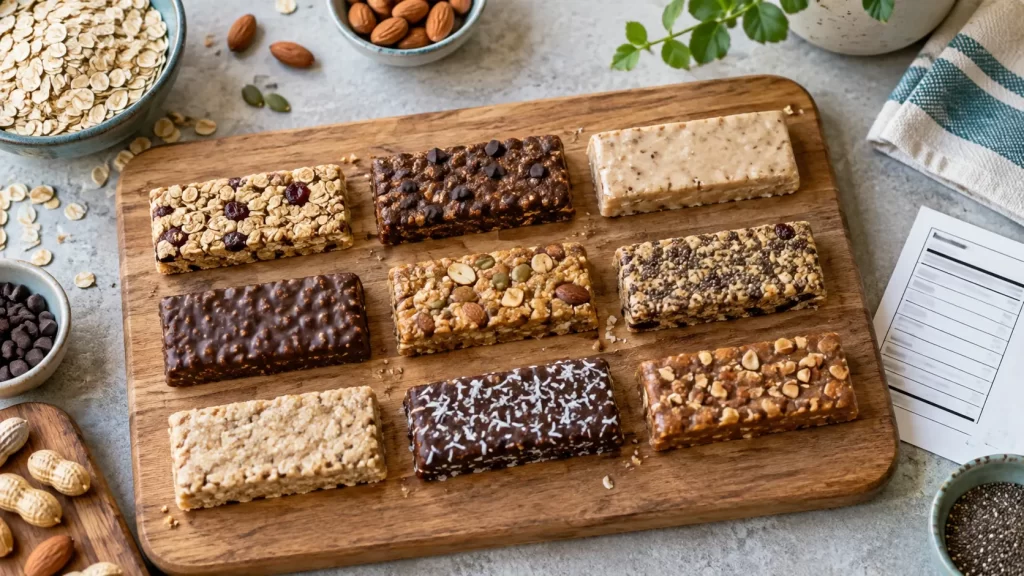
Nine protein bars compared: read the label before the ranking
The best protein bar is the one that meets a specific need without creating a problem elsewhere in your diet. A bar for a long commute is not necessarily the same choice as a substantial post-exercise snack. A bar that fits a plant-based diet may still contain a nut allergen; one with little added sugar may contain a large amount of sugar alcohol. Taste and texture matter because a supposedly ideal bar is not useful if you will not eat it. The answer is not a universal winner but a clearer way to compare real products.
This guide examines nine currently listed bars from manufacturers’ own product pages, checked in September 2026. It does not claim Sly Academy performed laboratory testing or that a registered dietitian personally reviewed these products. Labels and recipes can change, and flavors within one brand may differ. Use the figures and ingredient descriptions as a starting point, then check the exact wrapper you buy. There are no affiliate rankings here. The comparison focuses on protein source, serving size, fiber, added sugar, sugar alcohol, allergens, storage, and how each bar fits an ordinary eating pattern.
A protein bar can be a convenient packaged food, not a substitute for a varied diet or medical advice. If you manage a food allergy, kidney condition, diabetes, gastrointestinal disorder, or a prescribed diet, your requirements matter more than a general list. Do not rely on “plant-based,” “natural,” or “clean” to establish safety. The ingredient list and allergen statement answer more useful questions. Sly Academy’s guide to protein-rich everyday foods covers meal options when convenience packaging is unnecessary.
What counts as a useful protein bar?
Start with the job the bar must do. Are you adding a modest snack between meals, carrying food for a day when a meal is delayed, or seeking an easy protein source after training? A small bar that supplies protein but little energy may be appropriate as a snack and disappointing as a meal. A larger nut-butter bar may be satisfying but deliver more calories and added sugar than expected. Neither is inherently good or bad. Compare it with what you would otherwise eat and with the rest of your day.
The FDA’s label-reading guide recommends looking first at serving size, because all numbers refer to that amount. Check calories, protein, saturated fat, fiber, sodium, total sugar, and added sugar. Percent Daily Value can help compare nutrients, but it is a general reference, not a personalized target. A package may contain mini bars, full-size bars, or multiple servings. A “20 g protein” claim is meaningful only when you know how much food supplies it.
Protein is one part of the comparison. The NIH Office of Dietary Supplements explains that adequate dietary protein supplies essential amino acids for muscle protein synthesis. That does not mean every person needs a sports supplement or that consuming more protein without context always improves performance. Routine meals with dairy, eggs, legumes, soy foods, fish, or other protein-containing foods can also meet needs. If you train hard, total daily intake and overall food pattern matter more than one bar’s marketing message.
The term “energy bar” can mislead. Food provides energy through calories from carbohydrate, fat, and protein; protein itself is not a stimulant. A bar with much protein but little carbohydrate may not serve the same purpose as a snack chosen before prolonged activity. Conversely, a bar with more carbohydrate is not automatically inferior if it supports an activity. Think about timing, appetite, and tolerance, then choose for the actual situation rather than a vague promise of “fuel.”
How this comparison was made
We included nine named products with accessible official product pages and distinctive use cases. The list is not a scored contest: no blind tasting, price audit, clinical review, or independent nutrient analysis was performed. Product order makes comparison easier; it is not a first-to-ninth ranking. We avoid calling a bar “healthiest” based on one number. Where a manufacturer provides a Nutrition Facts panel, we give examples. Where the page shows only highlights, we say so and ask readers to check the physical label.
Our questions are practical. What is the protein source: whey, milk protein, egg white, soy, pea, rice, pumpkin seed, collagen, or a blend? How much fiber and added sugar appear on the same label? Do sugar alcohols or added fibers affect a sensitive person’s tolerance? Are there allergens or cross-contact statements? Does the bar need refrigeration? Could ordinary food provide the same benefit more economically or with a different nutrient mix? These tradeoffs matter more than enthusiastic adjectives on a product page.
Figures below refer to one named flavor and size at the time checked; do not transfer them to another flavor. Packaging is the most current source at purchase. Manufacturer pages can lag a recipe change, which is why several brands tell buyers to consult the wrapper. We do not repeat unverified expert endorsements or exact prices. Links cite product information, not a claim that Sly Academy tested or sells the bars.
1. think! High Protein, Creamy Peanut Butter
The manufacturer’s Creamy Peanut Butter page lists 20 g protein and 230 calories per bar. Its panel shows 1 g total sugar, 0 g added sugar, 1 g fiber, and 11 g sugar alcohol. The protein blend includes soy protein isolate, calcium caseinate, and whey protein isolate. That makes it a compact higher-protein option for someone comfortable with soy and milk ingredients who wants little labeled sugar in this flavor. It is not a dairy-free or soy-free choice.
The sugar-alcohol amount is easy to miss if you read only the wrapper’s front. Some people tolerate this combination well; others notice digestive discomfort, especially when eating several such products. The FDA distinguishes sugar alcohols from added sugar, and the NIDDK notes that sugar-alcohol-containing foods can aggravate diarrhea for some people. If new to this bar type, one serving and your own tolerance are more informative than a “low sugar” badge.
“High protein” is not a complete nutritional profile. The bar supplies protein in a portable format but little fiber. You might pair it with fruit if you need a more substantial snack. If your goal is simply to add protein at home, yogurt, beans, or other foods may offer a different mix of nutrients and texture. Compare the bar with your alternative rather than judging it in isolation.
2. BUILT Brownie Batter Puff
The BUILT Brownie Batter Puff product page describes a soft, marshmallow-style bar with 17 g protein, 140 calories, and 6 g sugar per bar. Its stated protein blend includes whey protein isolate and collagen, while the ingredient list includes gelatin. The manufacturer identifies milk and soy allergens and says the product may contain peanuts or tree nuts. This is a sweet-textured, portioned bar rather than a nut-and-oat format.
Protein composition is important. Collagen contributes grams to the total, but is not interchangeable with a complete, varied food pattern. Do not assume that two bars with the same protein number supply identical amino-acid profiles. The product includes whey, so calling it “collagen-only” would be inaccurate. It is not vegan because of whey and gelatin. If you select a bar after exercise, consider the rest of the meal and day instead of treating the wrapper as a stand-alone recovery prescription.
The moderate calorie figure may suit a small snack but can leave a hungry person needing more food soon after. That is not a product failure; it is a mismatch between portion and purpose. A banana, milk alternative, or ordinary meal may be a better companion than another bar. Examine the actual flavor wrapper for sugar, allergens, and serving size rather than borrowing Brownie Batter numbers for a different BUILT variety.
3. Perfect Bar, Peanut Butter
The full-size Peanut Butter Perfect Bar is a different option. Its listed serving is 71 g, with 340 calories, 17 g protein, 3 g fiber, 19 g total sugar, and 13 g added sugar. Peanuts, honey, nonfat dry milk, egg powder, and rice protein appear in the ingredient list. The label warns of peanuts, milk, eggs, and sesame, with a tree-nut equipment statement. These facts matter far more than the broad description “whole food.”
For someone wanting a more substantial snack, the larger serving and nut-butter texture may be welcome. For someone comparing added sugars, the 13 g figure deserves attention. Total and added sugar are different lines: the FDA explains the distinction and requires added sugar to be shown within total sugar on U.S. labels. Honey is still a source of added sugar in this context. A product can have familiar ingredients and still contribute meaningfully to the day’s added sugar.
Storage is another difference. Perfect Snacks says to keep the product refrigerated for best freshness, while allowing limited time at room temperature; check current instructions and the wrapper before packing it for travel. Do not compare the full-size bar with a mini bar as though portions were identical. A suitable choice on a road trip may differ from a choice kept in an office refrigerator.
4. RXBAR, Chocolate Sea Salt
The RXBAR Chocolate Sea Salt product information describes a bar based on dates, egg whites, nuts, and chocolate. The manufacturer’s current panel for this flavor lists about 200 calories, 12 g protein, 5 g fiber, 14 g total sugar, and 0 g added sugar per bar. Its allergens include egg and tree nuts, and the page warns of possible cross-contact with other allergens. The 14 g total sugar should not be mistaken for added sugar: dates contribute naturally occurring sugar.
This can suit a shopper preferring a chewy fruit-and-nut ingredient pattern over a bar built around a longer protein blend. It cannot suit someone with the listed egg or nut allergies, regardless of whether it looks “simple.” The protein number is lower than the 20-plus-gram products in this set, which may or may not matter. If you need a small snack, 12 g may be plenty in context; if counting on the bar for a training-day meal, plan the rest of that meal accordingly.
“No added sugar” does not mean sugar-free, and a short ingredient list does not establish suitability for everyone. Use Nutrition Facts and allergen lines together. If comparing a Blueberry RXBAR or newer flavor, check that package; do not copy Chocolate Sea Salt details across the range.
5. ALOHA, Peanut Butter Cup
ALOHA’s Peanut Butter Cup bar is listed at 230 calories, 14 g plant-based protein, 10 g fiber, and 5 g total sugar. Its protein blend uses brown rice and pumpkin seed proteins; ingredients include peanuts and tapioca fiber. The manufacturer says this product has no soy, dairy, gluten, or sugar-alcohol sweeteners, but it is emphatically not peanut-free. Product-specific label checks matter because an allergy is a safety issue, not a preference checkbox.
This is a comparison point for a plant-based shopper wanting notable fiber without sugar alcohol sweeteners. Ten grams of fiber is relatively high for one snack; people accustomed to less may prefer to introduce such foods gradually and pay attention to comfort. “Plant-based” does not make every ingredient minimally processed or turn a bar into vegetables. It describes the protein source and, here, a dietary suitability the manufacturer states.
For a person with peanut allergy, the ingredient ends the decision. For someone without that constraint, compare the 230-calorie serving to the snack size desired. Some days a bar is a bridge to dinner; on others it is more useful beside fruit or a meal component. Do not treat the fiber number alone as proof of universal superiority.
6. IQBAR, Peanut Butter Chip
The official IQBAR Peanut Butter Chip page highlights 12 g plant protein, 9 g fiber, and 1 g total sugar for the named bar. It is presented as a low-sugar, higher-fiber snack. These figures make it useful to compare with the date-based RXBAR or larger Perfect Bar, but highlights are not a substitute for reading the complete Nutrition Facts panel and ingredient list on the product you receive.
The manufacturer also markets additional “functional” ingredients. This guide does not treat marketing claims as evidence of a specific cognitive or medical benefit. Evaluate it as food first. Ask whether protein amount, fiber, sweetener profile, allergens, and portion suit you. A branded ingredient may sound impressive without changing the decision. If a wrapper differs from an online page, trust the wrapper for that package and ask the company about unresolved discrepancies.
Nine grams of fiber may be useful if your usual diet is low in fiber, but an abrupt jump can be uncomfortable. It is not necessary to maximize fiber in every snack. People who need lower-fiber foods for a medical reason should follow individualized advice. “More is better” would mislead here: the right amount depends on the whole diet and the person eating it.
7. CLIF Builders, Chocolate Peanut Butter
The CLIF Builders Chocolate Peanut Butter page advertises 20 g plant-based protein for this flavor. Its ingredient list begins with soy protein isolate and includes sweeteners such as cane syrup and cane sugar as well as peanuts and peanut butter. The manufacturer warns that online nutrition and ingredient facts may differ from the delivered bar and asks customers to refer to the package. That caveat matters for a guide that may outlive a recipe change.
This might appeal to someone wanting a dairy-free protein source and a firmer coated-bar format, but plant-based is not soy-free or peanut-free. Check the exact Contains statement and wrapper. A 20 g protein headline does not answer how much added sugar, saturated fat, or sodium you are comfortable with. Read those lines next to protein. A bar may be useful after a workout yet unsuitable for a person avoiding an ingredient.
Do not assume a sports-oriented product is required for recreational exercise. NIH guidance notes many people can obtain needed protein from foods. This is mainly a convenience tool. If it helps you eat when a meal is delayed, it may be practical. If it displaces a meal you would enjoy and that provides a broader variety of foods, convenience alone is not a nutritional upgrade.
8. Quest, Chocolate Chip Cookie Dough
Quest’s Chocolate Chip Cookie Dough protein bar lists a 60 g serving with 190 calories, 21 g protein, 12 g fiber, 1 g total sugar, 0 g added sugar, and 6 g sugar alcohol. Its protein blend uses milk protein isolate and whey protein isolate, and ingredients include almonds. This is one of the higher-protein and higher-fiber examples here. It is not dairy-free.
A person may value 21 g protein and a low added-sugar line while finding that added fibers or sweeteners do not agree with them. The high fiber content may be welcome for some and too much at once for others. Sugar alcohols and fiber are separate lines that may influence tolerance. If you have a prescribed carbohydrate or fiber plan, your clinician’s advice and exact wrapper take priority over generalized comparisons.
Variants and sizes can differ. Do not transfer the Cookie Dough panel to a dipped version or mini bar. Compare per serving, and if comparing cost use price per bar of the same size rather than a differently sized box. The lesson is not that Quest wins a protein contest; a stated serving lets you compare the complete label transparently.
9. No Cow, Chocolate Chip Cookie Dough
The No Cow Chocolate Chip Cookie Dough page lists a plant-protein blend of brown rice and pea, with soluble corn fiber, almonds, erythritol, and stevia. It identifies almonds as an allergen and notes shared equipment with other allergens. This is an example for someone seeking a dairy-free or vegan-style protein bar, but the almond warning rules it out for some. Its product imagery includes a Nutrition Facts label; consult the package for exact current quantities.
We deliberately avoid repeating a protein or calorie number that is not plainly available as text on the current product page. A comparison is useful only when each claim traces to a specific source and product. Flavors and product lines under one brand can differ. For a precise side-by-side calculation, photograph exact wrappers in the store and compare similar serving sizes.
This bar includes added fiber and non-sugar sweeteners. Some people prefer that combination; others prefer dates, honey, or nuts. Neither preference is itself a medical judgment. The FDA explains different permitted sweetener categories, including sugar alcohols. Read ingredient names and observe your tolerance rather than assuming a low-sugar claim predicts digestive comfort.
How to compare two bars in under a minute
Confirm serving size and calories. Two products can each say “protein bar” while one weighs substantially more. Next compare protein grams and identify the source. A number alone will not tell you whether the bar fits an allergy, vegan preference, or desired food pattern. Compare fiber and added sugar alongside total sugar. A date-based bar can show higher total sugar without added sugar; a sweetened bar can show very low total sugar while listing sugar alcohols. Reading all three lines prevents a false shortcut.
Check saturated fat and sodium if they matter to your overall diet, then read ingredient and allergen statements. The FDA lists nine major food allergens, including milk, peanuts, tree nuts, soy, wheat, egg, and sesame. The absence of one allergen from marketing language is not a safety check. With an allergy, examine the complete label every time, including cross-contact statements, and contact the manufacturer when uncertain. Reformulation can change suitability.
Finally, ask whether a bar solves a practical problem. A snack in a bag is useful if it prevents a long stretch without food. At home, yogurt, eggs, beans, tofu, nuts, or a sandwich may be equally convenient and provide a different nutrient mix. Our tofu, tempeh and seitan comparison is a next step for plant-based meal protein, not merely another packaged snack.
Sugar, fiber and the “net carbs” trap
Total sugar includes naturally occurring and added sugar. FDA rules require added-sugar amount and percent Daily Value on a U.S. packaged-food Nutrition Facts label. A date-based bar may show substantial total sugar but zero added sugar; a honey-containing bar can show both. “No added sugar” is not permission to ignore serving size, calories, or total carbohydrate. The meaning of a bar’s sugar profile depends on the rest of its label and your needs.
Fiber can make a snack satisfying, but a very high amount in one bar is not automatically ideal for every stomach. Some bars use soluble corn fiber or tapioca fiber to raise the number. Read ingredients if sensitive to certain fibers. If a bar combines high fiber with sugar alcohols, both may be relevant to comfort. NIDDK guidance discusses sugar alcohols as a possible contributor to diarrhea in susceptible people. This does not claim that any named bar causes symptoms in everyone.
“Net carbs” is often calculated by subtracting selected components from total carbohydrate, but packages and websites do not always define the calculation in the same way. Start with regulated Nutrition Facts lines: serving size, total carbohydrate, fiber, total sugars, added sugars, and sugar alcohol when declared. If using a carbohydrate-counting plan for diabetes, follow the method your care team taught rather than a front-of-package slogan. The most transparent comparison uses the complete label.
Protein quality, meal timing and ordinary alternatives
Whey and milk proteins, egg whites, soy, pea, rice, pumpkin seed, and collagen are not identical. For most readers, first ask whether the source fits allergies and preferences and whether the overall day includes enough varied protein foods. A single bar need not supply every nutrient. Collagen should not be mistaken for a complete replacement for other dietary protein. Equally, plant blends can be part of a sound eating pattern without optimizing every snack in isolation.
You need not consume a protein bar at an exact minute after exercise to make training count. NIH guidance describes a broader period in which adequate protein and overall intake support recovery; details depend on exercise and person. If a meal is coming soon, a bar may be unnecessary. If travel or work makes a meal difficult, portability may be the main benefit. That is a planning question, not a competition to collect the largest protein number.
Think of a bar as one tool among foods. Yogurt with fruit, a bean-based lunch, a tofu dish, an egg sandwich, or nuts paired with another food can deliver protein in different amounts and contexts. Sly Academy’s grocery-staples guide can help plan food to keep at home. A bar is valuable when shelf life, portability, or portioning solves a problem. It does not need a broad health claim to be useful.
Allergies, gluten-free claims and storage
Allergen checks precede preference comparisons. Whey is not dairy-free; egg-white protein is not egg-free. A plant-protein bar may contain peanuts, almonds, soy, or sesame, and cross-contact warnings can matter. The FDA consumer allergy guide explains how major allergens appear in ingredient or Contains statements. With severe allergy, do not infer safety from a photo, short ingredient list, or old online review. Check the product and ask the manufacturer when needed.
If gluten avoidance is medically necessary, look for the exact product’s gluten-free labeling, not an assumption based on no obvious wheat. The FDA defines conditions for “gluten-free” labeling, including a limit on unavoidable gluten presence. Flavors in one brand can use different ingredients or facilities. Protein source does not establish gluten status. For celiac disease, follow medical and dietetic guidance and inspect packages.
Storage matters too. Shelf-stable wrappers are convenient for bags, but heat can change texture and some products have special instructions. Perfect Bar’s refrigeration guidance shows why “portable” does not mean “leave it in a hot car indefinitely.” Check date, seal, and directions. If a package is damaged, expired, or stored contrary to instructions, choose another snack. These mundane details may matter more than small differences in protein grams.
Choosing by situation without pretending there is one winner
For a small desk snack, compare portion, taste, and whether you will still need fruit or another food. BUILT’s Puff is a lower-calorie example; RXBAR offers a fruit-and-nut pattern; either may or may not satisfy your appetite. For a substantial bridge between meals, full-size Perfect Bar has a larger serving but also a higher added-sugar line and refrigeration instructions. The useful comparison is not “which bar wins?” but “which tradeoff matches this occasion?”
For a higher-protein packaged option, think!, CLIF Builders, and Quest present around 20 g or more on their named pages. Their sweetener, fiber, protein-source, and allergen profiles differ sharply. Think! uses milk and soy proteins and shows 11 g sugar alcohol; Quest uses milk proteins and has higher labeled fiber; CLIF uses soy protein and sweeteners in its ingredients. The headline protein number cannot replace these distinctions. Choose with the whole label, not an isolated badge.
For a plant-based preference, ALOHA, IQBAR, CLIF Builders, and No Cow show different formulations. None is universally safe for allergens or ideal for digestion. ALOHA Peanut Butter Cup contains peanuts; No Cow’s named bar lists almonds and a shared-equipment warning; CLIF Builders contains soy and peanuts; check the exact IQBAR wrapper for ingredients and nutrition. If your preferred bar disappears or changes recipe, the comparison method still works.
For exercise days, think beyond the bar. What did you eat before activity, when is the next meal, and do you need carbohydrate, fluid, or a convenient protein source? A snack after a short gym session may differ from food for a long hike. There is no evidence here that any one of these nine products produces better athletic outcomes than the others. NIH guidance concerns adequate nutrition and activity, not a commercial winner.
Questions readers often ask
Can a protein bar replace a meal? It can provide calories and nutrients in a pinch, but most bars do not replicate the variety of a balanced meal. Look at portion and what the meal would usually include. If a bar repeatedly stands in for lunch, plan a more substantial portable meal or add foods supplying fruit, vegetables, and other needed nutrients. A high protein figure may still belong to a small snack.
Is a low-sugar bar automatically better? No. Read added sugar, total sugar, fiber, sugar alcohol, calories, and ingredients together. A low-sugar bar can be useful for one person and poorly tolerated by another. A bar with naturally occurring sugar from dates is not automatically unsuitable. The label is information to apply to context, not a universal grade. Be skeptical of nutrition claims reduced to one number.
Are bars necessary for building muscle? No. Protein is necessary for building and maintaining muscle, but ordinary meals supply it too. A bar may help when convenience matters and regular meals do not fit the schedule. Training, sufficient overall food, and a consistent pattern matter. For a specific sports-nutrition plan, consult an appropriately qualified professional rather than relying on a ranked snack list.
What if I have a food allergy? The product name is not enough. Check each wrapper’s ingredients, Contains statement, and cross-contact language every time. Do not rely on this article for clearance. If labeling is unclear, ask the manufacturer or avoid the product until you have reliable information. Allergy safety outranks protein grams, price, and texture.
Bottom line
Nine bars show different ways a packaged snack can combine protein, sweeteners, fiber, and ingredients. The useful choice is one that fits your task, preferences, and safety needs after reading its label. Use manufacturer pages to shortlist options, but give the current wrapper the final word. Treat an unverified “dietitian pick” or universal “best” claim with skepticism. A practical protein bar can be a convenient part of a varied eating pattern; it need not be a nutritional miracle.