
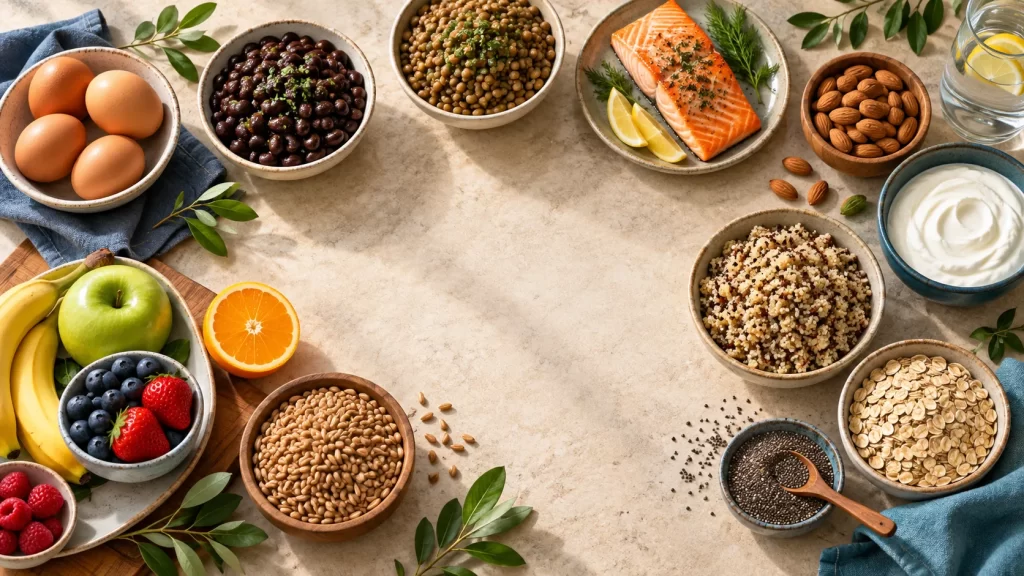
Protein-rich foods can make a meal more satisfying, but no single food is an instant cure for fatigue. Your body gets usable energy from calories supplied by carbohydrate, fat and protein; carbohydrate is especially important for many day-to-day activities, while adequate protein helps build and repair tissue. A steady eating pattern also depends on enough total food, fluid, sleep and, where relevant, medical care. This guide revisits nine familiar foods through that more useful lens: what each contributes, how to combine it with other foods and when its limitations matter. The choices are not a ranking, and they do not require an expensive supplement or a special diet.
The original version of this article attributed its advice to a dietitian without an identifiable reviewer and made several broad energy claims. This revision removes that unsupported attribution. It is general nutrition education, not a personalized prescription. If tiredness is persistent, new or severe, a clinician can help assess possible causes rather than assuming that more protein is the answer. For an overview of how protein fits into a healthy eating pattern, see the National Library of Medicine’s explanation of dietary protein and the CDC’s practical guidance on meals and snacks.
What protein can and cannot do for energy
Protein provides amino acids that the body uses for maintenance, growth and repair. It can also provide calories, but the popular phrase “protein gives you energy” can be misleading when it implies that eating a high-protein snack will reliably fix a slump. A person who has skipped lunch may feel better after a balanced meal because they have finally eaten enough food, not because one ingredient has a unique stimulating effect. Conversely, a protein-rich meal without enough overall calories or appropriate carbohydrate may not suit someone preparing for prolonged exercise. MedlinePlus explains that glucose is a main fuel for cells; the takeaway is balance rather than a contest between nutrients.
Food choices also affect how practical a meal is. Eggs cook quickly. Beans keep in a cupboard. Fish brings nutrients that an egg does not. Yogurt can be portable if kept cold. Nuts are convenient but easy to eat in large amounts without noticing. Grains such as oats and spelt contain some protein, yet their main role on the plate is not the same as that of fish, eggs or beans. The USDA’s Protein Foods guidance recommends variety across seafood, eggs, beans, lentils, nuts, seeds, soy, meat and poultry. Dairy and grains can add protein too, even though they sit in other food groups.
Portion needs differ by age, body size, activity, pregnancy, health conditions and the rest of the diet. The current U.S. 2025–2030 Dietary Guidelines emphasize whole, nutrient-dense foods, but a population guideline is not a personal target. Someone with kidney disease, a medically prescribed diet, food allergy, diabetes or another condition should use advice from their treating professional. This article focuses on ordinary food selection and preparation, not a universal gram target.
1. Eggs: a flexible anchor for breakfast or lunch
An egg brings a compact mix of protein and other nutrients and is easy to use in a real meal. Scrambled eggs on whole-grain toast with sliced tomato, a vegetable omelet and fruit, or a hard-boiled egg alongside a bean salad are all more complete choices than an egg eaten as a supposed energy remedy. The toast or fruit provides carbohydrate; vegetables add variety; the egg contributes protein and makes the plate feel like a meal. You can prepare several hard-boiled eggs ahead of a busy week, refrigerate them promptly and use them in lunches or snacks.
Cooking method matters more than a fashionable label. Poaching, boiling or lightly scrambling makes it easy to pair eggs with vegetables and grains. Loading an egg dish with processed meat and a large amount of butter changes its overall profile. If you do not eat eggs because of allergy, preference or cost, tofu scramble or beans on toast can play a similar practical role. An egg is not a mandatory component of breakfast, and “complete protein” is not a reason to dismiss plant foods. Across a varied day, many plant-based combinations can meet protein needs.
Keep food safety in mind. Buy eggs with intact shells, refrigerate them as directed and cook them appropriately for the people eating them. People at greater risk from foodborne illness may need particular caution with undercooked eggs. If a family member has an egg allergy, use separate utensils and follow their medical guidance rather than assuming a small quantity is harmless. For most readers, the simple takeaway is that eggs are a convenient ingredient whose usefulness comes from the meal built around them.
2. Beans and lentils: protein, fiber and low-cost planning
Beans, chickpeas, peas and lentils contribute plant protein and fiber, which makes them especially useful when a meal needs substance as well as affordability. A bowl of lentil soup with whole-grain bread, black beans with rice and vegetables, or chickpeas folded into a salad gives you more than one nutrient source. The USDA counts beans, peas and lentils in its protein-foods guidance and also recognizes their vegetable role. Their flexibility is valuable: a can can rescue a quick dinner, while dried lentils cook without the long soak required by many dried beans.
Some people avoid legumes because they associate them with digestive discomfort. Starting with a smaller portion, rinsing canned beans and increasing fiber gradually may be easier than jumping from very little fiber to a large bowl. Thoroughly cook dried beans according to food-safety instructions; undercooked kidney beans in particular are not a shortcut food. Canned beans are already cooked. If sodium is a concern, compare labels and choose lower-sodium varieties or rinse them. The goal is a sustainable habit, not a perfect ingredient list.
For a weeknight meal, warm cooked lentils with tomatoes, onion and spices, then serve them over a grain with a side of greens. A lunch option is hummus, chopped vegetables and a whole-grain wrap. Neither needs to pretend that beans are identical to fish or dairy: each food brings different nutrients. Readers interested in comparing another group of plant proteins can use our tofu, tempeh and seitan comparison as a next step. Choose based on taste, budget, allergies and what the rest of your diet already contains.
3. Fish: protein plus a reason to vary your seafood
Fish can contribute protein and, depending on the species, different fats and micronutrients. Salmon and trout are often chosen for their omega-3 fats, while canned sardines or other shelf-stable seafood can be practical where fresh fish is costly or difficult to find. The USDA encourages a variety of seafood and notes that species differ in omega-3 content and methylmercury. A fish meal becomes more balanced with a grain or starchy vegetable and produce; a salmon fillet alone does not replace the rest of lunch.
Try a baked piece of fish with roasted vegetables and potatoes, canned salmon mixed into a rice bowl, or sardines on toast with lemon and salad. Frozen fish is not inherently inferior to fresh fish; it can help limit waste if you cook for one person. Check storage and cooking instructions, and take particular care with raw or undercooked seafood if you are pregnant or otherwise at higher risk from foodborne illness. For mercury-sensitive groups, species choice matters, so use current official seafood advice rather than relying on a blanket claim that all fish are interchangeable.
Fish is not the only route to a nutritious meal. Someone avoiding it can combine beans, soy foods, eggs or dairy with fruits, vegetables and whole grains. A person with a fish allergy needs a genuine alternative, not an instruction to try a small portion. The value of fish in this list is its combination of protein and additional nutrients, not a promise of an immediate energy surge. If you are trying to create a repeatable meal plan, one fish meal among several varied protein choices is more realistic than eating the same “superfood” every day.
4. Almonds: a useful snack, not a main protein substitute
Almonds travel well, need no preparation and contribute unsaturated fats, fiber and some protein. Those features make them a practical addition to a snack. However, a small handful is not nutritionally identical to a serving of beans, yogurt or fish. Calling almonds a high-protein meal on their own overstates what they can do. If an afternoon snack needs to bridge several hours before dinner, pair almonds with a piece of fruit or another food that supplies carbohydrate and fluid. At breakfast, chopped almonds can add texture to oats or plain yogurt.
Portions deserve attention because nuts are energy-dense. That is not a reason to fear them; it is a reason to decide how much belongs in a meal instead of eating directly from a large bag. Choose plain or lightly seasoned versions if you want to control added sugar and sodium. Nut allergies are a serious exception: never treat almonds as a universal recommendation, check labels for cross-contact where necessary, and use an allergy-safe substitute according to the person’s care plan. Seeds may work for some people, but not automatically for every allergy.
A simple comparison clarifies the role. Almonds sprinkled over a grain bowl add crunch and fat; chickpeas in the same bowl can make the protein contribution more substantial. Both can belong there. When readers want a packaged snack, a bar may be convenient, but its ingredients and cost vary. Our protein-bar comparison is a related option to inspect critically rather than an instruction to replace ordinary meals with products.
5. Plain Greek yogurt: a quick base for a complete snack
Plain Greek yogurt is a convenient source of protein and can also contribute calcium. Protein amounts vary by brand and style, so read the package rather than relying on a single internet number. A bowl with berries and oats supplies fruit and grain alongside the yogurt; a savory bowl with cucumber, herbs and chickpeas can become lunch. The combination is what makes it useful for a busy day. A sweetened product with dessert-level added sugar is not automatically equivalent to plain yogurt simply because “protein” appears on the label.
Keep yogurt cold and observe the package’s storage instructions. People who avoid dairy have several alternatives, but their nutrient profiles vary greatly: a coconut-based yogurt may be low in protein, whereas a fortified soy-based option may be closer to dairy for that purpose. Compare protein, calcium, added sugar and ingredient labels. A person with milk allergy needs a milk-free product; lactose intolerance is different and may be managed in several ways, but a clinician or dietitian can help if symptoms are significant.
For a budget-friendly routine, buy a larger plain container if you can finish it safely, then add your own fruit, cinnamon or nuts. Portion it into a clean container before leaving home and keep it chilled. If refrigeration is impossible during a long commute, use a shelf-stable alternative such as roasted chickpeas or nut butter with crackers. The best snack is one that fits your real schedule and can be stored safely, not the one with the most impressive claim on a package.
6. Quinoa: a grain-like base that adds protein and variety
Quinoa is often described as a “complete protein.” That description refers to its amino-acid pattern, not to a claim that a bowl of quinoa provides every nutrient a person needs. In ordinary servings it serves mainly as a flexible grain-like base with some protein and fiber. Build a meal by adding lentils or eggs, vegetables and a source of fat such as olive oil or seeds. This is more useful than trying to make quinoa do the job of an entire plate.
Quinoa works hot under roasted vegetables or cold in a salad with chickpeas, herbs and citrus. Rinse it if the package recommends it, cook it in a measured amount of water and refrigerate leftovers promptly. If quinoa is expensive locally, brown rice, oats, barley or another whole grain can do much of the same meal-building work. No one needs to purchase an imported grain to eat adequately. The interesting question is whether the food helps you assemble a varied, affordable meal you actually enjoy.
For someone who has been eating a very low-carbohydrate breakfast and then feels hungry soon afterward, adding a grain or fruit alongside a protein source may be more helpful than escalating the protein portion indefinitely. Individual responses differ, and a person managing diabetes should follow their personalized care plan. Quinoa belongs on this list because it can contribute to a satisfying mixed meal, not because its protein content makes other grains obsolete.
7. Oats: a practical breakfast base with modest protein
Oats are mainly a whole-grain food, not a concentrated protein source. That distinction matters when a headline promises “high-protein foods.” Oats contribute some protein and fiber, but a bowl of plain oats becomes a more substantial breakfast when paired with yogurt, milk, soy drink, nuts or seeds and fruit. Overnight oats can save time, while cooked oats work well in colder weather. Neither preparation requires branded “protein oats” if the ordinary ingredients meet your needs.
A workable overnight version starts with oats and milk or fortified soy drink, then adds plain yogurt if tolerated and fruit before eating. For a savory version, cook oats with vegetables and top them with an egg or beans. These combinations address the common problem of a grain-only breakfast that may be too small for the person’s morning. The mix also allows you to change texture and flavor without reinventing your routine every day.
Compare plain oats with flavored sachets if added sugar matters to you. Choose certified gluten-free oats when required for celiac disease, because ordinary oats can be cross-contacted with wheat or other gluten-containing grains. Check the specific medical advice you have received, since tolerability can differ. The “energy” value of oats is not that they contain a magical slow-release ingredient; rather, they can provide food energy and fit easily into a balanced meal that includes other food groups.
8. Chia seeds: an add-in, not the center of dinner
Chia seeds contribute fiber, fat and a modest amount of protein in the small portions people usually eat. Stirred into yogurt or soaked with milk, they add texture and can make an existing snack more interesting. They are not a sensible substitute for a full protein serving merely because social media calls them a superfood. A tablespoon scattered over fruit and yogurt has a different role from a serving of eggs, tofu or beans. Keep that scale in mind when you evaluate claims on a recipe page.
When using chia in a pudding, soak it with enough liquid and follow a food-safe storage routine. Some people find a large increase in fiber uncomfortable; start with a smaller amount if it is new to your diet, and drink according to your usual hydration needs. Anyone with swallowing difficulties or a relevant medical restriction should seek individual advice rather than adopting an internet trend. A chia pudding can be pleasant and convenient, but it does not need to be prescribed as a treatment for blood-sugar instability or chronic fatigue.
Try chia in a small bowl with plain yogurt and berries, or add it to oats with a banana. If seeds are unavailable or costly, skip them: the meal can still be balanced. Variety and enough total food matter more than including a specific fashionable ingredient. In the context of this nine-food list, chia is best understood as a supportive topping that can add fiber and texture while other ingredients supply the bulk of the meal.
9. Spelt: a whole-grain option with an important gluten caveat
Spelt is a type of wheat. It can be used as cooked whole grains, flour or bread, and it contributes carbohydrate, fiber when whole, and some protein. It is not a gluten-free grain and should not be recommended to someone with celiac disease as a “gentler” substitute for wheat. That misconception is particularly important to correct because the older article treated spelt mainly as a protein-rich energy food without discussing its identity and limitations. If you need a gluten-free grain, choose an appropriate certified option and follow your clinical advice.
Cooked spelt can form the base of a vegetable-and-bean bowl, and spelt bread can accompany eggs or soup. The meal still needs variety: a grain cannot replace protein foods, vegetables and other components simply because it is described as ancient. Whole-grain versions generally provide more fiber than refined versions, but product labels vary. If spelt is hard to find, whole-wheat bread or another grain that fits your needs can be just as practical. Choose based on taste, access and the broader pattern of what you eat.
Spelt is also a reminder that a list of “nine high-protein foods” does not mean every entry is equally high in protein. Grains, nuts and seeds may contribute smaller amounts within a day, while eggs, fish, Greek yogurt and legumes can more directly anchor a meal. Understanding those roles is more helpful than placing a halo around every ingredient. A nutritious plan can include all nine, only a few, or sensible substitutes.
Put the foods together: three ordinary days, not a rigid meal plan
Consider three example combinations. On a workday, breakfast might be oats with plain Greek yogurt and fruit; lunch could be a lentil-and-vegetable soup with bread; dinner might be fish, potatoes and greens. On a vegetarian day, eggs with toast and tomatoes could be followed by a quinoa-and-chickpea bowl, then a tofu-and-vegetable stir-fry. On a tight-budget day, oatmeal with milk or fortified soy drink, a bean-and-rice lunch, and eggs with frozen vegetables at dinner may be easier to sustain than specialty powders and imported “superfoods.” These are illustrations, not calorie- or protein-prescribed menus.
A grocery plan makes the idea practical. Choose one or two foods you can prepare quickly, one shelf-stable protein such as beans or lentils, one fruit or vegetable you enjoy, and a grain or starchy food that works in several meals. Frozen and canned foods can make this less fragile when plans change. Compare unit prices, storage life and actual household preferences before buying a large quantity. Our grocery-staples guide offers related planning ideas, though you should still check its product suggestions against your own needs.
When you feel tired, first ask whether you have eaten enough and drunk enough for the day, whether the previous night of sleep was adequate and whether your activity changed. A balanced snack may help ordinary hunger; repeated or unexplained fatigue deserves medical assessment. Protein foods are useful building blocks of meals, not a substitute for diagnosis. The CDC’s healthy-eating overview emphasizes a pattern of whole, nutrient-dense foods rather than a single ingredient doing all the work.
How to read protein claims without being misled
Begin with the serving size. A food may advertise protein on the front but provide only a small amount in the portion you will actually eat. Then look at what else the food brings: fiber, unsaturated fat, calcium or other nutrients can be valuable, while large quantities of added sugar or sodium may change how often you choose a packaged version. Compare like with like. A cup of cooked beans and a sprinkle of seeds are not the same serving size or meal role, even if both appear in a “protein foods” graphic.
Be cautious with promises about concentration, stamina or metabolism. The fact that protein is essential does not establish that a specific food cures low energy, stabilizes everyone’s blood sugar or performs better than an overall adequate diet. Think of meals as combinations: a protein source, produce and a grain or other carbohydrate food can be adjusted to appetite and circumstances. Someone doing endurance exercise, someone recovering from illness and someone with a sedentary office day may need different amounts and timing. Generic online lists cannot settle those personal questions.
Finally, do not mistake a supplement aisle for a requirement. Whole foods can supply protein in many eating patterns. Supplements may be useful in particular circumstances, but they may also add expense, and products vary. If you suspect a nutritional deficiency or have a condition that changes protein needs, a registered dietitian or clinician can evaluate the full picture. For most readers, the most reliable improvement is unglamorous: eat regular, varied meals that fit your budget, preferences and health needs.
Adjusting the list for common real-life constraints
A food list is only helpful if people can actually use it. If you have little cooking time, keep canned lentils, plain oats and a shelf-stable nut or seed option where you can reach them, and add refrigerated foods when practical. If refrigeration at work is unreliable, do not leave fish, eggs or yogurt in a warm bag for hours just because a meal plan suggests them. Pack them with adequate cooling or choose a different meal. Food safety is part of nutrition, not a separate afterthought.
If cost is the main constraint, compare the price per usable serving rather than the price of a package. Dried beans can be inexpensive but require preparation time; canned beans cost more per serving in some shops but may prevent an expensive takeaway meal. Frozen fish may reduce waste compared with buying fresh portions you cannot finish. Store-brand plain yogurt can be more economical than single-serve flavored cups. Food that spoils before you eat it is not a bargain, so plan around your household’s actual routine.
If your diet excludes animal foods, combine legumes, soy foods, nuts, seeds and grains across the day, and pay attention to nutrients that require extra planning in a vegan pattern. If you have an allergy, do not rely on generic substitution charts: a seed or soy product may not be appropriate for you. And if exercise is the reason you are thinking about “energy,” remember that the timing and amount of total food and carbohydrate matter too. A snack before a long activity serves a different purpose from a recovery meal afterward. These decisions become clearer when you start with the activity and the person, not the headline on a food list.
Bottom line
Eggs, beans, fish, almonds, Greek yogurt, quinoa, oats, chia and spelt can all have a place in everyday eating, but they play different roles. Some can anchor the protein portion of a meal; others contribute smaller amounts alongside fiber or fat. Pair them with fruits, vegetables and appropriate carbohydrate foods, and vary your choices rather than chasing a single “energy” ingredient. If low energy persists despite adequate food, sleep and hydration, seek personalized medical advice. The most useful question is not which food claims the highest protein number, but which combination helps you eat well consistently.