

Ringworm treatment depends on the affected site, the person and the organism. This guide explains why a three-day promise is unreliable, how treatment decisions differ for skin, scalp and nails, and what to ask when symptoms persist.
Why three days does not establish a cure
Ringworm treatment has no universal three-day finish line. Ringworm is an infection caused by a group of fungi called dermatophytes, rather than a worm, and the treatment depends on the affected site, the organism and the person. A small patch on the skin, infection inside scalp hairs and a thickened infected toenail present different problems. Treatment commonly takes weeks, and some situations need considerably longer. Improvement in itching or redness is encouraging, but it does not establish that the fungus has been cleared or that a prescribed course can be stopped. [1]
Short courses have been studied, so it would also be inaccurate to say that a legitimate brief regimen cannot exist. A 1994 trial included three-day topical terbinafine treatment, but only a small number of its evaluable participants had body or groin ringworm. Outcomes were assessed later, including at day 28. The study does not show that every ringworm infection is cured within three days. It illustrates a distinction that advertising often blurs: the number of days a medicine is applied and the time at which an outcome is measured are different things. [24]
Even products containing the same antifungal name can have different instructions because their formulations and approved uses differ. The United States Lamisil AT terbinafine 1% cream label lists a one-week course for body or groin ringworm in adults and children aged 12 years and over. This is a label comparison, not a personal treatment instruction. Those distinctions matter before a product is purchased. A cream, spray or film-forming preparation should not inherit another product’s instructions through an internet search. Bring the exact package to a pharmacist, including its concentration, intended body site and country of sale, rather than relying on a headline about speed. [7]
The same problem arises when comparing different active ingredients. The United States Lotrimin Ultra Ringworm butenafine 1% cream label lists a two-week course for body or groin ringworm for ages 12 years and over; it excludes scalp and nail use. A short claim on the front of a package may therefore refer to a particular form of athlete’s foot, not body ringworm. The full Drug Facts panel is more informative than the largest number on the box. If the suspected infection is outside the listed use, changing the amount or extending treatment on your own does not resolve that mismatch. [9]
Confirm the problem before choosing treatment
A ring-shaped rash can suggest ringworm, but it cannot confirm it. Eczema, psoriasis and other skin conditions can resemble fungal infection, and ringworm itself does not always form an obvious ring. The examination may need to include other areas, such as the feet or nails, because the visible patch may not be the only affected site. A clinician may take material from the skin for testing. A photograph is useful for showing where a rash is and how it has changed, but it cannot identify the fungus or determine which medicine will work. [3]
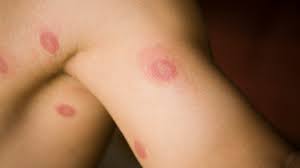
Colour is an unreliable shortcut to diagnosis. Depending on skin tone and inflammation, an affected area may look red, brown, grey or otherwise different from nearby skin. Scaling, itching, the location and the way a patch changes provide context, but no single feature proves a fungal cause. Hair loss or a nail changing colour also has several possible explanations. When describing symptoms, mention the change you actually see rather than trying to match one photograph online. A new patch that looks different from an earlier diagnosed infection deserves assessment on its own terms. [1]
A scraping examined with potassium hydroxide, often called a KOH examination, can help a clinician look for fungal structures. Laboratory technique matters. In a study comparing different preparations of the same samples, the proportion showing fungal material changed with the stain and the time allowed before reading. This was a comparison of methods, not proof that any test is infallible. Tell the clinician which creams or tablets have been used. Testing supports the assessment; it is not a home procedure to perform by scraping an inflamed patch yourself. [29]
Fungal culture tries to grow an organism, while molecular tests look for genetic material. These methods answer related questions but do not produce identical results. In a study of 191 skin or hair specimens, PCR, culture and microscopy differed in the proportion testing positive, and PCR performance differed by specimen type. The findings do not establish one universal best test. Ask what the available test can show, whether the specimen is suitable and what a negative result would mean. Further testing may be appropriate when the clinical picture remains uncertain. [28]
The affected body site changes the plan
For a limited infection of ordinary skin, an appropriate topical antifungal is often part of treatment. The choice changes when the area is extensive, difficult to treat or not responding, or when the person has other relevant health conditions. A pharmacist can help with a suitable product when self-care is appropriate, while uncertain diagnosis and more complicated disease need clinical assessment. Do not assume that a product is suitable everywhere on the body. The face, eyelids, genital skin and broken or markedly inflamed skin may need more careful evaluation and product-specific advice. [5]
An itchy groin rash deserves attention to its actual distribution. Groin ringworm may overlap with irritation from friction and moisture, while candidiasis, inflammatory skin disease and other conditions can resemble it. The label “jock itch” should not become a diagnosis for every genital symptom. Symptoms on the genitals, painful lesions, discharge or a concern about sexual exposure need an appropriate clinician rather than repeated purchases of the same cream. Mention any foot or nail changes too, because infection at another site can matter when a groin rash keeps returning. [32]
Athlete’s foot may affect the spaces between toes, the soles or the sides of the feet, and its appearance can vary. Moisture, footwear and other skin problems can complicate the picture. Painful cracking, spreading inflammation or discharge deserves assessment rather than assuming that more antifungal cream is the answer. People with diabetes or poor circulation should seek individual advice about a foot problem. A foot rash can also be a source of recurring infection elsewhere, so treatment planning should consider the whole pattern rather than only the most noticeable patch. [33]
Scalp and beard infection need different care
Scalp ringworm is a different treatment problem because the infection involves hairs and follicles. A skin cream alone generally does not reach the infection adequately, and oral treatment is usually needed under clinical supervision. Patchy hair loss, scaling or broken hairs warrants assessment, particularly in a child. The clinician may sample hair and scalp scale to help identify the cause. Starting a familiar body cream and waiting for a three-day response can delay suitable care. A plan for scalp disease should also address household contacts and the use of shared brushes, combs or headwear. [27]
A tender, swollen or boggy scalp area can be a kerion, a strong inflammatory response to fungal infection. It may have crusting, discharge and loose hairs, and can be mistaken for a bacterial abscess. Prompt assessment matters because severe inflammation can damage hair follicles and leave lasting hair loss. Squeezing, puncturing or trying to drain it at home can cause harm. The treating clinician needs to determine what is happening and whether additional treatment is necessary; a photograph alone cannot establish that a swollen scalp lesion is a kerion. [34]
For scalp infection, the organism can influence the choice of oral medicine. A systematic review of trials in children found that comparative results differed between Trichophyton and Microsporum infections. That makes a list ranking one antifungal as universally “best” misleading. The evidence also reflects particular drugs, study populations and follow-up periods. Parents can ask whether the suspected or identified organism changes the plan and how progress will be assessed. A medicine that helped a sibling may not be the right choice for a different child, organism or episode. [40]
Medicated shampoo may be recommended alongside oral treatment to reduce fungal material on the scalp and limit spread. It is an additional measure, not a replacement for the medicine needed inside infected hairs. Research on shampoo has examined effects such as shedding of viable spores, which is different from proving that shampoo alone cures scalp ringworm. The family should ask what role each part of the plan serves. Advice about contacts and shared hair tools should be followed without treating every household member as infected or sharing someone’s prescription. [30]
Infection involving beard hairs can behave differently from a superficial patch elsewhere on the face. Inflamed follicles, pustules or areas of hair loss need assessment, with attention to shaving practices and possible animal exposure. A superficial cream may be inadequate when infection extends into hair follicles. The clinician may need hair or skin samples and a treatment that reaches the involved tissue. Ask how to manage shaving while the area is inflamed, and do not share razors. A beard-area rash is not automatically fungal simply because it is itchy. [35]
Nail changes need diagnosis and patience
Thickened, discoloured or brittle nails are not always infected with fungus. Injury, psoriasis and other nail disorders can produce similar changes, so confirming the cause is important before committing to a long treatment course. A clinician may obtain nail material for microscopy, culture or another test. The result can also help separate a dermatophyte infection from other organisms. A tube labelled for ringworm on the body should not be assumed to treat an infected nail. Nail disease has its own treatment options, expected outcomes and reasons to seek specialist advice. [36]
Nail appearance is a particularly poor three-day outcome measure. A damaged nail does not immediately become clear when a medicine is effective, and nail studies distinguish fungal clearance from a completely clear nail. The United States JUBLIA efinaconazole 10% solution label illustrates the scale of this difference: its toenail studies used a 48-week treatment course and assessed complete cure at week 52. This is a label example, not a recommendation to use that product. Ask what would count as progress and what result is realistic for the particular nail problem. [13]
Use the exact product information
Trials of topical treatment for body and groin ringworm support the effectiveness of several antifungal classes, but they do not justify a cure guarantee for every person. A review of this evidence found variation in study quality, outcome definitions and follow-up, with limited information about relapse in many trials. “Clinical cure” may refer to the rash clearing, while “mycological cure” refers to fungal testing becoming negative. A product comparison needs to specify which outcome was measured and when. Marketing that combines these outcomes into one promise leaves out information patients need. [39]
Prescription status does not remove the need to check the exact indication. The United States LUZU luliconazole 1% cream label covers body ringworm from age 2, and groin or interdigital foot infection from age 12. Those boundaries come from the product’s authorized uses and supporting evidence; they are not a general age rule for all antifungals. The same label also distinguishes application sites and course lengths. For a child, a prescriber or pharmacist should check the specific formulation and site rather than transferring instructions from an adult, another body area or another brand. [10]
A familiar over-the-counter ingredient can have a longer labelled course than a newer product or a different formulation. The United States Lotrimin clotrimazole 1% ringworm-cream label lists a four-week body-ringworm course and requires a doctor’s direction for children under two. The practical lesson is to read the package that is actually being used. Do not stop solely because another product advertises a shorter course, and do not extend treatment indefinitely because some colour remains. A pharmacist can help distinguish the expected course from a reason to reassess the diagnosis or medicine. [8]
A “natural” remedy can irritate skin and still leave uncertainty about whether an infection has cleared. A trial of specific tea-tree preparations for infection between the toes found a fungal benefit after weeks of treatment, but some participants developed moderate-to-severe dermatitis. That evidence cannot be transferred to a homemade mixture, body ringworm, scalp infection or nail disease. New burning or an expanding rash is not proof that a remedy is working. Tell the clinician about oils and other products as well as medicines, because they can complicate the assessment. [22]
Why steroid mixtures can be misleading
A steroid cream can reduce redness and itching while allowing a fungal infection to spread or become harder to recognize. This altered appearance is often called tinea incognito. The border may become less obvious, and the rash may look more like another inflammatory skin condition. Tell the clinician about every cream used, including products bought abroad and creams sold as an antifungal mixture. A temporary cosmetic improvement is not evidence that the infection has been eradicated. Avoid adding a steroid to an undiagnosed rash without appropriate medical advice. [37]
Evidence about combination creams needs careful interpretation. A historical randomized trial found faster improvement in inflammation with an antifungal–steroid combination, while fungal results were comparable to the antifungal alone at study end. The outcomes and timing matter, especially when relief tempts someone to stop early or repeatedly reuse the mixture. A prescriber may sometimes have a specific reason for addressing inflammation, but that is different from recommending unsupervised combination products for any itchy ring. Ask what each ingredient is intended to do and how the diagnosis and response will be checked. [31]
Oral treatment needs a safety review
Oral antifungal treatment requires a medication review because tablets reach the whole body and have important risks. The United States oral terbinafine label includes liver-related warnings, contraindications and recommendations for assessment before prescribing. A clinician must consider the intended infection, medical history, other medicines and monitoring needs. That is why leftover tablets, another person’s prescription and an online dosing schedule are unsafe substitutes for care. If tablets are prescribed, ask which symptoms need prompt contact and whether blood tests or other follow-up are part of the plan. [11]
Itraconazole has important interaction and heart-related warnings, and its formulations are not interchangeable in every circumstance. Other medicines can affect its exposure, while itraconazole can alter levels of many other drugs. A clinician or pharmacist needs a complete list of prescriptions, nonprescription medicines and supplements before treatment is selected. Tell them about heart or liver disease and any new symptoms during treatment. Advice for one formulation should not be transferred to another. These safety issues are particularly relevant when a difficult infection prompts consideration of a longer or different oral treatment. [12]
Pregnancy and breastfeeding change the conversation about treatment. The safety advice can differ between a cream and a tablet containing the same named medicine, and information for one antifungal should not be generalized to another. Tell the pharmacist or prescriber about pregnancy, trying to conceive or breastfeeding before a product is selected. They can check the current local product information and the area being treated. Treatment close to the breast also needs practical advice to prevent infant exposure. A general statement that “antifungals are safe” or “antifungals are unsafe” is too broad to guide an individual choice. [6]
Pediatric research does not automatically override a current product label. An older uncontrolled study of terbinafine cream in children with body or groin ringworm reported a high rate of an “effective” outcome, but that category included substantial improvement rather than complete cure alone. It also recorded local reactions. Those findings cannot authorize use in every child or establish a cure within one week. A clinician or pharmacist must still check the child’s age, affected site, exact formulation and local approval. An adult’s instructions or a published research schedule should not be borrowed independently. [26]
When resistant ringworm becomes a concern
Trichophyton indotineae is an emerging dermatophyte that can cause extensive, inflamed and difficult-to-treat skin infection. Many strains are resistant to terbinafine, but the species name and resistance are not interchangeable concepts: susceptibility can vary, and treatment decisions need more than the label “resistant ringworm.” Travel and contact history can help the assessment. Routine laboratories may misidentify it as a closely related organism. Suspected cases can require specialized identification, consultation and a longer treatment plan rather than repeated empirical switching between ordinary creams. [4]
The first reported United States cases of T. indotineae illustrate why location alone cannot rule out an emerging infection. One patient in the 2023 report had no recent international travel, supporting concern about local transmission. The report also described the need for specialized testing after routine identification was insufficient. A case report cannot estimate how common the organism is in a community or predict how an individual’s rash will respond. Its practical contribution is to remind clinicians to investigate an unusually persistent or widespread infection even when the travel history is unremarkable. [14]
A New York City cohort of patients with confirmed T. indotineae infection documented prolonged illness, diagnostic delays and treatment challenges. It connected clinical experience with laboratory characterization, showing why a treatment history and the organism both matter. This was a small, selected group rather than a survey of everyone with ringworm, so its difficult outcomes should not become a forecast for an ordinary localized rash. For someone whose infection keeps returning, the useful step is to bring records of prior treatments and results so the next clinician can build on them. [14]
A North American reference-laboratory study found terbinafine resistance among submitted dermatophyte isolates, including T. indotineae and resistant T. rubrum. Because difficult cases are more likely to be sent to a reference service, the proportion resistant in those samples is not a population prevalence estimate. The study nevertheless shows that resistance is not confined to one species. When a treatment fails, the clinician must consider diagnosis, medicine use, reinfection and resistance together. A laboratory finding is most useful when interpreted alongside the patient’s actual response and the limitations of the testing method. [15]
TMVII: what is known and what remains uncertain
Trichophyton mentagrophytes genotype VII, often abbreviated TMVII, is a separate emerging cause of ringworm. CDC’s patient information, updated October 8, 2026, says anyone can acquire it, although recent reports have particularly involved men who have sex with men. Close skin contact, including sexual contact, can transmit it. It differs from T. indotineae and is not usually antifungal-resistant, although resistance is possible. CDC notes that treatment can take weeks to months; knowing the likely organism helps a clinician plan appropriate care without promising a rapid cure. [2]
Important details of TMVII transmission remain uncertain. CDC says it is not yet known whether people without symptoms can spread it, and the risk from contaminated objects such as clothing or bedding is not fully understood. Those gaps should not be replaced with absolute claims that a person or item is safe. The clinician can advise about avoiding contact with affected skin, informing relevant partners and returning to close-contact activities. This is a practical infection-control conversation; neither a person’s identity nor the location of a rash proves how they acquired it. [2]
Reports of TMVII infections in New York City described patients with lesions at several body sites and highlighted delayed recognition. The findings support considering fungal infection in a relevant clinical picture, including when lesions might otherwise be attributed to another sexually associated condition. They do not allow an online photograph or a partner history to identify a genotype. Specialized testing may be needed. A clinician should also consider other causes and possible coexisting infections when symptoms or exposures warrant it, rather than allowing a suspected fungal diagnosis to end the assessment prematurely. [16]
European TMVII case series add evidence that intimate contact can be relevant to transmission and that inflammation may be substantial. These reports involve selected patients seeking care, so they cannot establish the risk from any single encounter or show that only one group is affected. The patient-centred lesson is to describe symptoms and contacts plainly to a clinician and to avoid stigmatizing assumptions. Advice to partners should be based on a confirmed or reasonably suspected infection and current clinical guidance, with attention to privacy and to symptoms that need assessment. [17]
Judge progress with a reassessment plan
A rash that persists after treatment should trigger a review of the whole situation. Was the original diagnosis confirmed? Was the medicine appropriate for the site, and was it used as directed? Has another affected area or a close contact contributed to reinfection? Has a steroid altered the appearance? These questions are more useful than simply counting how many products have been tried. Seek reassessment at the product’s stated review point, or sooner if symptoms worsen, spread or become painful. Do not wait for a planned finish date when the illness is clearly changing. [4]
Treatment studies often assess patients after the application period has ended, because the final result cannot always be judged on the last treatment day. A randomized trial of a one-week terbinafine cream course for body or groin ringworm followed participants for seven additional weeks. That design matters when reading a claim about “one week” or another brief schedule: it can describe medication exposure without saying that every rash looks normal by then. Ask when improvement should be expected, when the result should be reviewed and what would count as a reason to return sooner. [25]
Reduce spread at home, school and sport
Reducing repeated exposure is part of recovery. Keep affected skin clean and dry, change damp clothes and avoid sharing towels, clothing or personal grooming items. Public changing areas and communal showers are reasons to consider protective footwear and careful drying, particularly around the toes. These habits reduce opportunities for spread but cannot guarantee that infection will never recur. They also do not replace appropriate treatment of a confirmed infection. Discuss practical difficulties so the household can follow the plan. [3]
Laundry can contain dermatophyte material, but laboratory results should not become a promise that one domestic wash makes every item sterile. Studies examining contaminated socks and textiles have found that survival depends on conditions such as wash temperature and the organism. Follow fabric-care instructions and relevant clinical advice, wash shared-use textiles appropriately and avoid sharing them while an infection is being managed. A household does not need an invented chemical recipe from social media. Never apply laundry disinfectants, bleach or cleaning concentrates to skin in an attempt to accelerate treatment. [19]
Contact sport adds a separate question: when is it appropriate to return to close physical contact? Athletic guidance can require a period of effective treatment and an assessment of the lesion, with different rules for skin and scalp infection. Covering a rash does not automatically make participation acceptable, and one organization’s policy should not be assumed to apply to another competition. Tell the coach or athletic health professional about the diagnosis and follow the applicable rules. Shared mats, equipment and changing areas also need the team’s usual cleaning and hygiene procedures. [21]
School and childcare advice is jurisdiction-specific. UK Health Security Agency guidance for education and childcare settings allows return once treatment for ringworm has started, but an individual setting may need additional advice for an outbreak or a child with scalp disease. This is a participation policy, not proof that transmission becomes impossible after the first application. Parents should ask the clinician and setting which instructions apply, keep hair tools and personal items separate, and report a confirmed diagnosis as locally required. A three-day website promise is not a sound basis for making attendance decisions. [38]
Include pets in the right kind of assessment
Animal exposure can be relevant when infections recur in a household. A study of a cat-breeding family investigated scalp infections in children alongside fungal cultures from the cats. Some findings reflected active infection while others required interpretation as possible carriage on the coat. A breeding household is not representative of every family with a pet, and a person’s rash does not prove that their animal caused it. Tell the clinician about animal contact, and arrange veterinary assessment for concerning skin or coat changes. Do not apply a person’s prescription to a pet. [20]
Veterinary guidance emphasizes that animal dermatophytosis needs interpretation of clinical findings and testing, because detecting fungal material does not always mean the animal has an active infection. Treatment and environmental measures should be matched to the actual situation. This matters when an apparently healthy pet is blamed for a person’s recurring rash or when a single test result causes unnecessary alarm. A veterinarian can explain whether the animal is infected, what monitoring is appropriate and how to manage contact. Human and animal prescriptions should remain separate even when the suspected fungus can cross between them. [41]
Know when to get help and what to ask
Painful, hot or swollen skin needs prompt assessment for a possible additional bacterial infection, such as cellulitis. Redness may be harder to see on darker skin, so warmth, pain and swelling also matter. Feeling severely unwell, becoming confused or faint, or breathing rapidly changes the urgency and can require emergency help. These signs do not diagnose cellulitis or show that an antifungal has failed; they indicate that waiting for a cream to work may be unsafe. Use the local urgent or emergency service appropriate to the symptoms. [23]
A treatment plan should also explain how recurrence will be handled. In an Indian randomized trial of oral treatment for more extensive body or groin ringworm, recovery commonly took weeks and relapse remained a substantial problem. That selected clinical population cannot predict outcomes for a small rash treated at a pharmacy, and the study does not authorize changing a prescription. It does reinforce the value of follow-up after initial improvement. Keep records of medicines and results, and ask when to return if the rash reappears rather than repeatedly restarting an old treatment. [18]
Frequently asked questions
Can ringworm always be cured in three days?
No. A brief treatment course does not establish fungal clearance by day three. [24]
Do all antifungal creams have the same course?
No. Follow the exact product information for the formulation, site and age. [7]
Can steroid cream make ringworm worse?
Yes. It can mask symptoms while infection spreads or becomes harder to recognize. [37]
Can a skin cream alone treat scalp ringworm?
Usually not. Scalp infection generally needs prescribed oral treatment after clinical assessment. [27]
Is every thick or discoloured nail a fungal infection?
No. Other nail conditions can look similar; testing may be needed. [36]
What if ringworm treatment does not help?
Seek medical reassessment if treatment is not helping; get advice sooner if symptoms worsen. [5]
Sources
- CDC: ringworm overview
- CDC: emerging ringworm and TMVII
- AAD: ringworm diagnosis and self-care
- AAD: T. indotineae clinical resources
- NHS: ringworm
- NHS: terbinafine in pregnancy and breastfeeding
- Lamisil AT 1% cream: US label
- Lotrimin clotrimazole 1% cream: US label
- Lotrimin Ultra Ringworm: US label
- LUZU 1% cream: US label
- Terbinafine tablets: US prescribing information
- SPORANOX capsules: US prescribing information
- JUBLIA nail solution: US label
- T. indotineae: New York cohort
- North American dermatophyte resistance study
- TMVII: New York investigation, 2024
- TMVII: French case series, 2025
- Body and groin ringworm: oral-treatment trial, 2022
- Dermatophyte textile-disinfection experiments
- Cat-breeder family: M. canis investigation
- NATA: skin diseases and sport
- Tea-tree preparations: athlete’s-foot trial, 2002
- NHS: cellulitis
- Short-course terbinafine trial, 1994
- Body and groin ringworm: short-course trial, 2001
- Childhood skin ringworm: topical trial, 1997
- BAD: scalp ringworm guideline, 2014
- Skin and hair specimens: diagnostic-method comparison
- Fungal microscopy: preparation-comparison study
- Scalp ringworm: adjunctive shampoo trial
- Antifungal–steroid combination trial, 1984
- DermNet: tinea cruris
- DermNet: tinea pedis
- DermNet: kerion
- DermNet: tinea barbae
- AAD: diagnosing nail fungus
- DermNet: tinea incognito
- UKHSA: education-setting exclusion periods
- Cochrane: topical treatment for body and groin ringworm
- Cochrane: oral treatment for childhood scalp ringworm
- WAVD: diagnosing and treating animal dermatophytosis