

Health information, not an individual vaccination plan. Guidance checked on 12 October 2026. A qualified clinician should apply the recommendations used in your country to your health history.
Zoster vaccine: what it is and what to check first
A zoster vaccine helps prevent herpes zoster, usually called shingles. Shingrix is the recombinant, adjuvanted zoster vaccine covered in this guide. Its U.S. authorization includes adults aged 50 and older, and adults aged 18 and older whose immune system is, or will be, weakened by a known disease or treatment. Those are licensing categories: they describe the groups covered by the product’s authorization. A vaccination programme can set a different recommendation threshold, and an insurer can have its own payment requirements. [1]
The age shown on a product licence is therefore not the only question when planning an appointment. Before booking, ask three separate questions: is this product appropriate for me, when should I receive it, and what will my local service cover? The following sections explain those decisions without assuming that a U.S. recommendation establishes eligibility everywhere. The FDA product page identifies Shingrix as a preventive vaccine; it does not establish a worldwide vaccination entitlement. [1]
Why shingles prevention matters
Chickenpox and shingles involve the same virus
Shingles develops when varicella-zoster virus, or VZV, becomes active again after remaining in the body following chickenpox. It is not caused by the virus responsible for COVID-19 or by a new infection with a SARS coronavirus. Many adults had chickenpox so long ago that they do not remember the illness. Feeling well for decades afterward does not mean that VZV has been removed from the body. [2]
Age and immune function help explain who faces the greatest risk. The likelihood of shingles rises as people grow older and with certain diseases or medicines that weaken immune defenses. CDC estimates that about one in three people in the United States will experience shingles during their lifetime; that population estimate is not a prediction for one individual. A person does not directly catch shingles from somebody else. However, exposure to the virus from shingles blisters can give a susceptible person chickenpox, and that person could develop shingles later in life. [2]
The concern extends beyond a temporary rash
A typical episode causes pain, itching or tingling followed by blisters on one side of the body or face. Skin discomfort can begin before the rash is visible. The blisters generally crust within seven to ten days, and the rash often clears within two to four weeks. Those timelines describe a usual pattern, not a reason to wait for the illness to resolve without advice. [3]
Postherpetic neuralgia, often shortened to PHN, is persistent nerve pain in the area affected by shingles after the rash has cleared. CDC estimates that about 10% to 18% of people with shingles develop it. Pain can last months or years and interfere with ordinary activities; risk increases with age. Shingles involving the face can threaten vision, and skin lesions can become infected with bacteria. Less common complications include hearing problems, pneumonia and brain inflammation. These possibilities explain why preventing shingles is about more than avoiding an uncomfortable patch of skin. [3]
A new painful rash needs assessment, not a vaccine appointment
If you think you already have shingles, contact a healthcare professional promptly. Antiviral treatment may be offered, and it works best when started early, commonly within three days of the rash appearing. Do not treat that window as a cutoff after which seeking care is pointless: a clinician should still assess symptoms, complications and individual risk. A vaccine appointment cannot replace that assessment. [4]
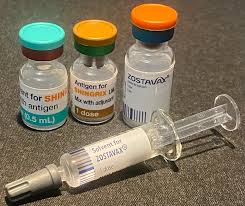
Understanding the vaccine terminology
Shingrix is a non-live vaccine. It contains no live virus that could cause chickenpox or shingles. It may be given while someone takes antiviral medicines when vaccination is otherwise indicated. [9]
Three words often make vaccine information harder to follow than it needs to be. An antigen is the material that the immune system learns to recognize. A subunit vaccine uses selected parts of a germ rather than the complete organism. Recombinant describes a production method used to make such a component. These terms describe the vaccine’s design; they are not a measure of how strongly one person will react to an injection. [5]
An adjuvant is an ingredient that helps strengthen the immune response to a vaccine. Other ingredients can serve different purposes, such as keeping components stable or properly mixed. It is therefore more useful to ask about an identified ingredient and a documented allergy than to assume every ingredient has the same role. General explanations of vaccine technology are not product-specific ingredient lists. When a clinic screens you, bring the name of any ingredient linked to a previous serious reaction so that the actual product information can be checked. [5]
Who is offered Shingrix in the United States?
CDC recommends two doses of Shingrix for adults aged 50 years and older. It also recommends two doses for adults aged 19 years and older who are, or will be, immunodeficient or immunosuppressed because of disease or therapy. A healthy adult younger than 50 should not infer eligibility merely from having had chickenpox. The younger-adult recommendation concerns the specified immune-risk group. [6]
Previous shingles does not remove the recommendation: shingles can recur. CDC specifies no fixed waiting period after a past episode, but vaccination should not occur during an acute episode. Previous Zostavax also does not replace the Shingrix course. Zostavax, the older live shingles vaccine, has not been available for use in the United States since November 2020. Under CDC guidance, at least eight weeks should separate Zostavax and Shingrix. Bring the old vaccination date if you have it, because the clinician should review the actual product and timing rather than treating every “shingles shot” as interchangeable. [6]
For adults aged 50 and older with healthy immune systems, CDC does not recommend routine chickenpox-history screening or laboratory testing before Shingrix. If testing already shows susceptibility, the clinician should follow varicella guidance. [6]
The two-dose schedule and missed appointments
| Situation | What the U.S. schedule means |
|---|---|
| Routine U.S. course | For an eligible adult, the standard Shingrix course consists of two doses, with the second usually given two to six months after the first. Record both the date already given and the agreed return window; “two doses” means two vaccination visits, not two injections at the first visit. [7] |
| A dose given too early | CDC’s adult schedule lists four weeks as the minimum interval for a valid second dose. This minimum is not the routine target for everyone. If records show an earlier dose, ask the vaccination service to assess whether a repeat is required rather than deciding from the calendar yourself. [7] |
| A previous shingles vaccine | The recommended Shingrix series remains a two-dose course even when a person previously had herpes zoster or received the older live zoster vaccine. Confirm the product name in your record. A dose listed simply as “varicella” or “chickenpox” should not automatically be counted as Shingrix. [7] |
If more than six months have passed since your first Shingrix dose, U.S. guidance says to give the second dose as soon as possible; the series does not need to be restarted. A late appointment and an appointment that was too early are different problems. One involves completing a delayed course, while the other can involve whether a dose counts as valid. Give the clinic the actual dates so it can apply the correct rule. [8]
Consider a practical example: someone received a documented first dose, moved home and missed the return appointment. The next step is to obtain that record and ask the new service to arrange the remaining dose, rather than assuming both injections must be purchased again. Conversely, do not deliberately delay because restarting is unnecessary. The recommendation is still to complete the course at the advised interval. Set a reminder, keep the booking details and contact the clinic if travel, illness or treatment plans change. [8]
For selected adults who are or will be immunocompromised, CDC allows the second dose one to two months after the first when completing the course sooner would be beneficial. Timing can be coordinated with treatment and periods when an immune response is likely to be stronger. This is a clinician-directed option, not a general shortcut for a holiday or a busy calendar. [9]
Immune conditions and treatment need a tailored plan
Why the medicine list matters
“Immunocompromised” covers many different situations. A condition can affect immune function directly, and a treatment can suppress it even when the underlying condition is well controlled. The effect of a medicine depends on the particular drug, its dose and the treatment schedule. A label such as “steroid use” is therefore not enough to settle the vaccination plan on its own. [10]
CDC distinguishes the safety of non-live vaccines from the question of how effectively a person responds to them. A vaccine may be suitable yet produce a weaker response during a period of substantial immune suppression. That is why the vaccination provider may need help from the team managing cancer treatment, transplantation or an inflammatory disease. Bring a current medicine list and the dates of planned treatments. Ask which clinician will agree the timing, and make sure the answer reaches the person giving the injection. Do not stop or postpone prescribed treatment on your own to create a vaccination window. [10]
People living with HIV
U.S. NIH guidance specifically recommends recombinant zoster vaccine for people with HIV aged 18 and older, regardless of CD4 count or a previous episode of shingles. This is HIV-specific guidance, not a blanket recommendation for every younger adult. The treating clinician should apply the relevant guidance rather than assuming one sentence on a general website settles the question. [11]
The NIH discussion also recognizes uncertainty about the optimal timing for people with low CD4 counts or HIV that is not yet suppressed. After antiretroviral treatment starts, some experts prefer to allow immune recovery or viral suppression to improve the expected response. Those considerations are individualized, and the guidance does not make every low CD4 result a reason to miss prevention indefinitely. Discuss the vaccine during routine HIV care, keep antiretroviral treatment as prescribed, and ask for a written dose plan that fits the broader care schedule. [11]
Chickenpox vaccine, shingles vaccine and immunity are different questions
An uncertain childhood history deserves context
Shingrix is not a vaccine for preventing a first chickenpox infection. For an immunocompromised adult with no documented chickenpox, chickenpox vaccination or shingles history, the clinician should establish the relevant history and evidence before treating the situation as routine zoster vaccination. Evidence can include two documented varicella vaccine doses, laboratory evidence of immunity or disease, or a clinician-verified history of chickenpox or shingles. [12]
This matters because a person who has neither had chickenpox nor received varicella vaccine is not in the same position as someone carrying latent VZV. Receiving Shingrix does not solve the separate question of protection against primary varicella. If records are absent, say so plainly and bring any available laboratory results rather than guessing. The care team may need the varicella recommendations, including advice after an exposure. Decisions are especially important when live vaccines may be unsuitable because of immune suppression; do not substitute one vaccine name for another. [12]
Read the product name on the record
Varicella vaccines protect against chickenpox. In U.S. guidance, there are single-antigen varicella vaccines and a childhood combination vaccine called MMRV, which also includes measles, mumps and rubella components. MMRV is licensed only for children aged 12 months through 12 years. Neither an MMRV entry nor a single-antigen varicella entry is a record of Shingrix. The shared word “varicella” reflects the virus involved, not identical products or an interchangeable schedule. [13]
If you have been exposed to chickenpox or someone’s shingles blisters and do not know whether you are immune, contact a healthcare professional promptly. Post-exposure decisions depend on evidence of immunity and whether a varicella-containing vaccine is suitable. Some commercial tests can miss immunity produced by varicella vaccination, so a negative test is not always straightforward to interpret alongside documented doses. Tell the clinician about pregnancy or immune-suppressing treatment, and let that person determine the appropriate exposure plan. [13]
How much protection can you expect?
In the trials summarized by CDC, Shingrix was about 97% effective at preventing shingles in adults aged 50 to 69 with healthy immune systems, and about 91% effective in those aged 70 and older. CDC also reports strong protection against postherpetic neuralgia. These figures describe results in studied groups; they do not mean that every vaccinated person has a guaranteed outcome or that a future rash can be ignored. [14]
For adults with weakened immune systems, CDC reports effectiveness against shingles ranging from 68% to 91%, depending on the condition affecting immunity. That range is more useful than quoting the highest healthy-adult figure to everyone. Ask how the evidence relates to your circumstances, especially if you are undergoing treatment. Protection and tolerability are also different measures: a sore arm does not tell you your personal effectiveness percentage, and feeling little discomfort does not establish failure. The practical goal is to complete the recommended course and still seek care for symptoms that could be shingles. [14]
Protection over time and the booster question
The Australian Immunisation Handbook, updated in September 2026, describes evidence of high Shingrix protection for at least ten years after vaccination in people without immune compromise. It also states that there is currently no recommendation for a routine zoster booster. These are useful findings, but they do not establish a lifetime guarantee, and duration evidence from one population should not be assumed to apply identically to every immune condition. [15]
A second dose completing the initial course is different from a booster years later. If you see a reminder for another injection, clarify which of those situations it refers to. Do not interpret “no routine booster” as permission to stop after one dose, or buy extra doses simply because several years have passed. Keep the completed course in your record and let your clinician check current guidance if your health changes. Future recommendations can change as longer follow-up becomes available; a fixed repeat interval should not be invented today. [15]
CDC likewise has no current recommendation for booster doses after the Shingrix series. [9]
Why local eligibility can differ from an American schedule
England provides a useful example of why country labels matter. The NHS shingles programme includes specified older-adult age groups and adults aged 18 and over with a severely weakened immune system. Its routine older-adult second-dose interval is generally six to twelve months, while eligible severely immunosuppressed adults use a different interval. These details belong to that programme and should not be silently combined with a U.S. schedule. [16]
For an NHS patient, eligibility can also depend on the date of a birthday and the programme’s rollout rules, not just whether the person is over 50. Ask the GP practice to check the current criteria rather than assuming a U.S. recommendation guarantees a free NHS appointment. The broader lesson applies when moving countries: bring your documented first dose and ask the receiving service to confirm the next step under its guidance. Do not select whichever interval or eligibility rule looks most convenient from several countries. [16]
Canadian guidance illustrates another difference: it says vaccination may be considered at least one year after a shingles episode in adults aged 50 and older. That differs from the U.S. approach described earlier. These statements are not interchangeable instructions for the same appointment. Your clinician should identify the applicable national guidance and explain the plan in the context of your health history. [17]
The Canadian guide also makes clear that a zoster vaccine is not the post-exposure intervention for someone susceptible to chickenpox after contact with shingles. If your immediate concern is a recent exposure, describe that concern first; simply booking the routine adult shingles vaccine could address the wrong question. For readers in the UAE or elsewhere, this guide does not establish local age eligibility, product stock, price, insurance reimbursement or a government-funded entitlement. Confirm those details with a licensed local service and your insurer before arranging payment. [17]
Common reactions and planning the next few days
Pain, redness or swelling where the injection was given are common after Shingrix. Temporary reactions can interrupt normal activities, so consider a little flexibility around work, exercise, caregiving or travel. That means allowing for the possibility of discomfort, not assuming that everyone will need time off. Ask the vaccinator what to expect and whom to contact if the reaction seems outside the usual pattern. [18]
CDC’s patient fact sheet notes that over-the-counter medicines such as acetaminophen or ibuprofen can help with discomfort after vaccination. Check which option is suitable for you rather than assuming either is safe with every medical condition or medicine. A routine temporary reaction after the first dose does not usually remove the need for the second. Serious reactions need a different assessment, especially a possible severe allergy. Write down when symptoms began and what happened so the service can advise you accurately; “I reacted badly” is less useful than a clear description of symptoms and timing. [18]
Common effects can also include tiredness, muscle aches, headache, chills, fever, nausea or stomach discomfort; they usually resolve within two to three days. Contact your healthcare provider if symptoms are worsening or not improving. [14]
When to delay or avoid a dose
Severe allergy and acute illness
Shingrix must not be given after anaphylaxis to a previous Shingrix dose or any of its components. Ask the clinician to review the details before another dose is arranged. This is different from having an unrelated allergy or a sore arm after an injection. Give the clinician details of the suspected trigger, the symptoms and any emergency treatment you received. If you have records from that event, bring them. [19]
Moderate or severe acute illness, with or without a fever, is generally a reason to delay vaccination until the illness improves. A mild illness such as an ordinary cold is not automatically a reason to cancel. These are clinical judgments, not a temperature-only rule: the severity and nature of the illness matter. Contact the service before the appointment if you are unwell, and ask whether to attend or reschedule. Screening should happen before each dose because an important illness or reaction may have occurred since the first visit. [19]
Pregnancy and breastfeeding
CDC currently makes no recommendation for Shingrix use during pregnancy and advises considering delay until after pregnancy. Routine pregnancy testing before vaccination is not recommended. Tell the provider if you are pregnant or may be pregnant so the timing can be discussed. Breastfeeding is a separate issue: CDC says recombinant vaccines pose no known risk to breastfeeding mothers or their infants, and vaccination can be considered when otherwise indicated. This is not a recommendation that every breastfeeding person needs Shingrix; age, immune risk and the individual clinical situation still determine the indication. [9]
Serious reactions: signs that need prompt help
Possible severe allergic reaction
Warning signs of a severe allergic reaction can include swelling of the face or throat, difficulty breathing, a fast heartbeat, dizziness, marked weakness or hives. Do not wait for hives to appear before seeking help. Get emergency medical help immediately if these symptoms occur after vaccination. Do not wait for a routine clinic reply, the next morning or the second-dose appointment. If you are still at the vaccination site, tell the staff at once; after leaving, use the local emergency number and explain that a vaccine was recently given. [20]
The current Guillain–Barré syndrome warning
The U.S. Shingrix label, revised in August 2026, includes a warning about Guillain–Barré syndrome, or GBS. It reports two postmarketing observational studies in adults aged 65 and older that found increased risk during the 42 days after vaccination. Their overall estimates were approximately three and seven excess GBS cases per million doses, respectively. These are estimates from different analyses, not two figures to add together or a precise prediction for one person. [21]
Both studies found the increased risk mainly after the first dose; neither observed an increased risk after the second dose in its analysis. “No increase observed” is not proof of zero risk. The studies used different methods, and these estimates should not be transferred uncritically to younger adults. If you previously had GBS or are concerned about neurological symptoms, discuss the history before vaccination. The decision should consider your shingles risk and current professional guidance, rather than dismissing the warning or treating it as a universal ban on the vaccine. [21]
GBS affects the nerves and can cause tingling followed by muscle weakness, often beginning in the hands, feet, arms or legs. Progressive weakness or new difficulty walking needs urgent medical assessment. Problems with breathing, swallowing or speaking, an inability to lift an arm, or sudden facial drooping require emergency help. Some of these symptoms can also indicate another emergency, including stroke, so do not wait to decide which diagnosis is more likely. [22]
The point of knowing these signs is to recognize when the response should change from routine aftercare to urgent evaluation. A symptom occurring after vaccination does not by itself establish that the vaccine caused it. Equally, that uncertainty is not a reason to ignore a serious symptom. Tell the healthcare team when the vaccine was given, when symptoms started and how they have changed. If urgent symptoms affect safe movement or awareness, arrange emergency assistance rather than driving yourself. [22]
Reporting a possible side effect
In the United States, the Vaccine Adverse Event Reporting System, or VAERS, accepts reports from patients, caregivers and healthcare professionals. A clinically important problem after vaccination can be reported even when it is unclear whether the vaccine caused it. The report helps safety monitoring; making it does not replace treatment or an examination. If you need medical care, obtain that care first. [23]
VAERS is designed to identify patterns that may need investigation. Its reports alone do not determine causation, so a raw count of reports is not the same as a measured rate of vaccine-caused injury. Useful details include the vaccine involved, the date it was given, when the problem began and what medical evaluation occurred. Ask your provider how to report through the appropriate system in your country if you were vaccinated outside the United States. Keep a copy of information you submit so that follow-up questions can be answered consistently. [23]
Planning a practical vaccination visit
Collect the records that will help the clinic
Look for previous vaccine records before the visit, especially the product name and date of any shingles or chickenpox vaccination. A former clinic, pharmacy, employer health service or local immunization registry may hold useful information. In the United States, CDC itself does not maintain a personal vaccination record for every adult. If you cannot locate a record, tell the provider what is known and what remains uncertain rather than filling the gap with an invented date. [24]
After each dose, ask for an updated, dated vaccination record and keep it somewhere you can find when you change providers or travel. If a local registry is used, ask whether the dose has been recorded there too. Keep separate vaccines clearly identified. Our guide to measles vaccine schedules and vaccination records explains another part of that recordkeeping task; a measles vaccination does not substitute for a zoster vaccination. Good documentation helps the next clinician see what was actually given. [24]
Ask about payment before the appointment
Coverage is specific to a country, a programme and an insurance plan. As one defined example, U.S. Medicare Part D covers the shingles vaccine, and its official information says people with Part D pay nothing for it. The programme covers ACIP-recommended adult vaccines that are not covered under Medicare Part B, without applying a vaccine copayment or deductible. That is a statement about Part D, not a promise that every person with every type of insurance receives identical coverage. [25]
Before booking elsewhere, ask the clinic and insurer to confirm the charge for each dose and whether a separate consultation or administration fee applies. Check whether the quoted amount covers one visit or the complete course, and ask what documentation is needed for a claim. If the clinic recommends other services, clarify their charges separately. No UAE or other local price is assumed here. A written estimate and clear coverage answer are more useful than an unattributed “average vaccine cost” found online. [25]
Can another vaccine be given at the same visit?
Many non-live vaccines can be given during the same appointment as other vaccines. Same-day administration means using the appropriate separate injections and sites; it does not mean mixing products in one syringe. Vaccination providers apply guidance for the particular vaccines involved, including any product-specific exceptions. Give the clinic a complete list of vaccinations you are planning rather than discussing each one with a different service in isolation. [26]
Combining suitable appointments can make an adult vaccination plan easier to complete, but the decision is not simply about convenience. The provider should check your medical circumstances, previous reactions and the relevant schedules. If you prefer to separate visits, ask whether that changes the recommended timing or leaves a needed vaccine delayed. Keep the names and dates of all vaccines in your record so that any later symptoms can be described accurately. Rules about spacing certain live vaccines should not be copied automatically onto every non-live vaccine. [26]
In the United States, adult vaccines may be available through medical practices, pharmacies, community clinics and health departments. If your usual provider does not stock the vaccine you need, ask where you can obtain it. Pharmacy rules can vary by state, patient age and vaccine, so calling ahead can prevent an unnecessary trip. Outside the United States, use a licensed local vaccination service and check its requirements directly. [28]
A useful booking conversation covers more than stock: ask whether the service can review your history, whether a prescription or referral is needed, what records to bring and how the second appointment will be arranged. If a specialist must approve timing around treatment, settle who will contact that team. Ask how to reach the service with a problem after vaccination and how to reschedule if you become unwell. Leave with a clear plan for the remaining dose rather than relying on a general reminder to “come back later.” [28]
If shingles occurs after vaccination
Vaccination does not remove the need to respond to a possible episode. Contact a healthcare professional promptly if you develop symptoms that could be shingles, particularly a painful blistering rash or symptoms involving the eye. CDC describes early antiviral treatment as most effective within 72 hours of symptom onset. The clinician decides whether treatment is needed and which option is appropriate; do not use leftover medication or assume a completed vaccine course makes examination unnecessary. [27]
While active shingles blisters are present, VZV can spread to susceptible people through contact with blister fluid or particles from the blisters. Keep lesions covered and follow advice about avoiding susceptible household and workplace contacts until lesions are dry and crusted. Tell the clinician if vulnerable people may have been exposed so they can receive appropriate advice. Prevention, prompt treatment and protecting contacts address different parts of the problem. Keeping those roles distinct is the clearest way to use the vaccine without overlooking an illness that needs care. [27]
Video note: The original embedded video is retained as historical educational material and has not been independently medically reviewed. Older embedded material may reflect previous guidance; use the current cited text and your clinician’s advice for vaccination decisions.





