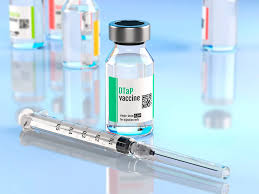

A tetanus vaccine conversation can begin with a childhood record, a prenatal appointment or an unexpected injury. This guide explains the terminology, current guidance and evidence behind those conversations, including where national schedules differ. It is educational information, not an individual vaccination or wound-treatment plan.
Guidance checked October 15, 2026. Ask a qualified healthcare professional to assess your circumstances, and read our medical disclaimer.
What the tetanus vaccine protects against
Tetanus is caused by a toxin made by Clostridium tetani bacteria. Spores in the environment can enter through broken skin, and the disease does not spread directly between people. Vaccination uses tetanus toxoid, an inactivated form of the toxin, to develop protective immunity. WHO recommends a life-course approach that includes an initial series and later boosters. This makes vaccination history important long before an injury happens. Preventing maternal and newborn tetanus also depends on clean childbirth and cord care alongside immunization; a vaccine program is one part of that wider protection. 1
The familiar association with rusty nails is incomplete. The relevant biology is contamination with spores and conditions that allow bacteria to grow, rather than rust itself. A puncture can provide such conditions, but injuries associated with tetanus are not limited to metal objects. Once produced, the toxin interferes with the nervous system’s control of muscles, causing rigidity and spasms. Recovering from tetanus does not reliably produce immunity, so an illness history cannot replace a vaccination history. This also explains why preventing exposure-related disease and treating established illness are different tasks. A reassuring-looking skin surface cannot tell someone what is happening deeper in a wound, and a vaccination record cannot diagnose the cause of new muscle symptoms. 2
Rare disease can still have serious consequences
A CDC surveillance report published in April 2026 documented 402 tetanus cases and 37 associated deaths in the United States during 2009–2023. Those dates describe the observation period, not a forecast of current individual risk. Deaths occurred predominantly among older adults, and incomplete vaccination remained an important finding. Information about vaccination and outcomes was missing for some patients, which limits how confidently percentages can be generalized. The report also identified missed opportunities for recommended prevention after injuries. Its practical lesson is that low national case numbers should not make a wound assessment or an incomplete vaccination record seem unimportant. Population surveillance is useful for showing where prevention is falling short; it cannot tell an individual that a particular injury is harmless. 21
Understanding DTaP, Tdap, Td and combination vaccines
The letters on a vaccination record identify vaccine components, while a brand name identifies a particular licensed product. DTaP, Tdap and Td are therefore not interchangeable labels for every injection that includes tetanus. When reading an old record, copy the entry exactly rather than rewriting it as “tetanus shot.” Retain the date, clinic, brand and any lot number already shown. A photo of the original entry can preserve details that disappear during transcription. This is especially useful when records have moved between countries or when a childhood combination vaccine appears under an unfamiliar name. The clinician can then interpret the actual product and its place in the sequence instead of having to reconstruct both from memory. 4, 10
DTaP products for younger children
Daptacel is an FDA-approved DTaP vaccine for children from six weeks through six years of age, before the seventh birthday. Its licensed course contains five doses and protects against diphtheria, tetanus and pertussis. The age range describes the product’s authorization, not a suggestion to give every eligible child a new course. Previous valid doses still need to be considered. The prescribing information also asks clinicians to review events following earlier pertussis-containing vaccines, including certain high fevers, prolonged crying, collapse-like episodes and seizures. These details matter more than a broad recollection that a previous injection “went badly.” A parent who has an emergency department summary or a previous clinician’s assessment should bring that account so the nature and timing of the event can be reviewed. 8
Infanrix is another FDA-approved DTaP product for the same age range, six weeks through six years, before the seventh birthday. Its label describes a five-dose course and identifies reactions such as injection-site discomfort, redness or swelling, fever, fussiness and reduced appetite. A list of possible reactions does not predict which ones a particular child will experience. The label also warns that some premature infants have had breathing pauses after intramuscular vaccination and calls for an assessment of the infant’s medical condition when deciding timing. That is a reason for pediatric review, rather than a rule that all premature infants should avoid vaccines. Product information helps the clinician distinguish ordinary counseling from a medical circumstance that needs an individualized plan. 9
Tdap and Td products for older age groups
Boostrix is a Tdap vaccine licensed in the United States for booster immunization from age ten onward. Its FDA indication also includes immunization during the third trimester of pregnancy to prevent pertussis in infants younger than two months. Important contraindications include a severe allergic reaction to a relevant previous vaccine or an ingredient, and otherwise unexplained encephalopathy within seven days after a pertussis-containing vaccine. Encephalopathy means a serious disturbance of brain function, not an ordinary headache after an injection. The label’s wording is specific because a vague description of a past reaction can lead to the wrong conclusion. Before receiving this product, a person with such a history needs professional review of what happened, which vaccine was involved and whether another cause was identified. 5
Adacel is a different Tdap product, with an FDA age indication of ten through sixty-four years. Its labeling includes a third-trimester pregnancy indication for infant pertussis prevention and permits repeat use under its stated conditions. Its relevant severe-allergy and post-pertussis encephalopathy contraindications are distinct from the precautions that call for a risk–benefit assessment. For example, a history of Guillain–Barré syndrome within six weeks after a tetanus-containing vaccine or an unstable neurological condition requires careful review. The presence of a precaution does not automatically mean that every future tetanus-containing vaccine is permanently prohibited. Product choice is a clinical decision that combines current recommendations, the authorized age range and the actual history. A brand that was appropriate years ago is not necessarily the product selected at the next visit. 6
Tenivac contains tetanus and reduced diphtheria toxoids, without a pertussis component, and is FDA-approved for people aged seven years and older. That distinction can matter when reviewing an adolescent or adult record: a documented Td dose does not document a Tdap dose. The absence of pertussis also does not make the product free of contraindications or precautions. A severe allergic reaction to an ingredient or a previous tetanus- or diphtheria-containing vaccine remains relevant. Its label additionally addresses previous Guillain–Barré syndrome and Arthus-type reactions, an uncommon form of substantial local immune reaction. A clinician should determine whether a reported swollen arm fits that diagnosis. Simply choosing a product without pertussis is not a substitute for evaluating the original event and the reason vaccination is being considered. 7
Why one childhood injection may have several names
Vaxelis combines protection against diphtheria, tetanus, pertussis, polio, hepatitis B and invasive Haemophilus influenzae type b disease. FDA approves it as a three-dose series from six weeks through four years, before the fifth birthday. Its label makes an easily missed distinction: that three-dose course does not by itself complete the primary pertussis series. Later vaccination still has to follow the appropriate plan. A combination product therefore cannot be understood only by counting needle visits. Each component has a place in its own sequence, and previous doses of other products may matter. When a clinic changes brands or a family moves, the useful question is how the documented combination fits the child’s remaining schedule. The number of diseases named on the label is not a ranking of which product is best for every child. 10
Pentacel combines DTaP with inactivated polio and a Hib conjugate vaccine. In the United States it is approved as a four-dose series for children six weeks through four years old, before the fifth birthday. This example shows why an apparently different entry on a child’s record may still contain a tetanus dose. It also shows why a clinic needs the exact product name: the components and licensed series do not match every other combination vaccine. The Hib component addresses invasive disease caused by Haemophilus influenzae type b; its name does not mean seasonal influenza protection. Families do not need to memorize all the abbreviations to participate in care. They need an accurate record and an explanation of which components were given, which are still due and how the clinic reached that conclusion. 15
Routine schedules depend on age, history and country
Current United States guidance
CDC guidance checked in October 2026 recommends routine DTaP at two, four and six months, fifteen through eighteen months, and four through six years. Routine adolescent Tdap is given at eleven or twelve years. Adults who have never received Tdap need a dose, followed by Td or Tdap boosters every ten years. An incomplete or unknown primary history requires a clinician-led catch-up series. These routine schedules do not replace wound-specific assessment. Product licensing and clinical recommendations are also different documents; catch-up recommendations can include circumstances outside a brand’s routine age indication. 4
A schedule is easiest to understand when the question is stated first. Is the visit intended to start missing protection, complete an interrupted course, provide a routine booster, address pregnancy or assess an injury? Those purposes can lead to different discussions even when the appointment is informally called a tetanus booster. Ask the clinician to identify the purpose in the written record. If two services give apparently different advice, show each the same dates and product names and ask which guidance each is applying. Comparing only the number of years since the last injection can hide the fact that one service is reviewing a complete course while another is looking at an uncertain history.
Examples from other national programs
United Kingdom guidance should be read with the child’s birth date and the current national schedule in view. The current UK schedule includes an eighteen-month six-in-one dose for children born on or after July 1, 2024. Older summaries describing one universal childhood dose count can therefore mislead families. UK advice also distinguishes routine immunization from management of tetanus-prone wounds, and the Green Book directs professionals to updated national advice while its immunoglobulin guidance is revised. The practical point for a family changing practices is to ask which birth-cohort schedule applies and whether the record is complete under that schedule. An internet comparison with a United States booster interval cannot settle a UK wound-prevention decision. 12
Australia’s Immunisation Handbook recommends tetanus-containing childhood vaccination at two, four, six and eighteen months and four years, with an adolescent booster at eleven to thirteen years. Its adult recommendations include a booster at fifty and at sixty-five when more than ten years have passed since the previous dose. Travel circumstances can alter the discussion, particularly where access to health services is difficult or tetanus-prone injuries are more likely. These are Australian recommendations, not a replacement schedule for readers elsewhere. They illustrate why a universal instruction to obtain the same booster at the same birthday would be inaccurate. People planning to live or work abroad should have their existing record interpreted against the destination’s guidance, with attention to both routine prevention and the practical availability of care. 13
Canada’s immunization guidance recommends tetanus-containing childhood vaccination and adult boosters, with Td generally repeated every ten years after the initial series. It also recommends an adult Tdap dose for pertussis protection and Tdap during every pregnancy, ideally between twenty-seven and thirty-two weeks. That preferred Canadian pregnancy window is not worded identically to the United States window. The guide identifies older age, birth outside Canada and missing records as factors associated with inadequate immunity, but these factors cannot establish an individual’s status by themselves. The useful response is a record review that recognizes vaccines received in other countries and identifies actual gaps. Country of birth should prompt careful documentation, not an assumption that a person has never been vaccinated. Provincial and territorial program arrangements also need to be checked locally. 14
When records are missing or a course was interrupted
CDC’s general immunization guidance explains that an extended interval between doses usually does not require restarting a vaccine series. Previously valid doses remain relevant, while doses given too early may need a different assessment. This is why a professional should review actual dates rather than merely count entries. The same guidance recognizes that unnecessarily frequent tetanus-containing doses can increase certain local or systemic reactions. Record retrieval is therefore useful even when a person is willing to have another injection. Mild illness is not usually a reason to miss vaccination, whereas moderate or severe acute illness is a precaution requiring assessment. These general principles help structure a consultation but do not determine the correct catch-up sequence for an individual child or adult. 16
Reconstructing a record often means combining several partial accounts. Childhood clinics, school health services, occupational health departments, maternity services and prior primary-care practices may each hold a different part. Keep the source of every recovered entry visible, especially when a date is approximate or a brand name is unreadable. Do not silently turn an uncertain memory into a confirmed record. Ask the current clinic to explain what it has accepted, what remains uncertain and where the reconciled version will be stored. A portable copy is useful if care is later transferred. This is a documentation task rather than a test of whether someone remembers childhood appointments correctly; gaps in paperwork should be handled without blame.
What changes after a wound
Under current CDC wound guidance, people with a complete primary series generally need a tetanus-containing vaccine when the last dose was at least ten years ago for a clean, minor wound, or at least five years ago for a dirty or major wound. Unknown, absent or incomplete vaccination history calls for vaccination for any wound. Dirty or major wounds include punctures, contaminated injuries and wounds with damaged tissue. Wound cleaning and removal of foreign or dead material require appropriate care. Antibiotics are not recommended solely to prevent tetanus, although an infected wound may need antibiotics for that infection. 3
Tetanus immune globulin, or TIG, is never indicated for a clean, minor wound under CDC guidance. For dirty or major wounds, it is indicated for people with unknown, absent or incomplete primary vaccination, and for people with HIV or severe immunodeficiency regardless of vaccination history. TIG neutralizes circulating toxin but cannot remove toxin already bound to nerves. 3
Immune globulin and vaccine serve different purposes
HyperTET is a human tetanus immune globulin product licensed for prevention after injury when immunization is incomplete or uncertain. It supplies antibodies obtained from screened human plasma rather than asking the body to generate its own response to a toxoid vaccine. Its prescribing information describes donor screening and manufacturing steps intended to reduce pathogen transmission, while acknowledging that the risk cannot be eliminated completely. This is a professionally administered medical product, not something to select or inject at home. If it is part of a wound plan, ask the treating team to explain its purpose and how the vaccination record will be updated separately. Receiving immune globulin should not be recorded simply as another tetanus vaccine dose, because those entries describe different interventions. 11
During an injury visit, make it clear whether the available vaccination information is documented or remembered. Tell the clinician when and how the injury happened and describe any care already received. If another service has assessed it, share that assessment rather than starting with an incomplete account. Before leaving, obtain the wound-care instructions and any vaccination follow-up in writing, including a contact route for problems. A later clinician should be able to understand what was assessed and what was actually given. If the discharge paperwork uses an unfamiliar abbreviation, ask for it to be expanded. Clear records matter here because an emergency encounter and an ordinary preventive-care visit may take place in different systems.
Tetanus-containing vaccination during pregnancy
In the United States, CDC recommends Tdap during each pregnancy, usually at twenty-seven through thirty-six weeks and preferably early in that window, to protect the young infant against pertussis. If Tdap is needed earlier for a clinical reason, it is not repeated later in the same pregnancy. A wound assessment should not be postponed to fit a routine prenatal window. 4
What pregnancy research can and cannot show
A randomized trial led by Munoz studied forty-eight pregnant participants who received Tdap or placebo during pregnancy, with the alternative intervention after delivery. Investigators followed mothers and infants and measured antibody responses. They reported no vaccine-associated serious adverse events and found higher early infant pertussis antibody concentrations after vaccination during pregnancy. This was a small preliminary trial, so it could not reliably detect very rare events or answer every question about every pregnancy. Its value lies in the controlled comparison and measured immune responses. The study’s gestational timing is a research detail, not an instruction to replace today’s national recommendations. When discussing maternal vaccination, keep the purpose clear: evidence about early infant pertussis protection is not a claim that the newborn has completed its own tetanus-containing vaccine series. 24
Donegan and colleagues examined UK pregnancy records for 20,074 women who received a pertussis-containing combination vaccine. Their observational study found no evidence of increased risk across a predefined set of pregnancy outcomes, including stillbirth, compared with the specified historical comparisons. Observational research can include many more people than an early trial, but differences between groups and incomplete records still affect interpretation. The study supports the broader safety assessment without proving that every event after vaccination is unrelated or that any medical intervention has zero risk. It also studied a particular program and product context. A reader should not transfer every detail of that study to a different brand or country. Current pregnancy advice draws on a body of evidence rather than one reassuring result alone. 25
Side effects, contraindications and safety monitoring
Ingredients and product-specific questions
FDA explains that vaccine ingredients have different jobs. Aluminum salts can act as adjuvants that strengthen the immune response; stabilizers help maintain a product; and small residual amounts of substances used during manufacturing may remain. Evaluating an ingredient requires attention to its amount, purpose and route of exposure, not just whether its name also appears in an industrial setting. FDA assesses ingredients as part of the complete vaccine. This does not remove the need to disclose a known serious allergy or to check the specific product being offered. Ingredients differ between formulations, so a generic internet list may not describe the actual vaccine at the clinic. Ask the clinician or pharmacist to use the current product information when explaining a relevant allergy or an unfamiliar ingredient. 27
A painful arm and anaphylaxis are different clinical problems. CDC’s tetanus vaccine information describes soreness, redness or swelling and sometimes fever or tiredness after vaccination. Breathing difficulty, swelling of the face or throat, or collapse requires emergency help. An adverse event should be assessed on its own features rather than dismissed because it happened after a routine injection. 2
Needle-related stress deserves practical support
WHO’s guidance on immunization stress-related responses recognizes that symptoms can arise around the vaccination process itself. Stress responses may occur before, during or after an injection, and they do not have the same mechanism as an allergic reaction. A history of fainting or intense needle fear is useful information for the vaccination team. Tell the clinic before the procedure so staff can provide a suitable setting and decide how to reduce the risk of injury. A calm explanation, privacy and an opportunity to ask questions can make the encounter more manageable. Staff still need to assess concerning symptoms rather than automatically attributing them to anxiety. The goal is to take the experience seriously while distinguishing the possible causes and responding appropriately. 17
Evidence about repeated Tdap doses
Jackson and colleagues studied 68,915 nonpregnant adolescents and adults in the Vaccine Safety Datalink who had previously received Tdap. The comparison involved people receiving another Tdap dose and those receiving Td. Investigators did not find significantly higher rates of the selected medical-visit outcomes in the repeat-Tdap group. Those outcomes included several neurological diagnoses and local reaction-related visits. This is useful evidence about repeat vaccination in the population studied, but it is not a guarantee against every possible reaction. It was an observational analysis and did not include pregnant participants. Its results should support professional assessment, not encourage extra doses outside an indicated schedule. A study showing acceptable comparative safety addresses a different question from whether a particular person currently needs another dose. 26
Reporting a problem and understanding a report
The United States Vaccine Adverse Event Reporting System, VAERS, accepts reports from patients, caregivers and healthcare professionals even when the cause of an event is uncertain. Reports help identify unusual patterns that warrant closer investigation. A report alone does not establish that a vaccine caused the event, and the system does not replace clinical care. Public counts are therefore not a straightforward measure of how often a vaccine causes a particular condition. Reporting behavior, missing information and other limitations affect what can be inferred. If a concerning event occurs, seek appropriate medical assessment and keep a clear timeline, the product information and relevant records. Reporting and diagnosis can proceed as separate tasks: uncertainty about causation should not prevent a concern from being documented. 18
The United States also has a National Vaccine Injury Compensation Program administered through a process described by HRSA. It addresses eligible claims involving covered vaccines and is separate from VAERS safety reporting. Eligibility depends on requirements that include the vaccine, circumstances, severity and filing rules; submitting a report to a safety system is not the same as filing a compensation petition. The program does not guarantee that every illness following vaccination qualifies. Someone considering a claim should consult the current official information and obtain appropriate advice about their situation. This administrative route should never delay medical evaluation of symptoms. Keeping the vaccination record and clinical documentation makes it easier to describe the concern accurately, whichever clinical or administrative process is relevant. 19
How long does protection last?
Antibody studies are informative, but not personal clearance
Hammarlund and colleagues measured tetanus and diphtheria antibodies in 546 adults in a cross-sectional study. Most participants had antibodies above the study’s protective threshold, and mathematical modeling suggested long persistence after vaccination. This helps explain why researchers debate the best interval for adult boosters. However, a cross-sectional study compares people observed at a point in time; it does not follow every person through every later exposure. A modeled population estimate cannot establish that a specific reader with missing records is protected today. Antibody thresholds, vaccine history and the population studied all matter when interpreting the findings. The paper is evidence for policy discussion, not a replacement for the current schedule in a reader’s country or for professional assessment of a wound. 22
A separate study by Slifka and colleagues compared tetanus and diphtheria incidence across North American and European countries using reported cases from 2001–2016. It found no significant reduction in tetanus incidence associated with countries having routine adult booster policies. A correction published in 2025 revised elements of the analysis without changing its conclusions. This was a population-level observational comparison, not a randomized test of withholding a booster after an injury. Countries can differ in childhood coverage, reporting, healthcare access and the people who remain unprotected. The finding supports examination of national policies but does not identify an individual’s immunity or resolve an urgent clinical decision. Readers can acknowledge this research while still using current local recommendations. Scientific debate about an optimal population schedule is compatible with careful prevention for people whose own vaccination history is incomplete or uncertain. 23
When a headline says protection “lasts decades,” look for what was actually measured. Was the endpoint an antibody concentration, a reported disease case, an adverse event or a modeled projection? Those outcomes answer different questions. Also check whether the article is describing a trial, an observational study or a national recommendation. A research paper may reasonably argue for a policy change without that change having been adopted. Dates matter for the same reason: an older paper can remain scientifically useful while its description of available products has become outdated. Bringing the source to a clinician is more productive than treating a short headline as a complete instruction. Ask how the evidence applies to the particular decision being made.
Making vaccination easier to access and document
For eligible United States children eighteen years and younger, the Vaccines for Children program supplies recommended vaccines through enrolled providers. Eligibility includes Medicaid eligibility, lack of insurance, certain underinsurance and American Indian or Alaska Native status. Underinsured children generally need an eligible health-center setting, so the location matters as well as the coverage. The vaccine itself is provided without charge, although a visit may involve other fees. A participating provider cannot refuse an eligible child’s vaccination because the family cannot pay the vaccine administration fee. Ask the clinic which services are covered before the appointment and whether it participates in the program. These rules concern a specific US program; they should not be presented as a universal promise of free vaccination for every person or country. 20
For any vaccination visit, clarify the practical pathway before relying on an appointment. Ask whether the service treats the relevant age group, can review an incomplete record and has the product or assessment capability being requested. If there is a referral, find out whether it has been received and which service will contact you. Separate questions about the vaccine charge from questions about consultation fees or insurance paperwork. Keep a copy of the final record somewhere you can find again, and ask how corrections can be made if an entry is inaccurate. The purpose is continuity: the next professional should be able to see what happened without making you rebuild the story from the beginning.
| Topic | Question to ask | Record to keep |
|---|---|---|
| Previous vaccinations | Which entries have been accepted? | Dates and product names |
| Purpose of this visit | What decision are we making today? | The clinician’s assessment |
| Past reaction | What does the earlier medical record show? | Timing and clinical summary |
| Next step | Who will arrange it? | Contact and appointment details |
Frequently asked questions
Is TIG the same as a tetanus vaccine?
No. TIG supplies antibodies; a tetanus vaccine stimulates an immune response. 11
Can an interrupted vaccination series be continued?
Often yes. A delayed series generally does not need restarting, but a clinician should check the previous dates and doses. 16
Does a VAERS report prove a vaccine caused a problem?
No. VAERS collects reports for safety monitoring; a report alone does not establish causation. 18
What should I bring to a vaccination appointment?
Bring available vaccination records, details of earlier reactions, your medicine list and the questions you want answered.