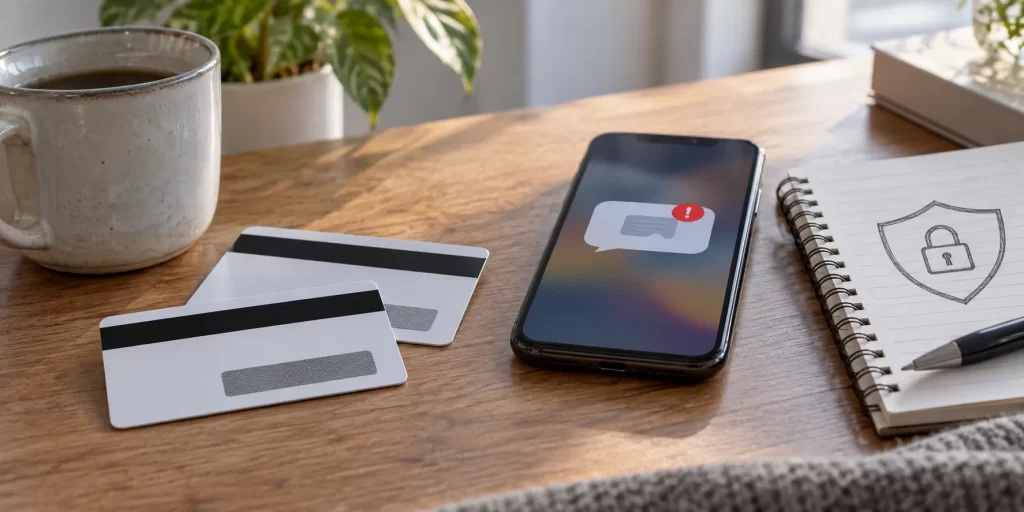
Gift cards are useful when you choose to give one to someone you know. They are a warning sign when a stranger, supposed official, employer, seller or new online acquaintance tells you to buy a card and send its number or PIN. The card then functions as a hard-to-reverse payment, not a gift. A scammer can spend the balance remotely while you still hold the plastic. You do not need to decide whether the caller’s story sounds convincing; the requested payment method is enough reason to stop.
This guide explains how gift-card scams work, the pressure tactics used in different settings, practical verification steps and what to do if you shared card details. It focuses on US reporting routes because the Federal Trade Commission’s gift-card guidance provides an authoritative process and issuer contact list. Readers elsewhere should also contact the issuer and local consumer-protection or police agency. A refund is sometimes possible but never guaranteed, so speed and evidence preservation matter.
A gift card is for a gift, not a demanded payment
A real gift means you decided to transfer value to a person who can use that retailer’s card. A scam demand is different: someone asserts that a tax bill, fine, utility balance, computer repair, job requirement, rent deposit, prize fee or emergency must be settled by buying a particular card. They may insist on a brand unrelated to the supposed debt. The FTC says legitimate businesses and government agencies do not direct people to buy gift cards to pay them. You can end the conversation as soon as that request appears.
Do not let the caller redefine the payment as a verification, temporary hold, refundable security step or safe-account transfer. These labels do not alter what happens when you disclose the card number and PIN: a stranger gains control of its value. A scammer may ask for a photograph of both sides, a receipt or a screen-share view instead of reading the number aloud. Those routes can reveal the same credentials. Do not provide them to an unexpected contact.
Gift cards are legitimate consumer products, and some stores accept their own cards for normal purchases. The warning is not that every card transaction is fraud. It is the instruction from another person to buy a card as a substitute for an ordinary payment or to reveal the redemption credentials. If uncertain, pause and contact the organization through a number you found independently. A real organization can verify a bill without forcing you to stay on the call while you shop.
How a scam turns a message into a loss
First comes contact: a call with a spoofed caller ID, a text appearing to come from a known company, an email mimicking a manager, a marketplace chat or a social profile using a familiar picture. The attacker supplies a reason to act before checking: service will be shut off, a loved one is in trouble, an account is frozen, a prize expires or a job offer will disappear. The deadline is part of the manipulation, not proof of the story.
Next comes the purchase instruction. The scammer may name a card brand, amount, shop and even several shops. They may keep you on the line while you travel. If a cashier asks questions, the scammer may coach you to say the cards are family gifts. A genuine payee has no reason to conceal the purpose of payment from a cashier. Do not buy more cards because you already bought one; a sunk cost is not an obligation to continue.
Finally the scammer collects the code or PIN. A clear photograph is often equivalent to reading it aloud. The FTC warns that sharing those details can let someone take the balance even though the card stays in your hand. An issuer may sometimes freeze an unspent balance or investigate a refund, which is why quick reporting matters. But it is unwise to promise yourself or anyone else that the funds will be recovered.
Recognize the pattern, not just the story
Urgency, secrecy, an unusual payment method and a request for credentials form a useful four-part check. “Do this in ten minutes” denies you time to think. “Do not tell your spouse, supervisor or cashier” isolates you from a second opinion. “Buy retail cards instead of using our normal checkout” bypasses an ordinary invoice. “Send a photo of the number and PIN” transfers the value. One sign is enough to pause; several together strongly indicate fraud.
A familiar name, logo, phone number or voice is not independent proof. Caller ID can be spoofed. Email display names and profile images can be copied. A voice recording can be replayed or imitated. End the interaction and start a new one through a trusted channel. For a bank or utility, use its official app or a number on a genuine statement. For a family emergency, call the person or a close relative using an existing contact, not a number in the alarming message.
People often say the caller knew their name, address or last purchase. Such facts may come from public profiles, data breaches or earlier contact. They make a story persuasive but do not establish authority to collect payment. Consider what the real organization would do: issue an account-specific notice, provide a documented dispute route and accept payment through its own channel. If the answer is instead “buy cards at a supermarket and give me the codes,” stop.
Government, tax and police impersonation
A person may claim to represent a tax office, court, police department, immigration authority or consumer-protection agency. The script might mention an arrest warrant, unpaid tax, visa issue or fine, sometimes alongside a badge number and transferred calls. None makes a gift-card demand legitimate. The FTC explicitly warns that government agencies do not demand immediate payment by gift card. Hang up without debating the alleged charge or confirming personal details.
If the claim worries you, visit the real agency’s website by typing its address yourself or use a verified number from an earlier letter. Ask whether there is an actual case or bill. Do not call the number in the suspicious message, because it may lead to the same group. Save the caller’s number and message for a report, but do not treat caller ID as a reliable identifier. A genuine notice and independently verified account are stronger evidence than a threatening tone.
Even if a person truly owes a balance, they should verify the amount and approved methods before paying. If you disclosed more than gift-card details, such as a government ID number, banking credentials or identity document, address those exposures separately. The FTC’s post-scam action guide distinguishes steps for different payment types and compromised information. The card report alone will not protect an exposed account.
Utilities, deliveries, account security and tech support
A utility imposter may threaten to disconnect power today unless you buy cards. A delivery imposter may demand a release fee. An account-security imposter may say a purchase must be canceled or money moved to safety. All try to keep you in one controlled conversation while you rush toward a retail purchase. End the call and check the account in the provider’s real app or website. Do not follow a link sent in the message that caused the alarm.
Tech-support fraud adds a device risk. A caller or pop-up may claim your computer is infected, request remote control and then demand gift-card payment. Do not grant access. A browser pop-up with an alarming number is not a trustworthy operating-system diagnosis. If access was already granted, disconnect the device, consult a trusted support provider, change passwords from a clean device and review affected accounts. Reporting the cards alone will not secure the computer.
Another script claims a refund was accidentally too large and asks you to return the difference with cards. A displayed balance or screen-share animation can be manipulated. Verify any refund in your actual bank or merchant account, outside the caller’s control. A company with a genuine accounting error has a documented correction process. It does not need card codes bought under pressure.
Family emergencies, friendship and romance
A text from a child, grandchild or friend may ask you to keep a crisis secret and immediately send cards. It may arrive from a new number with an explanation that the usual phone broke. Treat it as unverified even if it includes a familiar name or detail. Call the person through a saved number, contact another family member or ask a question that cannot easily be inferred from a public profile. If you cannot reach them immediately, do not pay while checking.
Romance and friendship scams may develop over weeks. A card request can appear as help with food, travel, medical care, a locked bank account or a child’s birthday. The relationship makes the payment seem less strange, but you should not transmit value through a remotely redeemable code to someone whose identity and circumstances are not independently verified. A video call and photographs alone do not prove need or honesty.
Be respectful when helping someone caught in this situation. Shame can discourage disclosure and delay reporting. Ask open questions: Who requested the cards? Which number or account contacted you? Were codes shared? Are receipts available? First stop further payments and contact the issuer, then check whether any accounts were accessed. Calm support is more useful than insisting that the person should have known better.
Jobs and fake requests from a supervisor
A fake recruiter may say an applicant must buy cards to activate a job account, pay for equipment or finish a test. Another script sends a counterfeit check and asks the applicant to buy cards with part of the deposit. Funds may appear available before a bank later determines the check is fraudulent; temporary availability is not final clearance. A genuine employer should have a transparent hiring process and should not collect gift-card codes as a condition of work.
At work, an attacker may impersonate a supervisor in email or chat: “I’m in a meeting; buy several cards for clients and send photos of the codes.” The message exploits a new employee’s wish to help and may copy a real name and avatar. Verify an unusual purchase using an existing company number or in person, not by replying in the suspicious thread. Organizations should make such verification routine rather than embarrassing.
The site’s job-scam guide covers related recruitment warning signs. For the specific gift-card demand, the decision is immediate: do not buy or transmit codes. Preserve the job posting and messages, report the account to the platform and contact the claimed employer through its independently found website if further verification is needed.
Marketplaces, prizes and online fees
A marketplace seller who wants a gift-card code before handing over an item is pulling you away from normal payment protections. A supposed buyer may tell a seller to buy a card to upgrade a payment account or release a transfer. Do not rely on screenshots of payment or links to unfamiliar payment pages. Use the platform’s actual checkout and dispute process. If the payment method changes abruptly, pause the transaction.
Prize scams say you won a sweepstakes, grant or benefit, but first must pay a processing fee with a card. Ask whether you entered and whether the organizer can be verified. Even if a real prize has tax implications, a stranger’s demand for retail gift cards is not how to resolve them. The FTC identifies prize-fee requests as a common gift-card scam. Do not send a small “refundable fee” as a test of authenticity.
Rental and property fraud can use the same method for an application fee or reservation deposit. Verify the property and the person authorized to rent it, inspect through safe channels and use a documented payment route. The site’s real-estate scam guide explains forged listings and other payment diversions. A request for gift cards is a reason to stop, not an alternative to broader checks.
A four-step verification routine before paying
First, interrupt the script. Say you will verify independently, then hang up, leave the chat or close the page. You do not need the caller’s permission. Do not click the verification link they supply. The pause matters because scams depend on keeping you in one controlled conversation from first warning to code delivery.
Second, identify the real entity. For a utility, use a prior bill or official app. For a manager, use the company directory. For a relative, use a saved family contact. Ask a narrow question: Is there a genuine bill, request or emergency? Avoid volunteering new personal details to the organization until you have verified that you reached the real one.
Third, compare the proposed method with the legitimate channel. A bill normally carries an account number and approved options. A marketplace has checkout tools. An employer can explain equipment purchases and reimbursement in writing. If the only allowed route is buying retail cards, the request fails this check. Do not let a promise of later reimbursement override it.
Fourth, ask a trusted person to review the demand. Reading it aloud often shows how much is pressure rather than evidence. Help an older adult or teenager contact the real institution without taking over their finances. The repeatable habit is stop, verify through an independent channel, then decide. It also helps with other payment methods covered in the financial-scam prevention guide.
If you bought the card but have not sent the code
Do not send a photo or read the number merely to confirm the purchase. Buying the card does not oblige you to continue. End contact with the person who demanded it. Keep the card and receipt secure. If you check the balance, use only the issuer’s official site or the genuine number printed on the card or packaging. A balance-check website supplied in the suspicious conversation might itself steal the code.
Ask the retailer or issuer about its return policy, explaining that you were pressured into a suspected scam but did not disclose the credentials. Policies vary and activation may limit returns. Even if a return is unavailable, an unused card is safer than one controlled by a criminal. If you paid by credit card, ask the card provider about relevant protections, but do not assume that a legitimate purchase from a retailer automatically becomes reversible because the intended recipient was dishonest.
Check whether you disclosed other information: address, account login, one-time code or remote access. Address each exposure directly. Change an account password through the real service, revoke sessions, contact your bank or follow official identity-protection advice as appropriate. Keeping the card code private solves one problem, not necessarily every consequence of the approach.
If you shared the number or PIN, act in order
Contact the gift-card issuer immediately. Explain that the card was used in a scam and ask whether any remaining balance can be frozen or refunded. Have the card, receipt, purchase date, amount and serial details ready. The FTC lists contact routes for major issuers; you can also use an independently verified issuer site. Never use a service number supplied by the scammer. Report even if time has passed.
Then report at ReportFraud.ftc.gov. State how contact began, the story told, cards purchased, when codes were shared and what else was exposed. If contact occurred online, report the account to the platform and consider the FBI Internet Crime Complaint Center in the US when applicable. A report can help identify patterns, but does not itself guarantee a refund or a personal case update.
Preserve evidence before blocking the account: screenshots, email headers if available, usernames, phone numbers, receipts, card packaging, transaction records and a short timeline. Do not publish full card numbers or personal data online. If the scammer gained account access, change passwords from a trusted device and notify the affected provider. If money came from a bank account or credit card, inform that institution too and accurately describe which transaction you authorized.
Consider a local police report when a large sum or identity information is involved, or if the bank or issuer asks for documentation. Routes depend on where you live and what happened. If someone later promises guaranteed recovery for an upfront fee, do not pay. The FTC’s recovery-scam guidance explains how criminals target a victim again after a loss. A stranger’s promise to retrieve the money in exchange for another gift card is not a remedy.
What a refund request can and cannot do
An issuer may stop redemption if the balance has not been spent or investigate whether funds can be recovered. The FTC notes that some gift-card companies have frozen fraudulent balances and returned money. Ask promptly and clearly for a refund. However, there is no universal right to reverse a code that has already been redeemed. Outcome depends on issuer, timing, transactions and applicable rules.
Keep the case number, date, representative and next steps. If the first support channel does not accept fraud reports, ask for the fraud team or use its published online route. Do not send the sensitive card details to random websites or social-media accounts posing as support. If asked for a receipt, use the issuer’s secure official process. Documented follow-up is better than repeatedly calling a number found in a comment.
Avoid sweeping claims. “Gift-card money is always gone” could discourage a time-sensitive report. “The bank will definitely refund it” creates false hope. The sound advice is narrower: stop further loss, contact the issuer, ask about freezing or returning funds, report fraud and secure exposed accounts. Pursue every legitimate route while keeping expectations realistic.
Buy gift cards safely for their intended purpose
When you genuinely want to give a card, use a trusted retailer or the issuer’s official site. Inspect physical packaging for damage, missing seals or an exposed PIN. The FTC warns that a criminal may record numbers before purchase and drain a newly loaded card; bring tampering to the retailer’s attention and choose another card. Keep the receipt and a secure copy of relevant purchase information in case you must prove ownership.
For digital cards, check the retailer URL and recipient address before paying. A typo can deliver a real gift to the wrong person, while a fake storefront may never provide a valid code. Avoid online auction offers and unsolicited discounts that could involve stolen or invalid cards. Explain to a child that a card number is like cash and should not be shared with someone in a game chat or social message.
After purchase, check that it activates at the expected value and deliver it through a channel you trust. Some retailers provide separate activation details on a receipt. Preserve that receipt until the recipient confirms use. These ordinary precautions do not make gift cards inherently unsafe. They help make sure value reaches the intended person. The critical distinction is who initiated the purchase and whether someone is collecting the redemption credentials under pressure.
Worked examples: a safer next action
Electricity cutoff. A caller says a shop’s power will be disconnected in an hour unless its owner buys three cards. The owner should end the call and check the utility account through the genuine portal or a number on a prior bill. If there is a real balance, pay through an approved channel after verification. The deadline story is not evidence that gift cards are accepted.
Message from the boss. A new employee gets an email using a supervisor’s display name, requesting client gifts and code photos. The employee should verify through an established company number or in person, not by replying to the email. The organization should alert its security team in case coworkers received the same message. The possibility that client gifts are normal does not authenticate this instruction.
Relative in trouble. A text from an unfamiliar number says a family member lost a phone and needs a card immediately. The recipient calls the relative’s saved number or a known family member. If the emergency is real, the family can choose suitable help after confirming facts. Anger from the sender when asked to wait is a reason to continue verifying, not to rush.
Code already sent. Someone shared photographs of two cards twenty minutes ago. They should contact both issuers at once, ask to freeze unspent value and request refunds, preserve receipts and messages, and report fraud. They should review whether passwords or accounts were also exposed. Arguing with the scammer or waiting for a promised refund wastes time. Fast action can matter, though no helper should guarantee recovery.
Help families, learners and workplaces reduce risk
Teach a short rule before a crisis: nobody gets a gift-card code because they claim a bill, prize, job, emergency or account problem requires it. Practice the response: “I will verify this independently and call back through the official number.” People can know scams exist but still freeze when threatened with arrest or disconnection. A rehearsed sentence offers a way out without debating every claim.
At home, agree to verify unexpected money requests from relatives through another channel. At work, specify who approves card purchases and require confirmation outside the email or chat where the request arrived. A cashier who notices repeated large purchases can ask a calm question and point to consumer guidance. None requires identifying a perfect scammer profile; each interrupts the payment path.
If someone was deceived, offer practical support rather than blame. Sit with them while they contact the issuer, gather receipts and file reports. Ask whether the scammer knows passwords or controlled a device. Help them tell another trusted person so the incident does not remain secret. Fraudsters manufacture fear and isolation; a supportive response can prevent a second payment or a later recovery scam.
Key takeaway
A gift card is not an emergency-payment system. If someone directs you to buy one and provide its number, PIN or photograph, stop and verify the claim through an independent channel. If a code was shared, contact the issuer immediately, ask about a freeze or refund, preserve evidence, report fraud and secure any exposed accounts or devices. The FTC’s guidance is an authoritative starting point for US issuer contacts. These steps cannot guarantee recovery, but they can stop further loss and give investigators the best available information.