
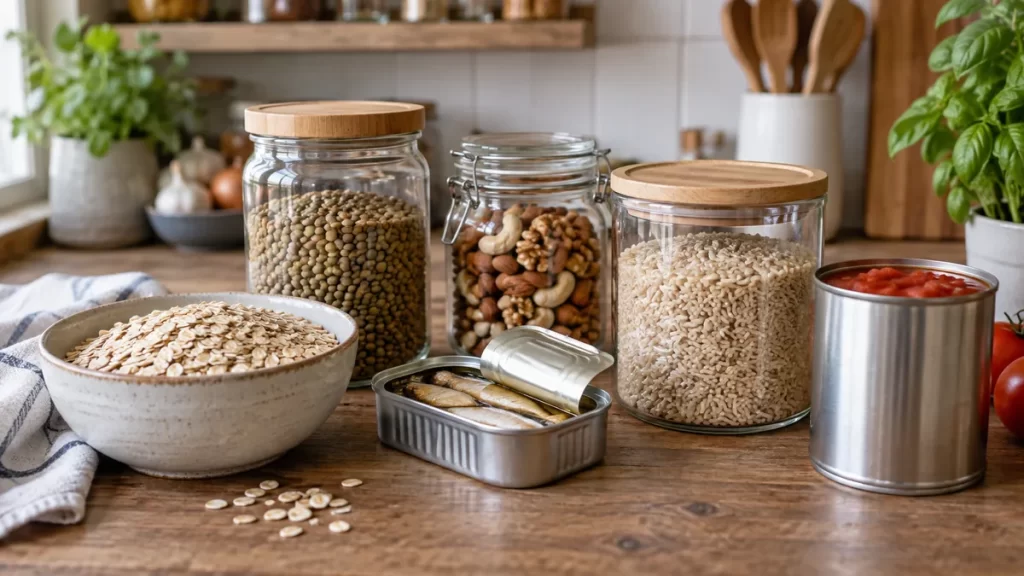
A useful pantry makes balanced eating easier
The most helpful pantry for a weight goal is not a shelf of special “diet” products. It is a collection of ordinary ingredients that makes a satisfying meal possible when time, money, or energy is limited. Oats, beans, canned fish, nuts, whole grains, and canned tomatoes can be combined with fresh or frozen produce in many ways. They are convenient, generally versatile, and easy to keep on hand. None of them causes weight loss by itself. The value lies in how the foods help you build an eating pattern you can maintain.
This guide is for adults looking for practical meal ideas, not a personal treatment plan. Weight is influenced by many factors, including health conditions, medicines, sleep, activity, access to food, and genetics. A pantry cannot solve all of those. The National Institute of Diabetes and Digestive and Kidney Diseases (NIDDK) emphasizes a healthy eating plan that fits your preferences and can be followed over time, alongside physical activity and realistic goals. If weight management is medically relevant to you, a clinician or registered dietitian can help tailor the approach. If you have a history of disordered eating, are pregnant, or manage a condition that changes your nutrition needs, individualized advice is particularly important.
The six staples below are categories, not a compulsory shopping list. Choose versions you enjoy and can afford. Build around your culture’s familiar meals. If canned fish is not appropriate, use another shelf-stable protein. If oats do not suit you, choose another whole grain. The central idea is to reduce the gap between “I need to eat” and “I can assemble a balanced meal.” For a broader look at preparation, Sly Academy’s meal-prep ideas for everyday routines offer another starting point.
What weight goals have to do with everyday meals
Weight change is often described as a simple arithmetic problem, but real life is more complicated than a single calculation. Energy intake and expenditure matter; so do hunger, food availability, sleep, routine, medications, and the ease of repeating choices. An ingredient that makes lunch easier can help a person stick with an overall plan, even though that ingredient has no special metabolic power. Thinking in terms of meals and habits is generally more useful than looking for a “fat-burning” food.
NIDDK describes successful weight-management programs as having realistic goals, a healthful eating plan, activity, support, and strategies for maintaining changes. That does not require every meal to look the same. It does suggest that extreme restrictions or promises of quick results deserve skepticism. The current U.S. Dietary Guidelines provide population-level advice about dietary patterns; they do not prescribe a single pantry or guarantee a personal outcome. Use those recommendations as context, not as a verdict on individual foods.
A simple meal-planning question is: where will the vegetables or fruit, a protein source, and a satisfying grain or other starch come from? Some meals will have all components; others can be balanced across the day. Pantry staples are especially useful for the protein and grain parts, while frozen vegetables, fruit, eggs, yogurt, or fresh produce can complete the plate. Flavor matters too: herbs, spices, lemon, vinegar, garlic, and a little oil can turn inexpensive basics into food you actually want to eat.
Portions still matter, particularly for energy-dense foods such as nuts and oils. But portion awareness is different from labeling foods “good” or “bad.” The FDA’s Nutrition Facts label is a practical tool for comparing serving sizes, sodium, fiber, protein, and other nutrients across brands. A labeled serving is a reference amount, not an instruction about how much you must eat. Your portion may differ; the label helps you interpret what is in it. Read both the amount per serving and the number of servings in the package before drawing conclusions.
1. Oats: a flexible whole-grain base
Plain rolled oats or quick oats are inexpensive in many markets and can be used for more than breakfast. They are whole grains and provide fiber. Their main advantage here is flexibility: a bowl can take fruit and yogurt, or an unsweetened savory topping; oats can also thicken soups and make a homemade bean patty easier to shape. Instant packets can be useful too, but flavored versions may include added sugar and cost more per portion. Compare labels and choose according to your preferences, not a blanket rule that one format is forbidden.
For a simple breakfast, cook oats with water or milk, then add fruit and a protein-containing food such as yogurt, milk, seeds, or an egg on the side. Oats alone may not satisfy everyone until lunch. Combining them with protein and produce creates a more complete meal. Overnight oats can be convenient when mornings are rushed: mix oats with milk or yogurt, refrigerate in a covered container, then add fruit before eating. The food should be refrigerated, rather than left on a counter overnight.
The same oats can be savory. Cook them in water, add tomatoes or leftover vegetables, and finish with an egg, beans, or fish. This is not a requirement to give up a sweet breakfast. It is a way to use one ingredient in different meals so the package does not sit untouched. If texture is the obstacle, adjust liquid and cooking time or try a different cut. Steel-cut oats take longer; quick oats soften faster. Either can fit a balanced pattern.
An example illustrates why combinations matter. A small bowl of plain oats eaten quickly may leave someone hungry; a larger bowl with fruit, milk, and nuts may feel more substantial but also contains more energy. Neither is automatically the correct portion. Consider your appetite, activity, and the rest of the day. Rather than copying a fixed number from a social-media meal plan, use the package label and your own hunger cues, and seek individualized guidance when appropriate.
2. Beans and lentils: an affordable protein-and-fiber option
Canned beans and dry lentils are among the easiest ways to make a meal more substantial without depending on a fresh meat purchase. Beans, peas, and lentils are recognized in public nutrition guidance as protein foods and as part of vegetable choices. They also supply fiber. Black beans, chickpeas, kidney beans, and lentils have different textures and fit different cuisines, so choose a type that works in your regular cooking. Dry beans need soaking or careful cooking according to the type; canned beans are ready to heat after draining.
A quick lunch can start with canned beans, canned tomatoes, and frozen vegetables, warmed with cumin or another familiar spice. Add rice or a whole-grain wrap if available. Another option is a bean salad with chopped vegetables, a little oil, vinegar, and herbs. A soup can be made from lentils, tomatoes, water or stock, and onions or frozen vegetables. These combinations are useful because they are complete meal frameworks, not isolated “healthy” ingredients requiring extra effort.
Check the sodium on canned-bean labels if you are comparing brands or following advice to limit sodium. “No salt added” and lower-sodium products are options, but availability and cost vary. Draining and rinsing regular canned beans can reduce some sodium; the American Heart Association recommends this as a practical step. It does not turn a bean meal into a medical treatment, and it is not mandatory if flavor or access makes another choice more realistic. If a product contains sauce, rinsing may remove the flavor you wanted; compare alternatives instead.
Some people experience digestive discomfort when suddenly increasing legumes or fiber. Smaller servings and gradual changes may be easier to tolerate. Cooking dry legumes properly, drinking enough fluid, and varying the types may also help. Persistent or severe symptoms call for clinical advice rather than a social-media workaround. People with kidney disease or other conditions may need an individualized plan for portions or nutrients, so a general article should not prescribe one serving to everyone.
Beans can replace part of the meat in a chili, pasta sauce, or stew without changing the whole recipe. That is a useful budget and preparation strategy. It can also make leftovers easier to stretch. Keep one or two varieties you reliably use instead of collecting many cans for an idealized menu that never happens. For more on why meals built around satisfying foods can be easier to sustain, see Sly Academy’s guide to foods and fullness; evaluate any individual claim there against your own needs and professional advice.
3. Canned fish: a quick protein when it suits you
Canned salmon, sardines, and canned light tuna can turn a grain-and-vegetable bowl into lunch in minutes. They require no cooking before use when the package is intact and stored according to its label. Fish supplies protein, and some varieties provide beneficial fats. The FDA and EPA fish advice is helpful for choosing species with lower mercury, particularly for people who are pregnant or may become pregnant, breastfeeding, and children. Canned light tuna, salmon, and sardines are among lower-mercury choices in that guidance; albacore tuna is a different category. Variety matters, and individual advice may differ.
A practical meal is a rice bowl with canned salmon, cucumber or frozen vegetables, and a lemon-yogurt dressing. Another is a tomato-and-sardine sauce over whole-grain pasta. For a no-cook option, combine canned fish with beans, chopped tomatoes, and herbs. These are examples rather than rules: season to taste, and check a product’s sodium if that is a concern. Fish packed in water and fish packed in oil both have uses; compare labels and choose a version that works for the dish and your overall eating pattern.
Seafood is not essential to this pantry strategy. Allergies, religious practice, vegetarian diets, taste, and price are valid reasons to choose something else. Beans, lentils, shelf-stable tofu where available, eggs kept according to their storage directions, or other suitable proteins can fill the same meal-building role. Do not force an ingredient into the plan merely because an article calls it a staple. A good staple is one you can safely use and will actually eat.
The packaging matters more than clever recipes if a can is damaged. USDA food-safety guidance says not to use cans that are bulging, leaking, badly dented, or otherwise show signs of spoilage. Keep shelf-stable cans in a cool, dry place and refrigerate leftovers promptly after opening in an appropriate covered container. Follow product instructions, especially for items sold refrigerated rather than genuinely shelf-stable. An ingredient is not a bargain if it is unsafe or wasted.
4. Unsalted nuts and seeds: flavor in a measured amount
Peanuts, almonds, walnuts, pumpkin seeds, and sunflower seeds can add texture and flavor to oats, salads, vegetable bowls, and yogurt. Nuts and seeds can supply protein and unsaturated fat, but they are energy-dense. That is why the word “healthy” is not a reason to eat directly from a large bag without noticing the amount. A small handful or measured spoonful may be enough to make a meal more satisfying. The right amount varies with the meal and the person; the Nutrition Facts serving gives a reference for comparison.
Buying a large bag is not always the cheapest option if it goes stale before use. Compare unit prices, consider small packages when storage is limited, and keep nuts sealed according to product instructions. A seed can be an alternative to a nut for some people, but allergy safety is individual. If you have a food allergy, read labels carefully and follow your clinician’s advice about cross-contact. Do not assume that a seed or nut butter is automatically safe because it appears in a recipe for another household.
Try adding chopped nuts to oatmeal alongside fruit rather than using a sweet packaged topping. Stir seeds into a bean-and-tomato salad for crunch. A spoonful of peanut butter can be spread on whole-grain toast with sliced fruit. These uses make a modest quantity do real work in a meal. They also show that a pantry food can be useful without becoming the center of every plate.
Salted or flavored versions are not morally wrong. If comparing sodium or added sugar is relevant to your health plan, read labels and choose the version that fits. A “no added sugar” claim does not remove the need to notice serving size, and a snack labeled “protein” may still be an expensive way to obtain it. The most useful purchase is often an ordinary food in a form you like, stored where you can see it when planning a meal.
5. Whole grains such as brown rice: a reliable meal anchor
Brown rice, whole-wheat pasta, barley, and similar shelf-stable grains can supply the base for a quick bowl, soup, or side dish. They are not a weight-loss shortcut, and they do not need to replace every refined grain in your life. Their practical value is that one cooked batch can be paired with different proteins and vegetables throughout the week. Whole grains generally contribute fiber and variety to a balanced pattern; the package label helps you compare products rather than relying on a brown-colored package.
Cook a grain in an amount you can use, following package directions, then refrigerate leftovers promptly and follow food-safety guidance for reheating and storage. If batch cooking feels burdensome, shelf-stable or frozen precooked grains may be worth the cost for the time saved. A meal assembled in ten minutes is more useful than an aspirational recipe that needs a long cooking session on a busy evening. Balance cost, convenience, and taste honestly.
A simple ratio is not a strict prescription. Start with a portion of grain, add beans or fish and a generous amount of vegetables, then season the dish. If you prefer a smaller grain serving and more vegetables, adjust it. If you need more food because of activity or hunger, adjust in the other direction. A fixed visual plate can be a planning aid but cannot account for every person’s needs. The relevant habit is building a meal that is nourishing and repeatable rather than cutting out a food group by default.
Whole-grain choices can be adapted to familiar cuisines. Rice with lentils and tomatoes, pasta with beans and vegetables, barley soup, or a grain bowl with fish all use the same pantry logic. This matters because an eating plan that ignores the foods a household enjoys is unlikely to last. If you are uncertain whether a packaged item is truly whole grain, inspect the ingredient list and compare fiber on the Nutrition Facts panel, while remembering that fiber content can vary even among whole-grain products.
6. Canned tomatoes: a low-effort foundation for vegetables and flavor
Canned diced tomatoes, crushed tomatoes, or plain tomato sauce can become the base of a stew, soup, pasta sauce, or bean skillet. They make it easier to start a meal when fresh tomatoes are unavailable or expensive. Tomatoes are not a complete vegetable plan, but they pair well with frozen spinach, peppers, carrots, or other produce. A shelf-stable tomato can be the bridge between pantry protein and a vegetable-rich dinner.
Look at the ingredient list and sodium if comparing plain tomatoes with seasoned sauces. A prepared sauce may be a helpful convenience, while a plain can gives more control over seasoning. Neither choice deserves a simplistic “good” or “bad” label. If you need to limit sodium for a medical reason, compare products and ask a clinician what target is appropriate. Some canned tomato products are acidic and may not suit everyone with particular symptoms; adapt the recipe rather than treating an ingredient as mandatory.
One flexible dinner starts by warming tomatoes with garlic and spices, adding rinsed beans or cooked lentils, and simmering until heated through. Serve with rice or another grain and add vegetables. The same base can take canned fish near the end of cooking, or a cooked egg if that suits the dish. A second meal can use leftover sauce on whole-wheat pasta. This is the advantage of an adaptable base: fewer separate ingredients to buy and fewer decisions when the day has already been demanding.
Use opened tomatoes promptly, refrigerate leftovers, and follow the product’s storage instructions. USDA warns against using damaged canned foods; that warning applies to tomatoes just as it does to fish or beans. Organize cans so older purchases are used first, and inspect them before opening. Pantry planning includes avoiding waste and keeping food safe, not merely calculating nutrients.
Turn the six staples into actual meals
A pantry list only helps if it maps to lunches and dinners you can make. Begin with two or three meals you already enjoy and identify the shelf-stable pieces. For example, a bean-and-tomato skillet needs beans, tomatoes, a grain, and an optional vegetable. A fish bowl needs canned fish, a grain, vegetables, and dressing ingredients. Oatmeal needs oats plus a protein source and fruit. Keep the missing perishable components on a short shopping list, or use frozen versions when feasible.
For a quick breakfast, combine oats with milk or yogurt, fruit, and a spoonful of nuts or seeds. For lunch, make a grain-and-bean bowl with tomatoes, vegetables, and spices. For dinner, simmer lentils in tomatoes and serve alongside rice and a vegetable. The following day, a fish-and-vegetable bowl gives a different flavor and protein source. These examples deliberately reuse ingredients without demanding identical meals. Repetition can reduce waste; variety can keep the routine enjoyable.
If cooking for one, smaller batches and frozen portions may be easier than a family-sized pot. If cooking for several people, set out a common base and let people add their preferred toppings. A household with different appetites or food needs should not be forced into one portion. Aim for a framework that can be adjusted. It is normal for a week’s meals to include takeout, celebrations, or convenience food; a pantry is a fallback and support system, not a test of compliance.
Meal preparation can be very small. Rinse beans, cook one grain, or chop a vegetable while another dish is being prepared. A few minutes of preparation can make the next meal easier without a marathon session of identical containers. If a schedule is unpredictable, favor combinations that can be assembled from cans and frozen foods. If you have more time on weekends, cook and store portions safely. The best method is the one that matches your life.
Shop by usefulness, not by a diet label
Before buying, check what is already in the cupboard. Then choose one or two options from each category rather than buying every recommended product. Compare unit prices where available, but account for waste: a cheaper bulk package is not cheaper if much of it is discarded. Check the Nutrition Facts label for serving size, sodium, fiber, and protein when those are relevant to your comparison. The FDA notes that serving sizes reflect amounts people typically consume; they are not recommendations about what you should eat.
Marketing terms deserve context. “Natural,” “keto,” “high protein,” and “weight loss” on a package do not tell you whether a food fits your needs or budget. A can of ordinary beans may be more useful than a costly snack bar. Conversely, a convenient prepared item may be worth its price if it helps you eat a meal during a difficult week. Judge purchases by what they help you do, not by how well the packaging matches a trend.
Write a short list around meals: oats for two breakfasts, beans and tomatoes for a skillet, rice for bowls, fish for one lunch, nuts for toppings, and vegetables or fruit to complete the meals. Adjust for what is on sale and what your household likes. If fresh produce will spoil before use, frozen produce is a sensible option. If a particular bean triggers discomfort or is disliked, buy another. Planning should reduce friction, not create a new source of guilt.
Portions, fullness, and a sustainable pattern
Fiber-rich foods, protein foods, and meals with vegetables can help many people feel satisfied, but responses vary. A bowl with only one ingredient might not keep you comfortable until the next meal. Adding protein and produce, eating at a pace that lets you notice hunger, and allowing enough food overall can make a plan more workable. It is also possible to eat these foods in quantities beyond your energy needs, so no staple guarantees a particular weight change. Look at the whole pattern over time, not at a single “perfect” ingredient.
If you are frequently hungry, unusually tired, or preoccupied with food, the answer is not necessarily more restriction. A plan may be too demanding or may not meet your needs. NIDDK recommends programs that are realistic and tailored. A registered dietitian can help assess meal timing, food choices, and medical factors without relying on blanket rules. Weight is only one indicator of health, and a safe plan should support daily functioning and nutritional adequacy.
It helps to distinguish portion awareness from rigid counting. Comparing labels can reveal that two products differ in sodium or that a package contains multiple servings. That information can guide a purchase. It does not require you to calculate every bite. Some people find tracking useful; others find it stressful or inappropriate. Choose an approach with your health professional if weight management is part of medical care, especially when medications or chronic conditions affect appetite or glucose.
Common pantry mistakes and practical fixes
The first mistake is buying ingredients with no intended meal. A cupboard full of unfamiliar grains or beans can still lead to a last-minute order because nothing feels easy to prepare. Fix this by attaching each purchase to one specific meal and keeping the recipe simple. The second mistake is assuming shelf-stable means immortal. Check dates and packaging, rotate older cans forward, and use USDA’s storage advice. Never use a bulging, leaking, or badly dented can.
A third mistake is treating a healthy-sounding food as unlimited. Nuts, seed butters, oils, and grain portions can be satisfying, but their amounts still influence the overall meal. Use the label as a guide and build a plate that includes produce and protein. A fourth mistake is thinking an occasional convenience meal ruins progress. Habits are built across many days. One dinner is not a verdict on your health or discipline. A pantry is useful precisely because it makes the next choice easier.
A fifth mistake is expecting a single ingredient to control appetite for everyone. Oats may be filling for one person and insufficient for another unless paired with protein. Beans may be convenient for one household and unsuitable for another because of digestion or preference. Make small experiments, note what keeps you satisfied and energized, and adapt. If weight changes are unexpectedly rapid, or eating becomes distressing, seek professional advice rather than intensifying a generic plan.
A realistic one-week approach
Start by selecting two staple-based meals for the week. Suppose Monday’s meal is a tomato-and-bean skillet over rice, with frozen vegetables stirred in. Cook enough rice for another meal and store it safely. Tuesday could be a fish-and-vegetable bowl using that rice. Wednesday might use oats for breakfast and leftovers for lunch. The plan has variety without requiring six new recipes or an elaborate shopping trip.
Later in the week, cook lentils with the remaining tomatoes and season them differently from Monday’s skillet. Use nuts or seeds as a topping on breakfast or a vegetable dish. If a meal does not happen, move the shelf-stable components to the following week and use perishables first. That flexibility is one of the greatest advantages of a pantry plan. It protects your budget and gives you a backup when schedules change.
At the end of the week, ask useful questions rather than grading yourself: Which meal took too long? Which ingredients went unused? Was lunch satisfying? Was there enough produce? Could a frozen vegetable or ready-cooked grain remove a barrier? Change one thing for the next week. Small, repeatable adjustments are more informative than a dramatic reset or an attempt to eat “perfectly” for a few days.
Keep expectations evidence-based
No six foods can promise weight loss. If an article claims a pantry item “melts fat,” “boosts metabolism” in a meaningful guaranteed way, or replaces medical care, treat the claim cautiously. The NIDDK describes safe programs as individualized, realistic, and supported by sustainable habits. The FDA’s label guidance helps you understand packaged foods, while USDA safety advice helps you store them properly. Those sources are more useful than a miracle-food claim.
The goal of this list is modest and practical: make it easier to prepare balanced meals with foods that keep well. Oats, beans, canned fish or an alternative protein, nuts and seeds, whole grains, and tomatoes can cover many meal combinations. Pair them with vegetables, fruit, and other foods you enjoy. Choose portions and a plan that fit your circumstances. If you need a personal weight-management strategy, seek qualified advice; if you simply want a more useful pantry, begin with one meal you can repeat and adapt.
Sources and further reading
- U.S. Dietary Guidelines for Americans, current edition — population-level dietary-pattern guidance.
- NIDDK: Eating and physical activity to lose or maintain weight — sustainable eating and activity context.
- NIDDK: Choosing a safe and successful weight-loss program — realistic goals and individualized support.
- FDA: How to understand and use the Nutrition Facts label — comparing packaged foods.
- FDA: Serving size on the Nutrition Facts label — what a listed serving means.
- FDA and EPA: Advice about eating fish — species and mercury considerations.
- USDA FSIS: Shelf-stable food safety — can condition and storage.
- American Heart Association: The benefits of beans and legumes — practical canned-bean and sodium guidance.