

Symptoms, care, and recovery
Tonsillitis is inflammation of the tonsils, usually caused by an infection. It can make swallowing painful and leave children or adults feeling feverish and exhausted. Most episodes improve without complications, but breathing difficulty, an inability to swallow saliva, or rapidly worsening swelling need urgent attention. This guide explains the difference between tonsillitis and strep throat, what testing can tell you, and how clinicians approach recovery and repeated episodes.
Educational information; sources checked 6 October 2026. This guide does not provide a personal diagnosis or treatment plan.
What tonsillitis means
The tonsils are two areas of tissue at the back of the throat, one on each side. They belong to the body’s immune and lymphatic systems and help respond to germs entering through the mouth and nose. Inflammation can make them red, swollen, and uncomfortable. The term tonsillitis describes that affected tissue; it does not identify which germ, if any, a particular test will find. Knowing the name of the condition is therefore only the beginning of understanding its cause. [1]
Several everyday terms overlap. A sore throat describes a symptom. Pharyngitis means inflammation of the throat, while tonsillitis focuses on the tonsils. Strep throat is a specific infection caused by group A Streptococcus bacteria. Someone can have inflamed tonsils during strep throat, but many people with tonsillitis have a viral infection instead. These distinctions explain why two people with similar-looking throats may receive different advice about tests, medicines, and returning to school. [2]
An isolated episode is often called acute tonsillitis. Recurrent tonsillitis means distinct episodes that happen repeatedly, generally with periods of improvement between them. Persistent throat discomfort deserves assessment on its own terms, because not every continuing sore throat comes from repeated tonsil infection. Describing when symptoms began, whether they cleared completely, and what happened between episodes is more useful than trying to choose a label at home. [3]
For broader biology revision, explore Sly Academy’s biology flashcards. The nucleic acids study guide explains DNA and RNA, useful background for understanding how bacteria and viruses carry genetic information.
What causes tonsillitis?
Viruses cause most acute sore throats and many episodes of tonsillitis. Different respiratory viruses can produce a similar combination of throat discomfort, fever, and tiredness. Cough, a runny nose, hoarseness, or red eyes can point toward a viral illness, although the whole clinical picture matters. The absence of a cough does not establish a bacterial diagnosis. [4]
Group A strep is an important bacterial cause because identifying and treating it can reduce symptoms, transmission, and certain complications. It is most common in school-age children, particularly those aged five to fifteen, although adults can develop it too. Close contact at home, school, or another shared setting increases opportunities for infection. A family member’s diagnosis is useful information for a clinician, but it does not prove that every new sore throat in the household has the same cause. [5]
Age changes how illness presents and how clinicians interpret symptoms. Young children may express throat pain by refusing food, becoming irritable, or drinking less. School-age children can sometimes have headache, abdominal discomfort, or vomiting alongside a sore throat. An adult may mainly notice swallowing pain and difficulty carrying on with work. These differences make observation of drinking, alertness, and general wellbeing important, especially when a child cannot explain what hurts. [6]
Young infants with fever need prompt clinical advice rather than being assumed to have an ordinary sore throat. For children of any age, alertness, breathing, drinking, and a caregiver’s concern matter alongside the temperature reading. Follow any individualized infection plan already provided for a child with a complex health condition. [7]
Symptoms and what throat appearance can tell you
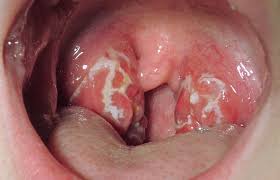
Common symptoms include a sore throat, painful swallowing, fever, tender neck glands, and feeling generally unwell. The tonsils may look swollen and red, sometimes with pale or white areas on the surface. Bad breath can occur, and pain may be felt in the ears even when the main problem is in the throat. The combination and severity vary, so a mild-looking throat does not necessarily reflect how much someone is struggling to drink or function. [6]
White patches are particularly easy to overinterpret. They can accompany different infections and do not establish strep throat or show that an antibiotic is needed. A photograph cannot assess the complete history, hydration, breathing, neck examination, or test results. Comparing an image with pictures online may raise a useful question, but it should not be used to choose medication or decide that a worsening illness is safe to manage without help. [2]
Some findings change the questions a clinician asks. A rash with a sore throat may prompt assessment for scarlet fever or another cause, while unusually prolonged tiredness and swollen glands may suggest glandular fever. [8] A new rash should be described even if it appeared after the throat symptoms began. Its texture, distribution, and associated illness can matter; redness may also be less obvious on darker skin. An online appearance checklist cannot reliably distinguish these possibilities. [9]
When throat symptoms need urgent medical help
Airway safety and swallowing come first. Difficulty breathing, inability to swallow saliva, or rapidly worsening swelling in the mouth or throat requires emergency assessment. New drooling because swallowing is impossible is different from simply finding food uncomfortable. Do not wait for a routine appointment or a strep result when these problems occur. Use the local emergency service, and follow the instructions given by the emergency team. [10]
A peritonsillar abscess, also called quinsy, is a collection of pus beside a tonsil. It can cause severe throat pain, often worse on one side, a muffled voice, trouble opening the mouth, and difficulty swallowing. Suspected quinsy needs urgent same-day assessment; breathing difficulty or inability to swallow saliva requires emergency care. Clinicians may need to examine the airway, drain the abscess, and give other treatment in an appropriate setting. It is not something to squeeze, puncture, or manage by taking leftover antibiotics at home. [11, 12]
Dehydration is another reason an apparently routine throat infection can become urgent. Watch for much less urine, fewer wet nappies or diapers, a dry mouth, dizziness, or unusual drowsiness. A child who cannot keep up with fluids needs advice before dehydration becomes severe. Confusion, difficulty waking, or breathing difficulty alongside dehydration signs warrants emergency help. The ability to take an occasional sip should not be mistaken for maintaining adequate intake throughout the day. [13]
Urgent advice is also appropriate when pain makes eating or drinking difficult, illness is worsening quickly, or someone appears seriously unwell. People with reduced immunity or complex health conditions may have specific instructions for fever or infection and should follow those plans. Local access routes differ: urgent primary care, a pediatric service, an advice line, or an emergency department may be appropriate depending on severity. A time-based recovery estimate never overrides a new warning sign. [14]
How clinicians assess a suspected episode
Assessment usually starts with the course of the illness: when pain and fever began, whether symptoms are improving, and whether the person can drink and urinate normally. Cough, nasal symptoms, a rash, known exposure to strep, previous episodes, and relevant medical conditions help provide context. An examination can include the throat, neck glands, temperature, and overall condition. The aim is both to identify the likely cause and to recognize problems that need a different level of care. [3]
A useful description focuses on what has changed. For a child, that might mean how much they are drinking compared with usual, whether wet diapers have become less frequent, and whether they are interacting normally. For an adult, it might mean being unable to swallow ordinary fluids or developing a voice change. These observations communicate the effect of the illness more clearly than a pain score alone. They also help explain why a second assessment can be necessary after an initially reassuring visit. [15]
In England, NICE guidance supports clinician use of tools such as FeverPAIN or Centor to inform antibiotic decisions for acute sore throat. Those tools combine clinical findings and are interpreted with the person’s overall condition and risk. They are not instructions for patients to calculate a score and obtain antibiotics independently. Other countries use different testing pathways. Two services may therefore take different evidence-based approaches without either treating the visible tonsils as a complete diagnosis. [14]
Before leaving a consultation, it helps to understand the working explanation, whether any test is pending, and what would prompt reassessment. Ask how results will arrive and who to contact if they do not. A plan may legitimately involve symptom relief and observation, further testing, or treatment for a confirmed infection. Clear follow-up arrangements are part of care, particularly when a child is waiting for a culture result or when the initial symptoms do not fit a straightforward pattern.
Strep tests: what a result means
A throat swab collects material from the back of the throat and tonsil area. A rapid antigen test looks for evidence of group A strep and can provide a result quickly. A throat culture takes longer because the laboratory looks for bacterial growth. Culture can detect infections missed by a rapid antigen test. The choice of test and the need for a second test depend on local guidance, the test used, and the patient’s age and symptoms. [16]
In the United States, CDC guidance says that patients with clear viral features generally do not need group A strep testing. When those features are absent, examination alone cannot reliably distinguish a viral sore throat from group A strep. For symptomatic children aged three years or older, a negative rapid antigen test should be followed by throat culture. This backup culture is not routinely indicated for adults. These are US recommendations, rather than a single worldwide testing rule. [17]
A positive result needs to be read alongside the illness. Some people carry group A strep without symptoms, and a carrier can have an unrelated viral sore throat while still testing positive. That possibility is particularly relevant to repeated positive results. It does not mean patients should disregard a result or change treatment themselves. A clinician can interpret the pattern, previous results, exposure, and symptoms to decide whether carriage or another explanation deserves consideration. [18]
Ask which test was performed instead of assuming every quick throat test has the same meaning. Also check whether the result is final or whether a culture is still pending. A negative test for group A strep does not explain every possible cause of a sore throat, and no laboratory result makes breathing difficulty or worsening dehydration safe to ignore. Ongoing symptoms sometimes require reassessment. [19]
| Question | Helpful evidence | Important limit |
|---|---|---|
| Are the tonsils inflamed? | History and throat examination | Appearance alone does not identify the germ. [16] |
| Is group A strep present? | An appropriate throat test interpreted in context | A result does not explain every cause of a sore throat. [19] |
| Could this be quinsy? | Urgent clinical assessment | A throat photograph cannot establish airway safety. [12] |
On a small screen, swipe horizontally or focus the table area and use the arrow keys.
Glandular fever and other causes of a persistent sore throat
Glandular fever, also called infectious mononucleosis or mono, can cause a prominent sore throat, swollen glands, fever, and marked fatigue. Epstein–Barr virus is a common cause. Teenagers and young adults are especially familiar with this illness, although it can occur at other ages. Clinicians may consider it when symptoms are severe, prolonged, or accompanied by a characteristic pattern. They may use blood testing when it would help clarify the diagnosis rather than assuming every persistent episode is bacterial tonsillitis. [8] Test choice and timing matter, and a single test does not always settle the diagnosis. [20]
Recovery from mono can take longer than recovery from an uncomplicated short respiratory infection. An enlarged spleen is a possible complication, so returning to contact sport, heavy exertion, or activities involving abdominal impact needs specific clinical advice. Feeling less feverish does not establish that those activities are safe. Severe abdominal pain requires emergency assessment. These precautions apply when mono is suspected or diagnosed; they are not a reason to impose a prolonged sports restriction on every ordinary sore throat. [21]
A continuing sore throat can also have explanations outside an acute tonsil infection, including irritation and other throat conditions. [4] Persistent symptoms, a lasting neck lump, or an ongoing change that does not resolve should be discussed with a healthcare professional. [10] The purpose of reassessment is to reconsider the cause and the next step.
Supportive care: comfort, fluids, and rest
Supportive care aims to make swallowing manageable, maintain hydration, and allow recovery. Rest and comfortable drinks can help during an uncomplicated illness. Some people prefer cool drinks or soft cold foods; others find comfortably warm liquids easier to swallow. There is no need to force a particular temperature or a large meal. Foods that are soft and easy to swallow may be more practical while the throat is sore. Avoid anything hot enough to burn. [1]
When swallowing hurts, small amounts offered regularly can be easier than a large drink all at once. For a child, keep an eye on actual intake and urine output, not just whether a cup has been placed nearby. Someone who depends on others for drinks may need active help obtaining them. If drinking remains difficult, seek advice rather than assuming rest alone will be enough. New dehydration symptoms mean the care plan needs reassessment. [13]
Smoke and other irritants can worsen throat discomfort, so avoiding exposure is sensible. [4] For children, choose foods and drinks they can manage safely and offer reassurance without repeatedly forcing a throat inspection. A sore child may need more frequent attention to comfort and drinking even when they are resting. Seek medical review when warning signs appear. [15]
Salt-water gargling may soothe some adults, but it is unsuitable for young children or anyone who cannot gargle and spit safely. Lozenges also have age restrictions and can be a choking risk for younger children. Products marketed for a sore throat differ in their ingredients and benefits; a pharmacist can help check suitability. Symptom relief does not identify the infection, eliminate the need for assessment, or prove that the person is no longer able to spread it. [22]
Using symptom-relief medicines safely
Common pain-relief medicines may help with fever or swallowing discomfort, but the appropriate product depends on age, health conditions, other medicines, and local labeling. Children need age-appropriate preparations and instructions. A pharmacist or clinician can clarify suitability when there is uncertainty, especially for pregnancy, dehydration, long-term illness, or multiple medicines. This article does not provide individualized medicine choices or doses, and a package intended for an adult should never be assumed appropriate for a child. [23, 24]
Check active ingredients before combining products. Some cold, flu, and pain remedies contain the same ingredient under different brand names, creating a risk of accidental duplication. Keep a simple record of what was given and when, especially if more than one caregiver is helping. Use the measuring device supplied for a liquid medicine and follow its label or the prescriber’s instructions. Household spoons are not reliable measuring tools. [25, 24]
Aspirin is generally avoided in children and teenagers with viral illnesses because of its association with Reye syndrome; local age restrictions and specialist exceptions should be discussed with a professional. Do not borrow another person’s prescription or reuse an old course because the throat looks similar to an earlier illness. If a medicine causes a suspected reaction, get advice about the next step; breathing difficulty or swelling of the lips, tongue, or throat after a medicine requires emergency help. [26, 27]
When antibiotics help and why they are not routine
Antibiotics act against bacteria and do not treat viral sore throats. Giving one for an illness it cannot treat adds the possibility of side effects without the intended benefit. This is why supportive care can be the right plan even when tonsils are painful or have white patches. A recommendation to observe an uncomplicated illness should include an explanation and a plan for worsening symptoms. It should not mean ignoring concerns or leaving a family unsure when to seek help. [28]
When group A strep is confirmed and treatment is indicated, antibiotics can shorten symptoms, reduce spread, and lower the risk of some complications. [18, 17] The benefit is not simply cosmetic improvement of the tonsils. Treatment decisions also depend on the patient’s history, allergies, and local practice. Choosing between antibiotics or changing a prescription requires a qualified prescriber. An online comparison of drug names cannot safely account for those individual factors.
If an antibiotic is prescribed, take it exactly as directed and contact the prescriber or pharmacist about missed doses, side effects, or difficulty taking it. Do not share it, save it for a future illness, or independently change the amount or duration. Unnecessary use contributes to antibiotic resistance, while an appropriate prescription still needs careful use. Antibiotics are a targeted tool, not a general measure of how seriously a clinician takes a sore throat. [28]
Rare complications after group A strep include acute rheumatic fever and kidney inflammation, as well as local spread of infection. These conditions do not develop in most people with a sore throat. The reason to mention them is to explain the value of correct diagnosis, appropriate treatment, and attention to new symptoms. New joint pain, abnormal urine, or another concerning change after an infection warrants clinical advice rather than assuming it is part of ordinary throat recovery. [29, 30]
Transmission and returning to school or work
The infections that cause tonsillitis can spread between people, but tonsillitis itself is a description of inflammation rather than a single contagious organism. Group A strep spreads mainly through close contact and respiratory droplets, and can also spread through contact with infected secretions. Different viruses have their own patterns of spread. A person cannot work out a precise infectious period from the appearance of the tonsils or from the word tonsillitis alone. [31]
Practical precautions include handwashing, covering coughs and sneezes, and avoiding shared drinking containers or utensils during an infectious illness. Clean items that have saliva on them before someone else uses them. Household members should pay attention to their own symptoms and seek advice when appropriate; exposure alone is not a reason to take another person’s antibiotics. Infection prevention works best as a set of ordinary habits that people can maintain while supporting the sick person. [32]
For confirmed group A strep, US CDC advice is to stay home until fever has gone and at least twelve to twenty-four hours have passed after starting appropriate antibiotics. In England, current UKHSA education guidance specifies exclusion for twenty-four hours after antibiotics are started for group A strep infection and scarlet fever. Follow the treating clinician’s advice and local school, childcare, or workplace rules. A person should also be well enough to participate in normal activities. [17, 33]
For other causes, return decisions depend on the illness, fever, general wellbeing, and applicable local guidance. Some tiredness or throat sensitivity can remain after the worst phase, while ongoing fever or inability to drink indicates a different problem. A practical return plan considers whether the person can manage the day, take fluids, and rest if needed. A fixed number of days printed online cannot replace diagnosis-specific instructions or the person’s actual progress. [33]
Recovery: improvement matters more than a countdown
Many uncomplicated episodes start improving within a few days. NHS information describes tonsillitis symptoms often settling in three to four days, while broader acute sore-throat guidance describes an illness lasting around a week. These are typical ranges, not deadlines. The cause, severity, and person’s health all influence recovery. Persistent fatigue from glandular fever follows a different course, and symptoms that are worsening should not be explained away by choosing the longest published estimate. [22, 4]
Look for a pattern of improvement: easier swallowing, better fluid intake, more usual activity, and a fever that is settling. A brief fluctuation can happen, but a clear deterioration or a new symptom calls for renewed advice. If prescribed treatment is difficult to take, report that difficulty rather than quietly leaving out doses. It helps the clinical team know whether the problem is ongoing infection, dehydration, a medicine issue, or a need to rethink the diagnosis. [34]
CDC advises contacting a healthcare professional when confirmed strep is not improving after forty-eight hours of antibiotics. That advice does not mean waiting forty-eight hours if emergency symptoms develop. For a sore throat that has not improved after about a week, or for repeated episodes, arrange review. Children or medically vulnerable people may need earlier assessment according to their symptoms and the advice already given. A worsening patient should always be assessed on their current condition. [18, 10]
Follow-up is easier when the important details are available. Keep the date symptoms began, the name and result of any test, medicines prescribed, and any advice about returning for review. If more than one service is involved, bring that information to the next consultation. This avoids relying on memory during a stressful illness and helps distinguish a continuing episode from a new one. It also provides a more useful account than photographs alone.
What changes when tonsillitis keeps returning?
Repeated sore throats deserve a review of the pattern rather than an assumption that every episode is the same. The clinician may consider whether episodes are true acute tonsillitis or another throat problem is contributing. Time between episodes, complete recovery, and associated symptoms all matter. A succession of school or workplace absences can be substantial even when each individual illness eventually settles. [35]
A brief episode diary can help make that burden visible. Record the approximate date, symptoms, clinical assessment, any test result, treatment, and days when normal activities were not possible. Include complications or urgent visits if they occurred. There is no need to repeatedly inspect or photograph the throat to maintain a useful record. The purpose is to give the clinician a reliable history and to show how illness affects daily life, not to accumulate entries toward an operation. [36]
Monitoring is often a reasonable part of care because the frequency of episodes can improve over time. During that period, the care plan should still address significant acute illness and clarify when specialist assessment is appropriate. The tradeoff is individual: repeated missed school, inability to work, poor intake during attacks, and family disruption may all matter. Discussing these effects is legitimate even if the person has not reached a commonly quoted numerical threshold. [37]
Snoring, pauses in breathing during sleep, or other concerns about obstructed breathing are a separate reason to discuss the tonsils. Surgery decisions for sleep-disordered breathing are not simply based on counting infections. Likewise, persistent asymmetry or another concerning finding requires assessment under a different pathway. Distinguishing the problem being treated helps families understand why an ear, nose, and throat specialist may recommend different investigations for people who all describe having troublesome tonsils. [38]
When tonsil removal may be considered
Tonsillectomy is surgery to remove the tonsils. For recurrent infection, the decision weighs the expected reduction in future tonsillitis against recovery time, pain, bleeding, anesthesia risks, and the possibility that symptoms may improve without surgery. Removing the tonsils does not prevent every future sore throat because other parts of the throat can still become inflamed. A useful discussion therefore starts with what is causing the episodes and what benefit is realistic for that person. [36]
In the English NHS Evidence-Based Interventions guidance, one commonly used framework is at least seven qualifying episodes in one year, five in each of two years, or three in each of three years. Episodes must be documented, clinically significant, adequately treated, due to acute tonsillitis, and disabling enough to prevent normal functioning. These numbers are part of a shared decision, not automatic eligibility based on a home tally. Severe symptoms or complications can justify specialist consideration outside a fixed count. [37]
US pediatric guidance also uses episode frequency and documentation when discussing recurrent throat infection, while emphasizing watchful waiting below specified thresholds and consideration of modifying factors. These recommendations concern children and should not be presented as a universal adult rule. Local referral and funding criteria vary. The specialist should explain which guidance applies, whether the history meets it, and how the person’s risks and preferences influence the recommendation. [39]
Questions worth discussing include the likely benefit, alternatives, expected time away from normal activities, and how complications would be managed. Ask whether another procedure, such as adenoid removal, is also planned and why it is being considered. A family should leave with a clear understanding of the intended outcome and the recovery plan. Choosing observation is also an active decision when it includes support and a route back to review. [40]
What to know about recovery after tonsillectomy
Recovery from tonsillectomy is different from recovery from the infection that led to it. A sore throat and painful swallowing are expected after surgery, and recovery can be particularly uncomfortable for adults. The operating service should provide written instructions on pain relief, eating and drinking, activity, supervision, and whom to contact. Arrange practical support around that plan. Do not replace the surgical team’s instructions with a generic internet diet or medicine schedule. [41]
Bleeding after tonsil surgery needs prompt medical attention, including bleeding that appears after a period of improvement. The discharge team should explain exactly what signs require emergency care and where to go. Difficulty maintaining fluids or other unexpected deterioration also warrants advice. Before surgery, make sure the household can identify the contact number and knows the transport plan. Preparation does not eliminate complications, but it makes it easier to respond quickly and follow the treating team’s instructions. [42]
The final aim is a better balance of health and daily functioning, rather than a promise of never having throat pain again. After recovery, the clinical team can review whether the original problem has improved and whether any ongoing symptoms need separate attention. For someone continuing with observation instead, the same principle applies: track meaningful changes, keep acute care advice accessible, and revisit the plan when the burden or nature of the illness changes.
Frequently asked questions
Is tonsillitis contagious?
The viruses or bacteria causing tonsillitis can spread between people. How long someone may spread infection depends on the cause. Wash hands, cover coughs, and avoid sharing drinks or utensils while ill. Follow diagnosis-specific advice about school or work. [32, 31]
Can adults get tonsillitis?
Yes. Tonsillitis is more common in children, but adults can develop it too. Age affects the likely cause and testing approach; it does not rule the condition in or out. [1]
Do white patches on the tonsils mean strep throat?
No. White patches can occur with different infections. Appearance alone cannot confirm strep throat or show that antibiotics are needed. A clinician interprets the symptoms, examination, and any appropriate tests together. [16]
How long does tonsillitis usually last?
Many uncomplicated episodes improve within several days, but symptoms can last around a week or longer. Seek advice if they persist or worsen. Breathing difficulty or inability to swallow saliva requires emergency help. [22, 10]
Does tonsillitis always need antibiotics?
No. Many episodes are viral, and antibiotics do not treat viruses. Clinicians decide whether bacterial infection warrants treatment using the illness, appropriate testing, and local guidance. Do not use leftover antibiotics or another person’s prescription. [34]
When might someone need their tonsils removed?
Surgery may be considered for documented, recurrent, disabling tonsillitis after discussion of benefits, risks, and observation. Local criteria vary, and complications or sleep-related breathing problems follow different pathways. Episode counts alone do not make surgery automatic. [39, 38]
Sources
Public medical and public-health references checked on 6 October 2026. Guidance may differ between countries and clinical settings.
- MedlinePlus: Tonsillitis
- American Academy of Pediatrics: Sore throat, strep throat, and tonsillitis
- MedlinePlus Medical Encyclopedia: Tonsillitis
- CDC: Sore Throat Basics
- CDC: About Strep Throat
- Mayo Clinic: Tonsillitis symptoms and causes
- NHS: High temperature in children
- CDC: About Infectious Mononucleosis
- NHS: Scarlet fever
- NHS: Sore throat
- MedlinePlus: Peritonsillar abscess
- NHS Greater Glasgow and Clyde: Quinsy referral guidance
- NHS: Dehydration
- NICE NG84: Acute sore throat recommendations
- Royal Children’s Hospital Melbourne: Tonsillitis
- MedlinePlus: Strep A Test
- CDC: Clinical Guidance for Group A Streptococcal Pharyngitis
- CDC: Testing for Strep Throat or Scarlet Fever
- MedlinePlus: Throat swab culture
- CDC: Laboratory Testing for Epstein-Barr Virus
- NHS: Glandular fever
- NHS: Tonsillitis
- NHS: Medicines for babies and children
- NHS: Paracetamol for adults
- US FDA: Giving children medicine safely
- MedlinePlus: Reye syndrome
- NHS: Antibiotic side effects
- CDC: Healthy Habits, Antibiotic Do’s and Don’ts
- CDC: About Rheumatic Fever
- CDC: About Post-Streptococcal Glomerulonephritis
- CDC: About Group A Strep Infection
- CDC: Preventing Group A Strep Infection
- UKHSA: Exclusion periods in children and young people’s settings
- NHS: Antibiotics
- Mayo Clinic: Tonsillitis diagnosis and treatment
- NHS England: Recurrent tonsillitis decision support tool
- Evidence-Based Interventions: Tonsillectomy for recurrent tonsillitis
- AAO-HNSF ENT Health: Tonsils and Adenoids
- AAO-HNSF: Tonsillectomy in Children guideline fact sheet
- MedlinePlus: Questions to ask about tonsil removal
- East Kent Hospitals NHS: Adult tonsillectomy aftercare
- MedlinePlus: Tonsil and adenoid removal discharge advice
Video context: Understanding Tonsillitis by Zero To Finals was published on 16 October 2021. Its full content has not been re-reviewed for this update. Testing and treatment guidance varies by country and may have changed; clinical scores and antibiotic choices require professional assessment. Use the current written guide and Sources above for context.





