
This guide is general health education, not a diagnosis or personal treatment plan. Sources were checked editorially on 14 October 2026; this does not mean a licensed clinician reviewed the article. Follow local emergency advice and the instructions of your healthcare team.
Tick bites: start with the right next step
Ticks feed on blood and can pass bacteria, viruses or parasites to people during feeding. The practical questions are whether a tick is still attached, whether symptoms need medical attention, and where the exposure happened. A bite alone does not identify an illness. Different tick-related diseases can produce similar fever, headache, muscle aches, tiredness or rashes, so an assessment depends on symptoms and geography together. [1]
Ticks cannot jump or fly. Many wait on grasses and shrubs and climb onto a person who brushes past. They may then move to another part of the body before attaching. Their saliva can make a bite difficult to feel, allowing an attached tick to remain unnoticed. Checking skin is therefore useful even when you have felt no sting, itch or pain during an outdoor activity. [1]
Before removal: check which regional guidance applies
Australia uses different tick-removal advice because of the allergy risks associated with Australian ticks. If bitten there, do not scratch, squeeze or pull an attached tick with household tweezers. People with known tick allergy should seek urgent medical help without disturbing it. People without known allergy are advised to kill the tick where it is using an appropriate ether-containing freezing product, then let it fall off. Ask a pharmacist about a suitable product and follow its instructions; do not improvise with a household chemical. [5]
In Australia, if the tick cannot be frozen or does not fall off, leave it undisturbed and seek urgent medical assistance. ASCIA advises emergency-department removal for a person with tick allergy unless an allergy specialist has provided a safe individual plan. [3]
Removing a tick in the United States
For routine US tick removal, act promptly rather than waiting for a medical appointment solely to remove it. Use clean, fine-tipped tweezers and grasp close to the skin, avoiding pressure on the tick’s swollen body. Pull steadily away from the skin without twisting or jerking. If mouthparts remain and do not lift out easily with tweezers, leave them alone rather than digging into the skin. Clean the bite and your hands with soap and water. Check for other ticks. [4]
Do not burn a tick or cover it with petroleum jelly, nail polish or other substances to make it release. After removal, seal it in a container if retaining it, or dispose of it safely without crushing it between your fingers. Commercial tick-test results should not determine treatment: a positive tick does not prove infection, and a negative result does not exclude another unnoticed bite. [4]
Australian guidance also warns against irritant chemicals and burning. Freezing advice refers to a specific regional removal method, not to applying just any spray. If you cannot safely follow local instructions, contact local medical services promptly rather than repeatedly trying different methods on an attached tick. [5]

Which changes after a bite need medical advice?
| Situation | What to do |
|---|---|
| New illness | Seek emergency care for fever with a severe headache or stiff neck. Contact a healthcare professional for other new symptoms such as muscle or joint aches or swollen glands after a bite. Explain when you noticed the tick and whether symptoms are worsening. Severe breathing or movement problems need the emergency response above. [2,32] |
| An expanding patch or flu-like symptoms | Seek prompt medical advice for a round or oval spreading rash or flu-like illness after possible exposure. In the UK, request an urgent GP appointment or use NHS 111. Tell the clinician about recent forests, grassland or travel, even if you did not notice a bite. [8] |
| Feeling well, but possible high-risk US bite | Contact a clinician promptly if Lyme prevention might be relevant. The assessment has a limited window after removal. Keep the removed tick in a sealed container if available for identification, and provide the place of exposure, removal time and whether the tick looked swollen with blood. [10] |
A useful record for the appointment
Bring a simple timeline: possible exposure dates, location, when the tick was removed, and when fever or skin changes began. These details help a clinician decide which infections are plausible. Keep watching for fever, rash or a flu-like illness during the following weeks, whether or not preventive treatment was given. If illness develops, do not wait for a laboratory or tick-test result before asking for medical advice. [10]
Also note the affected person’s age, the part of the body bitten and their current condition. Small retained mouthparts can occasionally lead to a local problem even when the main tick has been removed; seek advice about persistent or worsening changes at the site. [2]
Understanding Lyme rashes and testing
Lyme disease can cause an expanding rash called erythema migrans, but it does not always form a target or bull’s-eye. Fever, chills, headache, fatigue and body aches can occur without a rash. A small irritated bump appearing immediately after a bite is different from the gradually enlarging Lyme rash. Appearance alone cannot settle the diagnosis, and new or expanding changes deserve clinical assessment. [7]
On brown or black skin, a Lyme rash can be harder to see and may resemble a bruise. On lighter skin, it may look pink, red or purple. Check for a change that is spreading rather than expecting one specific color or a perfect ring. A rash can also be in a place that is difficult to inspect, so ask for help looking if needed. [8]
Lyme blood tests detect the immune response rather than giving an instant answer immediately after a bite. Antibodies take time to develop, so testing early can be falsely negative. Tests can stay positive for months or years after an infection has cleared and do not show that someone is protected from reinfection. A clinician interprets results alongside symptoms, exposure and other possible causes, and decides whether testing or later reassessment is appropriate. [7]
A typical erythema migrans rash after plausible exposure in a Lyme-endemic area may be diagnosed clinically rather than waiting for a blood test. The AAN/ACR/IDSA guideline also advises against routine Lyme testing in people who have no symptoms after an Ixodes tick bite. Testing everyone immediately can create misleading answers instead of clarifying who needs treatment. [9]
Preventive antibiotics: a clinician-only decision
Under the North American AAN/ACR/IDSA guideline, a high-risk Lyme bite means an identified Ixodes vector tick, exposure in a highly endemic area, and attachment estimated at 36 hours or longer. Preventive treatment must be started within 72 hours after tick removal. A clinician must decide whether those conditions are met and whether the medicine is suitable. If the bite cannot confidently be classified as high risk, observation and symptom monitoring are recommended. Do not use leftover antibiotics or treat this checklist as a prescription. [9]
CDC’s clinical decision aid also considers engorgement, whether tick identification is uncertain, and medication safety, including allergy, pregnancy and breastfeeding. Preventive antibiotics after a tick bite have not been shown to prevent anaplasmosis, babesiosis, ehrlichiosis or Rocky Mountain spotted fever. A Lyme prevention decision therefore never replaces attention to new symptoms. [10]
There is no universal number of attachment hours that guarantees protection from every tick-related illness. UKHSA notes that some pathogens can be transmitted faster than Lyme bacteria. Remove or manage an attached tick promptly using the appropriate regional method. The 36-hour criterion above is part of a particular Lyme prevention decision, not permission to leave a tick in place. UK guidance does not routinely recommend preventive antibiotics after a tick bite; recommendations should not be transferred automatically between countries. [28]
Where the bite happened changes the risk
Tick maps show general distributions, not a diagnosis for an individual bite. Finding a species in a region does not prove that it carries a particular germ there, and ticks may occur outside shaded map areas. In the United States, blacklegged ticks occur widely in the east, while western blacklegged ticks occur along the Pacific coast. Lone star ticks occur across the Northeast, South and Midwest. Several tick species can transmit diseases other than Lyme. [6]
Different species in the same broad region can carry different pathogens. Blacklegged ticks can transmit the organisms responsible for anaplasmosis and babesiosis as well as Lyme disease. Lone star ticks are associated with ehrlichiosis, among other conditions. A map of one species cannot stand in for a map of all tickborne disease risks. When using a map, check which species and geographic area it actually describes. [6]
In Europe, Lyme borreliosis involves several Borrelia species, and patterns of skin, joint and neurological disease can differ from those described in North America. Exposure is possible in woodland, heathland, meadows and some urban parks. A traveler returning from Europe should tell their clinician about the itinerary and outdoor activities rather than assuming that all tickborne illnesses follow a familiar US pattern. Local clinical guidance matters for interpreting symptoms and arranging tests. [30]
Other infections a clinician may consider
Rocky Mountain spotted fever
Rocky Mountain spotted fever is a bacterial infection that can become life-threatening quickly. Fever, headache, nausea, vomiting, abdominal pain or muscle pain can occur early. The rash may appear only after fever has already started, so waiting for spots is unsafe. Cases occur across the United States, and several tick species are involved. Seek medical care promptly for illness after a bite or time in tick habitat, even if the name of the disease seems unrelated to your location. [18]
If a clinician suspects this infection, treatment should not be held until blood-test confirmation arrives. Results can take time, and early treatment is important. This is different from giving preventive antibiotics to a well person after every bite. The treating clinician chooses treatment based on the illness and circumstances; a home tick identification or online photograph cannot safely make that decision. [18]
Ehrlichiosis and anaplasmosis
Ehrlichiosis can cause fever, chills, severe headache, muscle aches and stomach symptoms, usually beginning within one to two weeks after an infected tick bite. Some people develop a rash, especially children, but many do not. A person may not remember being bitten. Infection is associated with lone star and blacklegged ticks in the United States. Becoming ill after time in grassy, brushy or wooded places is enough reason to mention tick exposure during a medical assessment. [19]
Young children, older adults and people with weakened immune systems have higher risks of severe ehrlichiosis. Delay in treatment also increases risk. Confusion, breathing problems, abnormal bleeding or other severe deterioration require urgent assessment. Do not decide that the illness is harmless because it started with symptoms resembling a routine virus. [19]
Anaplasmosis is another bacterial illness transmitted mainly by blacklegged and western blacklegged ticks. US reports are concentrated in the Northeast and upper Midwest, although the tick vectors have wider ranges. Fever, chills, headache and muscle aches are common, and nausea, vomiting or diarrhea can occur. Symptoms often begin within one to two weeks. These features overlap with other infections, which is why a clinician may order blood tests rather than relying on a rash or a tick photograph. [20]
People aged 65 or older and those with weakened immunity are at increased risk of severe anaplasmosis. Prompt care matters; a clinician who suspects it may begin treatment before results return. Tell the clinician about immune-suppressing medicines or treatments, including cancer care or transplantation, because they can affect the assessment and follow-up plan. [20]
Babesiosis
Babesiosis is caused by parasites that infect red blood cells. In the United States, most cases occur in the Northeast and upper Midwest. Some people have no symptoms, while others develop fever, chills, sweats, fatigue, headache or poor appetite. Symptoms may appear over weeks or months rather than immediately. Destruction of red blood cells can cause anemia. A person without a spleen, with weakened immunity, or with significant liver or kidney disease needs particular attention if illness follows exposure. [21]
Mention those health conditions when seeking care, even if another tickborne infection has already been discussed. Babesiosis requires its own diagnostic assessment; a clinician may examine a blood sample for parasites or arrange specialized testing. The absence of a distinctive rash does not make that assessment unnecessary when the illness and exposure fit. [21]
Powassan virus and neurological illness
Powassan virus disease is uncommon, with most US cases reported in the Northeast and Great Lakes regions. Initial illness can include fever, headache, vomiting and weakness. Severe infection may cause encephalitis or meningitis, and hospital care can be needed. Antibiotics do not treat this virus. For background, read encephalitis symptoms and emergency care, but act on the emergency symptoms above immediately rather than delaying for further reading. [22]
Tularemia and a sore at the bite site
Tularemia can develop after a tick or deer-fly bite or contact with an infected animal. One form causes an ulcer where bacteria entered the skin together with swollen nearby lymph glands, often in the groin or armpit. Another causes swollen glands without an obvious ulcer. Fever accompanies these forms. Tell a clinician about animal handling as well as bites, since the route of exposure can change the illness pattern and the tests considered. [23]
An ulcer is not automatically tularemia, but a persistent sore and fever should not be treated as a routine itchy bite without advice. The infection can be mistaken for other illnesses. Cough, chest pain or difficulty breathing can occur with lung involvement and need prompt medical assessment, particularly if symptoms are worsening. [23]
STARI and a Lyme-like rash
Southern tick-associated rash illness, or STARI, is linked to lone star tick bites and most often recognized in the southern United States. It produces an expanding rash that can closely resemble Lyme erythema migrans. Fatigue, fever, headache and body or joint aches may accompany it. Its cause is not known, and it is not established as infection with the bacteria that cause Lyme disease. There is no diagnostic blood test for STARI. [24]
Because the conditions can look alike, a spreading rash needs clinical assessment rather than a home decision based on a tick’s white spot. Evidence has not established whether antibiotics are necessary or helpful for STARI itself. A clinician considers the location, likely tick, rash and the possibility of Lyme disease when choosing a plan. [24]
Allergy and paralysis are different tick-related problems
Alpha-gal syndrome
Some tick bites can lead to alpha-gal syndrome, an allergy to a molecule found in most mammals. In the United States, it is most often linked to lone star ticks, but other tick species are associated with it elsewhere. Reactions can occur after eating mammalian meat or exposure to other products containing alpha-gal. This is not the same as an immediate reaction at the bite site, and not everyone who is bitten develops the allergy. [25]
Hives, severe stomach symptoms, swelling, breathing problems or faintness may begin two to six hours after a triggering food or product. The allergy itself may become apparent weeks or months after the original tick bite. Seek emergency help for a severe reaction. An allergist or other clinician should assess suspected alpha-gal syndrome and identify what to avoid; people do not all react to the same products. Do not stop prescribed medicines without discussing safe options. [25]
Tick paralysis, especially in Australia
Tick paralysis is caused by toxins in tick saliva rather than by a bacterial infection. It is rare in people, but Australian cases particularly affect young children. Unsteady walking, increasing limb weakness, facial weakness or double vision are concerning. A child may become unusually quiet, sleep excessively or refuse food. Seek medical attention promptly for these changes after possible exposure; breathing difficulty or rapidly worsening weakness is an emergency. [26]
An important Australian distinction is that symptoms may worsen after the tick has been removed. Removal does not establish that observation at home is safe for an affected person. Medical monitoring and support may be needed, sometimes including breathing support. Clinicians must locate and safely manage attached ticks while assessing the illness. Families should tell them about all possible bites, including ticks found on the head, chest or other hidden areas. [26]
Build prevention into an ordinary outdoor day
Clothes and routes
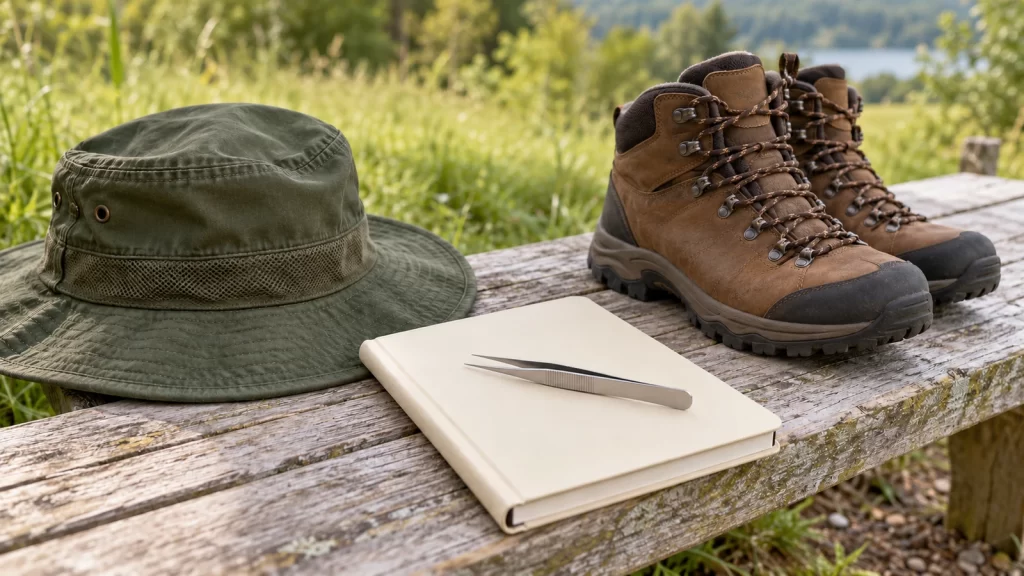
Choose long trousers, a long-sleeved top and closed, protective footwear for tick habitat. Tucking a shirt into trousers and trouser legs into socks reduces gaps where ticks can reach skin. Pale clothing can make a crawling tick easier to notice. These are practical barriers rather than guarantees. Check clothing during the activity instead of assuming that covered skin means an attached tick is impossible. [31]
Stay near the center of a clear trail and reduce contact with tall grass and shrubs along its edges. Apply the same precautions to short garden tasks or a walk as to a long hike. Reducing exposure and checking afterward work together; neither needs to be an elaborate routine. [31]
Choose a suitable skin repellent
Choose a registered repellent labeled for the intended use. In the United States, recommended active ingredients include DEET, picaridin, IR3535, oil of lemon eucalyptus, PMD and 2-undecanone. Picaridin may be called icaridin in other countries. Pure essential oil of lemon eucalyptus is not the same as a tested, formulated repellent. A product advertised as natural should not be assumed to offer equivalent protection. [14]
Protection time varies by formulation, active ingredient concentration, sweating, water exposure and rubbing. Check the product’s directions rather than assuming that one application lasts all day or that extra product is always better. EPA-registered repellents are considered safe during pregnancy and breastfeeding when used as directed. Choose products before a trip so that you can read the instructions and plan for reapplication during the activities you expect. [14]
Apply repellent safely, particularly for children
Use repellent only as its label directs, on exposed skin or permitted clothing. Do not apply it underneath clothing, on cuts or irritated skin, or close to eyes and mouth. Spray it onto your hands before applying to the face, and avoid inhaling spray or using it in an enclosed space. Wash treated skin when you return indoors. Keep the container out of children’s reach. [12]
An adult should apply repellent for a child and avoid the child’s hands. Follow the exact product’s age restrictions. Some oil-of-lemon-eucalyptus products are unsuitable below age three, while EPA permits certain specifically labeled formulations; ingredients alone do not tell you a product’s full restrictions. If the label is unclear or you are choosing for an infant, ask a pharmacist or clinician. Do not use a human product on a pet unless its label explicitly allows that use. [12]
Permethrin is for treated clothing and gear
Factory-treated clothing provides protection only where that clothing covers the body, so exposed skin may still need a suitable skin repellent. Read and keep the garment’s pesticide-use instructions, including its washing guidance. Labels may require treated garments to be washed separately. Do not assume that every item of clothing can be treated: these products are intended for specified outer clothing and gear, not for applying indiscriminately to underwear or other fabrics. [13]
For tick prevention, clothing and gear products containing 0.5% permethrin can be used according to their labels. Do not spray these products onto skin. Keep this use separate from any medical cream a professional might recommend for another purpose; the name of an ingredient does not make different formulations interchangeable. [15]
If treating clothing yourself, use a product registered for that job and follow its precautions. Factory-treated clothing has been assessed by EPA for its intended use, including exposure considerations for children and pregnant or nursing people. That assessment does not mean that concentrated pesticide, agricultural formulations or an improvised mixture can be substituted. The product and its approved use are what matter. [13]
Check, shower and manage clothing after exposure
Use a mirror or ask for help with a full-body tick check after outdoor exposure. Examine the scalp and hair, in and around the ears, underarms, waist, belly button, groin and behind the knees. Check children as well. Showering soon after coming indoors can wash away unattached ticks and creates an opportunity to inspect skin. CDC reports reduced Lyme risk with showering within two hours, but showering does not remove the need to inspect for attached ticks. [11]
Inspect coats, backpacks and other gear before putting them away. For dry clothing, CDC advises a high-heat tumble dry for ten minutes to kill ticks; damp clothing needs additional time. If washing first, hot water is recommended because cold or medium-temperature water does not reliably kill ticks. Follow fabric safety instructions and do not mistake a cool wash for a completed tick-control step. [11]
For young children, give particular attention to the scalp and neck as well as skin folds. ECDC notes that bites in these areas are relatively more common in children. A careful check includes places a child cannot see or describe easily. Repeat checks after further exposure rather than assuming an earlier inspection covers the rest of the day. [30]
Pets, gardens and outdoor work
Pets can carry ticks indoors, where a tick may later bite a person. Check outdoor pets daily, particularly around ears, eyelids, collars, legs, toes and tails. Ask a veterinarian which preventive product fits the animal and local risks. Cats are especially sensitive to some chemicals, so never apply a tick product to a cat without veterinary advice. A dog’s Lyme vaccination, where appropriate, does not prevent the dog from carrying ticks home. [16]
If a pet becomes unusually quiet, eats poorly or otherwise seems unwell after possible exposure, contact the veterinarian. Signs may be delayed. Brown dog ticks can also infest houses and kennels, so repeated indoor sightings deserve advice rather than an assumption that every tick will die indoors. Keep pet prevention and human skin-repellent instructions separate. [16]
Reduce damp, sheltered tick habitat close to places people use. Keep grass short, remove accumulated leaves and brush, and prune vegetation to allow more sunlight. Place play equipment and sitting areas away from overgrown borders where feasible. Canadian public-health guidance suggests a wood-chip, mulch or gravel boundary at least one metre wide between lawns and adjacent tick habitat. This helps organize lower-exposure spaces; it does not certify a garden as tick-free. [17]
Think about how animals enter and move through the property. Repair openings and manage vegetation around wood piles or stone walls where appropriate, and discuss pets’ prevention with a veterinarian. Start with the places children play and people regularly walk rather than treating every part of a garden identically. Continue personal tick checks even when the lawn and borders are well maintained. [17]
People working in landscaping, forestry, farming, construction or similar settings may encounter ticks repeatedly. Ask the employer about protective clothing, repellents, local risk and reporting bites or illness. Prevention should be part of the work routine, with time for skin and clothing checks. Tell a clinician about occupational exposure if you become unwell; the location and nature of the work may be more informative than a remembered bite. [15]
Pregnancy, travel and a sensible longer-term plan
Pregnancy is a reason to seek timely advice about a possible tick-related illness, not a reason to abandon bite prevention. Canadian public-health guidance permits approved DEET or icaridin repellents and permethrin-treated clothing during pregnancy when used according to their labels. If you feel unwell or suspect Lyme disease, contact your healthcare professional. Treatment can be selected safely in pregnancy, and early assessment is important. The choice of preventive or treatment medicines belongs to the clinician who knows your circumstances. [29]
Ticks and local risk areas can change. In Canada, blacklegged ticks are spreading into new areas, and they may be found outside established risk zones. They can be active when conditions remain above freezing and the ground is not snow-covered. Use current provincial or territorial guidance rather than assuming winter dates or an older map remove the need for precautions. [29]
Tick-borne encephalitis, or TBE, is a viral disease found in parts of Europe and Asia. The virus is not found in the United States, but travelers can be exposed abroad, particularly around forests. It can also be transmitted through unpasteurized milk or cheese from infected animals. For travel to affected areas, discuss vaccination with a healthcare professional before departure and avoid unpasteurized dairy products. A vaccine is recommended for some travelers according to their exposure risk. [27]
TBE vaccination decisions do not replace protective clothing, repellent and tick checks. The vaccine addresses that particular infection; different diseases require different preventive advice. If fever, headache, vomiting or weakness develops after travel, give the clinician the itinerary and exposure history. Severe neurological symptoms require emergency care. There is no specific medicine that eliminates TBE virus infection, and severe illness may require hospital support. [27]
Make a repeatable plan: appropriate clothing and repellent before exposure, checks during and afterward, and a clear route to medical advice if symptoms appear. Children may need help checking their head and neck, while adults should remember legs and skin folds. Finding one tick is a reason to inspect the rest of the body, because more than one can be attached. Being tick-aware supports outdoor activity; it does not require avoiding every park or garden. [28]
If symptoms persist, return or fail to improve after prescribed Lyme treatment, go back to the clinician for reassessment. Recovery can take time, and persistent symptoms need support and evaluation. Be cautious about buying tests or treatment online without professional advice. A previous diagnosis should not stop a clinician considering other explanations for new symptoms. [8]
Original video
The original video is retained below for continuity. It has not been independently reviewed for this rewrite and is not a source for the written guidance. Removal advice varies by region; follow the clearly labeled advice above and local medical guidance.