
The phrase foods that cause gout is a useful starting point, but it can make a complicated condition sound like one bad meal. Organ meats, large portions of red meat, certain seafood, alcohol and sugary drinks deserve attention. Yet eating differently is only one part of treatment. A balanced eating pattern can support gout management; it does not reliably remove the need for medicine or guarantee that another flare will never happen. The aim is a practical, nourishing routine rather than an ever-growing list of forbidden foods. [7]
This guide provides general health information, not an individual diagnosis or treatment plan. Sources were checked on 12 October 2026.
Why food is only part of the gout story
Gout is inflammatory arthritis caused by urate crystals in and around joints. Urate, often called uric acid, comes from the breakdown of purines in your own tissues as well as in food. Normally the body removes it, much of it through the kidneys. When production and removal are out of balance, urate can accumulate over time and crystals may form. The immune response to those crystals produces a painful flare. That underlying process can remain present between attacks, even when walking feels normal and there is no visible swelling. A symptom-free week therefore does not prove that the crystal burden has disappeared. Equally, a high urate result alone does not mean everyone will develop gout. [1]
Family history, kidney function, some medicines and other health conditions help explain why two people can eat similar meals and have very different experiences. Gout is more common in people with conditions such as high blood pressure, diabetes, heart failure or impaired kidney function. Excess body weight can also contribute, but it is not a complete explanation. Anyone can develop gout, including someone who rarely drinks alcohol or eats meat. A useful appointment considers these factors together. Food questions should be part of that conversation, not a test of whether someone has been disciplined enough. Treatment decisions need to fit the whole person and the health problems already being managed. [4]
Diet research also has limits. NICE found that studies of specific dietary approaches were generally small and short, leaving insufficient evidence to promise that a particular diet will prevent flares or lower urate reliably. Its practical advice is healthy, balanced eating. This is compatible with reducing likely triggers while continuing medical treatment. It is a reason to be cautious about dramatic claims, not a reason to give up on everyday food choices. A useful plan should remain realistic even when the science cannot predict exactly how an individual will respond. [6]
Foods and drinks to reconsider first
Use the comparison below to choose a starting point. The examples show changes in portion, frequency or type of food; they are not a prescription for every person. Your usual eating pattern matters more than whether a single item appears on a good-food or bad-food list.
| Food or drink | A useful change |
|---|---|
| Organ meats | Replace liver, kidney or sweetbreads with another protein source. [7] |
| Red meat | Choose smaller portions of beef, lamb or pork less often. [7] |
| Seafood | Review frequent anchovies, sardines and shellfish; some fish can still fit. [7] |
| Alcohol | Avoid during a flare; discuss limiting intake between flares. [7] |
| Sweetened drinks | Choose water or an unsweetened alternative more often. [7] |
| Vegetables and legumes | Keep variety; plant purines do not justify a blanket vegetable ban. [7] |
Organ meats and concentrated extracts
Liver, kidneys and other offal are high-purine foods and are sensible first targets when reviewing a gout diet. Concentrated meat or yeast extracts also deserve attention. Think about what goes into a meal, not just the visible piece of meat: a rich extract used repeatedly in soups, sauces or spreads may be easy to overlook. Read ingredient lists or ask how a dish is made. You do not need to throw away every sauce or assume that all soups are equivalent. Start with foods you eat regularly, and discuss suitable alternatives if an ingredient is important in your family’s cooking. The replacement should still make the meal satisfying. [8]
Red meat, poultry and portions
Beef, pork, lamb and some game meats are common subjects of gout food lists. Poultry is not purine-free either, so replacing a large steak with an equally large chicken portion does not turn the meal into unlimited food. A more workable approach is to reduce how much meat dominates the plate and use a wider range of protein sources. For example, keep a smaller amount of meat in a familiar stew rather than making meat the entire centre of dinner. You do not have to remove every food containing purines, which would be impractical. Ask a dietitian about portions that meet your nutritional needs, especially if you are also trying to maintain strength or recover from illness. [9]
Seafood needs a more nuanced approach
Tuna, trout and several types of shellfish can contribute purines. However, fish also has nutritional benefits, and advice should account for the kind, amount and frequency you eat. A small fish serving in a varied diet is different from frequent large seafood platters. Someone who eats shellfish several times a week may have a more useful change to make than someone who enjoys it occasionally. Discuss your own pattern rather than assuming every fish must disappear. If a meal is built around seafood, consider a smaller serving alongside other parts of the meal, or choose a different protein on another day. [10]
Alcohol: beer is not the only consideration
Beer receives a lot of attention, but wine should not be described as a guaranteed safe option for someone with gout. A study that compared drinking before attacks with drinking at other times in the same participants linked beer, spirits and wine with recurrent flares. Because this was observational research, it does not establish an identical threshold for everyone. It does reinforce a practical point: switching the type of alcohol is not the same as removing alcohol-related risk. Review how much you drink on an occasion, not only the weekly total. If celebrations or weekends involve several drinks, that pattern is worth discussing even when the rest of the week is alcohol-free. [12]
If you may be physically dependent on alcohol, get medical advice before stopping suddenly. Shaking, sweating or feeling sick when you do not drink can be signs that support is needed. Abrupt withdrawal can be dangerous. Severe shaking, hallucinations or a seizure require emergency help. A clinician or alcohol service can help you reduce or stop safely without making gout management a separate, competing problem. [13]
Sugary drinks, fruit and food labels
Sugar-sweetened drinks are a useful place to focus because gout advice is not solely about purines. Sugary drinks can affect urate even though they are not high-purine foods. Review the beverages you reach for automatically: the drink bought with lunch, the bottle kept beside a desk, or the mixer poured with alcohol. Replacing a frequent sweetened drink may be more practical than scrutinising tiny amounts of individual ingredients. Start with the drink you consume most often. [8]
Whole fruit is not the same food choice as juice, a sweetened fruit drink or a large smoothie. NHS guidance distinguishes sugars naturally contained within whole fruit from free sugars in juices, honey and syrups. Keeping whole fruit in a balanced diet therefore makes more sense than removing it simply because it tastes sweet. A drink described as natural can still contain a substantial amount of sugar, and honey is still a source of free sugar. For an everyday swap, try eating fruit with a meal rather than routinely drinking it. You do not need a special detox juice, and changing the sweetener’s name does not automatically change the overall pattern. [14]
On a US Nutrition Facts label, total sugars includes naturally occurring sugar as well as added sugar. Added sugars is the more useful line when comparing sweetened products with an otherwise similar unsweetened version. For example, plain milk or yogurt can contain sugar naturally without having sugar added. Check the serving size at the same time: the amount listed may not represent the full bottle or container you normally finish. Compare like with like, such as two yogurts or two breakfast cereals, rather than treating every gram of total sugar as evidence that a food is unsuitable. Ingredient lists can help identify syrups, honey and other sweeteners. Labels provide context for a choice; they are not a diagnostic test for gout. [15]
Plant purines do not mean plants are off the menu
Purine tables can make beans, lentils, spinach or asparagus look alarming. Yet vegetables containing purines have not shown the same relationship with gout risk as animal sources. A general ban on these foods can remove useful meal options without solving the underlying urate problem. Vegetables, legumes, nuts and whole grains can belong in a balanced gout eating pattern. If you have been avoiding almost every protein source because of contradictory lists, ask for help rebuilding meals rather than extending the restrictions. A bean-based dish, for example, can be a practical alternative to a meat-centred dinner. This does not override an allergy or another specific medical diet, but gout by itself is not a reason to assume that all plant purines are harmful. [11]

Build meals around what you can include
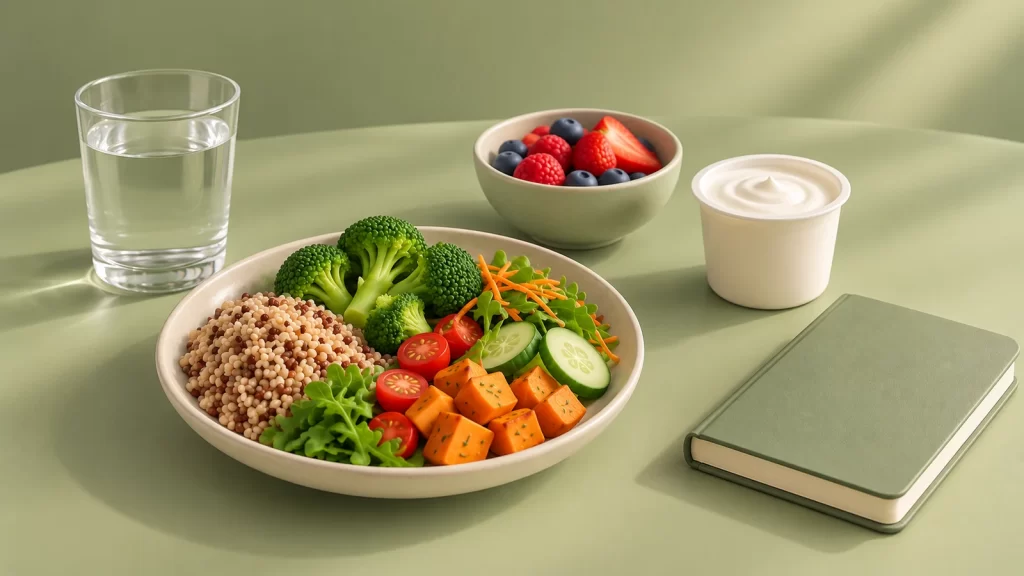
A balanced meal still needs enough food. The Eatwell approach includes vegetables and fruit, starchy foods, protein foods, and dairy or suitable alternatives, with variety across the day and week. Higher-fibre versions of familiar starches can fit, and beans or pulses can contribute protein. Reduced-fat dairy is an option for people who tolerate it; suitable unsweetened alternatives may work for others. There is no requirement to make every plate identical or to eat a perfect balance at each sitting. This flexibility matters when appetite, money, food access or cultural traditions shape the meal. Aim to adjust meals you already know how to prepare rather than replacing your whole kitchen with unfamiliar specialist products. [16]
DASH is one example of a balanced pattern, originally designed for heart health and blood pressure. It emphasises vegetables, fruit, whole grains, beans, nuts and lower-fat dairy while limiting sugary drinks and foods high in saturated fat. It does not require branded foods or expensive ingredients. The useful lesson is its overall structure: several food groups, realistic portions and fewer automatic high-sugar choices. Treat it as a framework you can adapt with your care team, particularly if you also have blood-pressure concerns. It is not a guarantee that your urate target will be reached through diet, and a separate medical eating plan may require changes to the standard pattern. [17]
A flexible day of meals
Here is an original planning example to adapt to your appetite, budget and any medical restrictions. It is not a tested gout-treatment menu or a calorie prescription. For breakfast, consider porridge with plain yogurt and chopped fruit, or toast with eggs and vegetables. For lunch, assemble a bean and rice bowl, or use leftover vegetables in a sandwich with a protein filling you enjoy. For dinner, try a vegetable and lentil curry, a tofu stir-fry with rice, or a smaller serving of chicken beside potatoes and vegetables. Use familiar seasoning rather than assuming a gout-conscious meal must be bland. These are interchangeable ideas, not foods you must eat on a particular day.
Plan for the moments between meals as well. If you usually get hungry during a long commute, pack something convenient before leaving home rather than relying on whatever is available later. If lunch is often skipped because of work, decide on an easy backup you can keep ready. At home, make a short list of two breakfasts, two lunches and three dinners you genuinely like. Repeating a manageable rotation can be more useful than designing an elaborate menu that is hard to shop for. Write down substitutions for foods you cannot tolerate so that a change in one ingredient does not leave you with no meal at all.
Shopping, restaurants and shared meals
At the shop, organise your list around complete meals. Choose the main ingredients, then think about drinks, sauces and snacks that usually accompany them. A pantry full of ingredients is not helpful if none fit together into something you want to cook. When eating out, read the menu before you are rushed, and consider which part of your usual order is easiest to adjust. You might change the drink, choose a different main course or share a large portion. You do not need to explain your medical history to everyone at the table. A simple request about ingredients or portion size is often enough to make the decision clearer.
For a family meal, aim for a shared base with flexible additions. A pot of vegetables, rice or another familiar staple can work alongside different protein choices. Ask the person cooking which ingredients are fixed and which can be served separately. That keeps the discussion concrete: less of one item, another option available, or a different drink in the fridge. Avoid turning dinner into an argument about who caused the condition. If you are helping someone else with gout, ask what support they actually want. Practical help with shopping or getting to an appointment may be more welcome than commenting on each mouthful.
Hydration: regular fluids, not a forced water challenge
Water is a straightforward everyday drink, but it is not the only fluid that counts. Other drinks and some foods contribute to intake. Needs vary with weather, physical activity and illness, so a fixed number of glasses cannot describe every person’s situation. An easy routine is to make drinks available during the day and notice times when you regularly forget them. If you dislike plain water, try an unsweetened option you enjoy rather than relying on sweetened drinks by default. More is not automatically better, and a general hydration suggestion should never override a fluid limit set by your clinician. [18]
Thirst, a dry mouth, darker urine and urinating less often can suggest dehydration. Persistent dizziness on standing, unusual drowsiness or inability to keep fluids down need urgent medical advice. Confusion or difficulty waking requires emergency care. Heat, heavy sweating, vomiting or diarrhoea can change your needs, so pay attention when you are unwell. Urine colour is only a rough guide, not a measurement of urate or proof that a painful joint is safe. If you have been told to limit fluid, ask your care team how to respond to illness rather than simply drinking much more. [19]
Kidney disease, heart failure and stone history need individual advice
People with chronic kidney disease may need a tailored balance of protein, minerals and fluid. Advice can change with kidney function, blood results and treatment. This is why a general list of gout-friendly foods cannot automatically become your entire kidney diet. A food that fits one goal may need a different portion for another. Ask a renal dietitian or your clinician to reconcile the advice in one written plan, including whether you have a daily fluid limit. If you have heart failure or another reason for a prescribed fluid restriction, follow that restriction and ask before increasing intake. Do not try to wash out urate by forcing large amounts of water. [20]
Kidney stones are another reason to make food advice specific. Prevention depends on the stone type; a uric acid stone is not the same as a calcium oxalate stone. Advice may involve the amount or source of protein, salt, calcium, oxalate or fluids, depending on the findings. Do not assume that a stone history means you should stop eating calcium, or that a gout food list covers every stone-prevention need. Ask which type you had and what the tests showed. For more background, see our guide to kidney stone causes and prevention. Having gout does not mean everyone will develop stones, and the prevention plan should reflect your own history. [21, 30]
If weight change is appropriate, make it gradual
Avoid crash diets, fasting for rapid weight loss or trying to compensate for a celebration by barely eating afterward. Rapid weight loss can provoke gout problems, and it is not the goal of a sustainable eating plan. Weight management, when appropriate, should fit alongside regular treatment rather than become an emergency response to a flare. [2]
Start with changes you can repeat: a regular meal routine, a more workable shopping plan or replacing a frequent high-calorie drink. NHS weight-management advice favours small, sustainable steps and discourages sudden restrictive diets and skipped meals. Someone else’s weight target or meal schedule is not automatically right for you. Discuss support if weight loss is a medical goal, especially if previous attempts have made eating stressful or difficult. During recovery from illness, or if you are losing weight unintentionally, the priority may instead be adequate nourishment. Ask what outcome your clinician is aiming for and how progress will be checked beyond the number on a scale. [22]
Cherries, coffee and supplements: keep expectations realistic
Some research links coffee with lower gout risk, but that does not make it a treatment. If you enjoy coffee, consider your other health conditions and discuss an appropriate amount rather than adding extra cups specifically to control gout. [7]
The American College of Rheumatology reviewed research on cherries and cherry extracts but found the certainty of evidence too low to make a specific recommendation. Enjoying cherries as food is different from relying on a concentrated product to prevent attacks or replace treatment. [29]
Some foods and supplements are often promoted as natural gout treatments, but encouraging findings do not establish a reliable replacement for medical care. Studies differ in the products tested, the people included and the outcomes measured. A change in a blood result is also not the same as proving fewer painful attacks over years. The British Dietetic Association notes that the evidence supporting supplements is not solid enough for confident general recommendations. You can enjoy ordinary foods you like without treating them as a dose of medicine. Avoid building an expensive daily routine around a promise that a fruit concentrate, vitamin or probiotic will control gout on its own. [23]
Dietary supplements can interact with medicines and may have side effects. Natural on a label does not establish safety, and the product sold online may not match the preparation used in a study. Before taking a gout supplement, show your pharmacist or clinician the full ingredient list and the proposed amount. Include products you already use, even if they are sold as general wellness remedies rather than gout treatments. This is particularly important when kidney disease or several medicines complicate the picture. Do not replace prescribed treatment with a supplement or delay assessment of a swollen joint while trying one. Evidence and product quality both matter; testimonials cannot answer either question reliably. [24]
A flare needs a treatment plan, not just a different dinner
Medicines for an active flare reduce inflammation and pain. Depending on your health and other medicines, a clinician may use an anti-inflammatory medicine, colchicine or a corticosteroid. These are different from treatments aimed at keeping urate low over the longer term. The best choice is individual, so do not borrow someone else’s prescription or assume an over-the-counter medicine is appropriate simply because it is familiar. Ask in advance what you should do at the first sign of your usual flare. If symptoms are new, different or suggest infection, seek assessment rather than applying an old diagnosis to a new problem. [25]
While following your prescribed plan, rest and raise the affected limb and avoid pressure on the joint. A cold pack wrapped in a towel can help; apply it for up to twenty minutes at a time rather than putting ice directly on skin. Seek medical advice if your usual treatment is not helping. Food changes are a longer-term part of care and should not be used as the main pain treatment for an acute attack. [2]
Why urate-lowering treatment still matters
Long-term urate-lowering medicines address the crystal-forming process. Some reduce urate production; others increase removal. Treatment commonly aims for a blood urate level below 6 mg/dL, with the precise target and plan set by your clinician. Sustained lowering can help existing deposits dissolve and prevent new ones. The absence of pain is welcome, but it is not the only way treatment is assessed. Blood monitoring and the history of attacks matter too. Needing a medicine does not mean your food changes failed. It means food and medication have different jobs within the same plan. Discuss benefits, side effects, other health conditions and follow-up before making changes. [26]
Allopurinol is an example of a urate-lowering medicine that is usually taken regularly. Flares can happen when it is first started; that does not automatically mean it is the wrong treatment. Do not stop it simply because an attack occurs, because you feel better, or because you have changed your diet. Follow your prescriber’s advice. There is an important safety exception: if a rash or other skin reaction develops while taking allopurinol, stop it and seek medical advice straight away, as NHS guidance advises. Severe allergic symptoms need emergency care. Make sure you know the warning signs and who to contact before leaving the appointment or collecting a new prescription. [27]
Some medicines prescribed for other conditions can affect urate. This is a reason for a medication review, not for changing treatment yourself. The American College of Rheumatology specifically advises against stopping appropriately prescribed low-dose aspirin just to reduce urate. It also discusses switching certain diuretics only when feasible and clinically appropriate. A medicine protecting your heart or controlling another condition may have benefits that outweigh its effect on gout. Bring a complete list of prescriptions, over-the-counter medicines and supplements to appointments. Ask which changes, if any, make sense for you, and let the prescriber coordinate them. [29]
What tests and follow-up can tell you
Diagnosis may involve the history, examination, a blood urate test and sometimes joint-fluid sampling or imaging. Urate can be lower during a flare; NICE advises repeating a low result after the attack settles when gout is still strongly suspected. Clinicians also consider infection and other causes of a painful swollen joint. A food diary or a single laboratory number cannot replace that assessment. [5]
A uric acid test may use blood or urine, and the reason for ordering it matters. A result used to investigate stones is not necessarily answering the same question as a blood test used while evaluating joint symptoms. Ask what your result means alongside the examination and other tests, whether another sample is needed, and whether preparation instructions apply. Do not change medicines or fast for a test unless the clinical team tells you to. Keeping a copy of the result and its units can make later discussions easier. [30]
Ask for a plan that covers both the next flare and prevention. Useful questions include which medicine to take if familiar symptoms begin, what should prompt urgent care, when urate will be checked, and how treatment changes will be reviewed. If attacks continue, treatment is difficult to tolerate or the diagnosis remains uncertain, discuss whether specialist input would help. Starting or adjusting urate-lowering treatment can involve a period when additional flare-prevention medicine is needed. Understanding that possibility in advance is more useful than guessing that a recent food caused every attack. Make sure the plan is practical for weekends, travel and times when your usual clinic is closed. [28]
A simple record that supports care without blaming every meal
If you want to track patterns, keep the record brief enough that you will use it. Note the date symptoms began, the joint involved, how the episode differed from your usual experience, and what treatment you took according to your plan. You can also record unusual meals, alcohol, illness, travel or missed routines. Write what happened rather than a conclusion such as one ingredient caused this. Bring the notes to a scheduled review and ask which details are useful to continue tracking. A record is a conversation aid, not a test that can exclude infection or establish that a particular food is safe for you.
Choose one or two manageable food changes to discuss and review. For example, identify the drink you buy most days or the meal that is hardest to adapt, then plan an alternative you actually want. Keep track of practical obstacles too: cost, working hours, access to a kitchen, appetite or family preferences. These details help explain why a technically correct suggestion may not work in daily life. If a plan leaves you constantly hungry, anxious about food or unable to eat socially, bring that up. The next step should be a better plan, not automatically more restrictions. Progress can include clearer treatment instructions and easier meals as well as fewer attacks.
Video note: The original accompanying video is retained separately. It has not been independently reviewed for medical accuracy in this update; use the written safety advice and your clinician’s guidance for medical decisions.





