

This guide explains biliary atresia warning signs, specialist assessment and continuing family care. Use it to prepare questions for the treating team. Sources were checked on 9 October 2026.
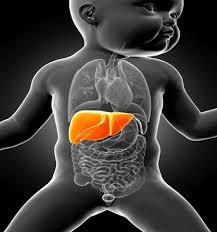
What biliary atresia does to the liver
Biliary atresia is a serious disease of infancy that damages and obstructs the bile ducts. These channels normally carry bile from the liver into the intestine, where it helps the body digest fats. When drainage fails, substances that should leave the liver accumulate, and inflammation and scarring can progress. The problem affects more than the visible yellow color of jaundice: protecting the liver requires an early specialist assessment and a treatment plan. [2]
The condition does not look identical in every baby. In a prospective North American study of 289 infants, most had biliary atresia without major associated malformations, while smaller groups had other abnormalities or differences in the usual arrangement of organs. Some children have associated heart, spleen or intestinal problems. This is one reason the team examines the whole child and may arrange additional investigations. Recognizing a particular pattern can help with planning, but it does not replace an assessment of bile drainage and liver health. [3]
Why the cause remains uncertain
Researchers are investigating several possible pathways to bile-duct injury. A study of children with biliary atresia and splenic or organ-position abnormalities identified rare candidate variants in PKD1L1, a gene involved in development and cellular signaling. That finding concerns a selected subgroup. It does not mean that typical biliary atresia has one established inherited cause, or that a routine gene test can explain every case. Questions about associated abnormalities or family recurrence belong with the child’s specialists. [4]
Experimental research also examines how an outside trigger could injure vulnerable bile ducts. Scientists studying livestock outbreaks identified biliatresone, a plant compound that damages the biliary system in zebrafish and laboratory models. These experiments offer a way to study disease mechanisms. They do not establish that ordinary foods, a parent’s behavior or a particular human exposure caused a baby’s illness. Findings in animals and cells must be distinguished from evidence that changes diagnosis, prevention or treatment in people. [5]
Recognizing the early warning signs
A baby with biliary atresia may initially seem well. The American Academy of Pediatrics’ 2025 report asks clinicians to consider eye color, stool color and previous direct or conjugated bilirubin results at the visit between 2 and 4 weeks of life. Pale stools, jaundiced eyes or concerning earlier results may prompt blood testing. At this age, a direct or conjugated bilirubin level of at least 1 mg/dL warrants urgent consultation with pediatric gastroenterology. Before 2 weeks, the laboratory’s own newborn reference range matters. A family noticing pale stools should contact a clinician promptly rather than wait for the scheduled visit. [6]
Persistent jaundice also warrants testing. The AAP’s 2022 guideline specifies total plus direct or conjugated bilirubin at 2 weeks for formula-fed infants and 3 to 4 weeks for breastfed infants. Warning signs need earlier assessment. A direct fraction above 20% of total bilirubin is no longer necessary for identifying cholestasis. [7]
A previous check for ordinary newborn jaundice does not necessarily answer the question of bile drainage. In an early study, babies later diagnosed with biliary atresia already had elevated direct or conjugated bilirubin shortly after birth, even when their total bilirubin was below treatment thresholds for common newborn jaundice. Many did not have an elevated direct-to-total ratio. This helps explain why clinicians may request the actual earlier laboratory results and order a different or repeat measurement instead of relying on the memory that “the jaundice test was fine.” [8]
Cholestasis means impaired bile flow and is always a reason to investigate, although biliary atresia is only one possible cause. The NASPGHAN/ESPGHAN guideline recommends measuring both total and direct bilirubin in the evaluation of persistent infant jaundice. It regards a direct value above 1 mg/dL as abnormal, regardless of the total. Clinicians also consider infections, metabolic conditions and inherited liver disorders, some of which need their own urgent treatment. An abnormal result signals a need for evaluation; it does not, by itself, establish biliary atresia. [9]
How doctors establish the diagnosis
The diagnostic process brings several kinds of evidence together. The 2025 FISPGHAN position paper emphasizes early recognition of biliary atresia while investigating other causes of cholestasis. History, examination, blood tests, imaging and sometimes liver tissue or genetic testing contribute different information. The team uses these findings to decide whether operative assessment and a cholangiogram are needed. In that procedure, the surgeon examines bile-duct drainage using contrast imaging. The sequence varies with the infant’s condition and local expertise; a long checklist should not become a reason to delay a time-sensitive surgical decision. [10]
What ultrasound and biopsy can show
Ultrasound can reveal features that raise or lower suspicion, including the appearance of the gallbladder and tissue near the liver’s bile-duct entrance. The “triangular cord” sign is one feature radiologists may seek. In an original diagnostic study, some infants with biliary atresia did not show that sign, and some had a visible gallbladder. Consequently, a reassuring description of one ultrasound feature is not a complete rule-out. Imaging must be interpreted alongside the blood results, symptoms and other findings. [11]
A liver biopsy provides a small tissue sample for microscopic examination. Pathologists look for patterns that suggest blocked drainage and help distinguish biliary atresia from other infant liver diseases. In a multicenter analysis of 227 needle biopsies, expert interpretation achieved about 90% diagnostic accuracy. That is useful information, but it is not perfect certainty. The result helps guide the next step, and an inconclusive sample does not automatically end the investigation. Specialists decide how much weight to give the biopsy in the complete clinical picture. [12]
The developing role of MMP-7
Matrix metalloproteinase-7, usually shortened to MMP-7, is a blood biomarker studied as an aid to specialist assessment. A North American study involving 399 infants with cholestasis found it useful in distinguishing biliary atresia from other causes. However, different assay methods produced different thresholds. A number from one laboratory should therefore not be interpreted using an internet cutoff from another study. MMP-7 can add information to the workup; it does not make clinical judgment, timely referral or definitive assessment unnecessary. [13]
What newborn screening can and cannot do
Direct or conjugated bilirubin screening aims to recognize a biochemical warning before a baby’s illness becomes obvious. A Texas study involving 124,385 newborns across 14 hospitals used a two-stage approach and also compared outcomes before and after implementation. Its results supported the potential for earlier recognition and treatment. Screening nevertheless involves more than drawing blood: an abnormal initial result needs an organized follow-up process. Because biliary atresia is rare and the outcome comparison was not randomized, the study should not be presented as a guarantee that every case will be detected. [14]
Stool-color cards use examples to help caregivers recognize stools that may contain too little bile pigment. A 19-year Japanese program screened more than 313,000 newborns. Its one-month screening sensitivity was 76.5%, showing both the value and the limitations of the approach. A card can help someone notice an important change, but a normal-looking diaper cannot reliably exclude early disease. Persistent jaundice or another concerning finding still needs assessment even if the stool does not match a pale example. [15]
Taiwan’s national experience illustrates the importance of linking recognition to action. Its stool-card program placed color examples in the child health booklet and created a route for reporting abnormal stools and arranging evaluation. Studies documented changes toward earlier referral and surgery after implementation. These are observations from a healthcare program, with historical comparisons rather than randomized assignment. The broader lesson is that a useful screening tool needs clear instructions, a clinician who receives the concern and a timely pathway to specialist care. [16]
Screening availability also depends on the health system. A 2024 integrated-network study achieved high initial testing coverage, but emphasized the practical work needed to complete the second stage and evaluate abnormal results. It identified no biliary atresia cases among the eligible screened newborns, so it could not establish how reliably that program detects the disease. Such implementation research helps explain why a hospital may have a particular screening pathway while another does not. [17]
The Kasai procedure and its limits
The Kasai operation, also called hepatoportoenterostomy, removes damaged ducts outside the liver and connects a loop of intestine to the liver’s drainage area. Its purpose is to give bile a route into the bowel through remaining small channels. Establishing drainage can reduce jaundice and help preserve the child’s original liver. It does not reverse every part of the underlying liver disease. [2]
Earlier surgery generally offers a better opportunity, but no birthday divides guaranteed success from guaranteed failure. A French national cohort spanning 1986–2015 found better long-term native-liver survival among children operated earlier. Those are group-level associations across decades of care. They should support urgency, not a prediction about one infant or an instruction to abandon evaluation after a certain age. A pediatric liver and surgical team considers the actual extent of disease and the available options, including whether transplant assessment should proceed. [18]
After surgery, the response becomes an important part of prognosis. A prospective multicenter study found that total bilirubin during the first three postoperative months was associated with subsequent liver-related events and transplant-free survival. This is why follow-up blood tests matter even when the surgical wound has healed. Clinicians assess the pattern over time and combine it with growth and signs of liver disease. A favorable result is encouraging; an unfavorable one helps the team plan additional support and assessment rather than providing a complete prediction on its own. [19]
“Native-liver survival” means living with the original liver, without transplantation. It is different from overall survival. A Dutch study followed children who had already reached age 2 with their native liver and found that some later needed a transplant, particularly for irreversible jaundice or portal hypertension. Its results apply to that selected group of survivors, not to every newly diagnosed newborn. They demonstrate why an initially successful Kasai remains the beginning of long-term care rather than proof that future liver problems are impossible. [20]
Complications specialists continue to watch for
Scarring can make it harder for blood to pass through the liver, contributing to portal hypertension. This can involve an enlarged spleen, abnormal enlarged veins and other complications that require specialist assessment. A multicenter study of long-term native-liver survivors found an association between persistent cholestasis after Kasai and later portal hypertension. The finding reinforces the need to monitor more than visible jaundice. It does not mean that one blood result predicts every complication or that a child who looks well can safely stop follow-up. [21]
Cholangitis is infection and inflammation involving the bile ducts and is an important concern after Kasai. Fever or a child becoming unwell, especially with increasing jaundice or changing stool color, needs prompt discussion with the treating team. An international expert panel proposed definitions combining symptoms with laboratory or imaging findings to improve recognition and research consistency. Its recommendations are expert consensus, not proof that one preventive regimen suits everyone. Antibiotic decisions, investigation and treatment duration depend on the clinical situation; families should use their own team’s instructions. [22]
When liver transplantation enters the plan
Transplantation is an established treatment option when the native liver can no longer support a child adequately. Options may include a deceased-donor liver, a split graft or living donation, depending on the child and transplant program. A US registry analysis of transplants performed during 2010–2021 reported strong graft outcomes in biliary atresia. These findings are encouraging, but graft survival is not the same outcome as patient survival, and historical averages cannot guarantee an individual result. Referral allows a transplant team to discuss suitability, timing, donor options and the care required afterward. [23]
Long-term outcomes extend beyond jaundice
Many people with biliary atresia reach adulthood, including some who retain their native liver. A UK long-term study documented education, employment and parenthood as well as ongoing liver disease in adulthood. It also found that health problems could develop after transition even in some people without obvious chronic liver disease at that point. The study had incomplete follow-up for some participants, so its percentages are not universal forecasts. Its practical message is that adult hepatology follow-up remains relevant and that meaningful adult lives and continuing medical care can coexist. [24]
Development is another part of the picture. Studies of infants with biliary atresia found vulnerability associated with poor growth and more severe liver disease. A selected cohort of older children living with their native liver did not show an overall excess of developmental delay, although markers of more advanced disease were associated with lower scores. These findings should not be reduced to a prediction that every child will struggle at school. They support attention to development and timely assessment when concerns arise, while recognizing the differing populations studied. [25]
What treatment research currently shows
Medicines given around surgery serve different purposes, and their evidence needs careful interpretation. In the randomized START trial, 140 infants received postoperative steroids or placebo. Steroids did not produce a statistically significant improvement in the primary bile-drainage outcome, and serious adverse events began earlier in the steroid group. This does not justify families changing an existing prescription on their own. The evidence does not establish steroids as a universally effective way to make Kasai succeed. Postoperative protocols require a discussion of benefits, uncertainties and risks with the treating team. [26]
Intravenous immunoglobulin has also been studied as a possible way to modify inflammation after surgery. The small PRIME phase I/IIa study assessed feasibility, safety and preliminary activity, using historical controls for comparison. It did not demonstrate a significant improvement in bile drainage. An early-phase study can show that an intervention is practical to administer without proving that it improves the outcomes families care about. It should therefore be described as investigated therapy, not established routine treatment. [27]
A phase II study published in 2025 tested short-term intravenous N-acetylcysteine after Kasai. None of the 12 participants in the first stage reached the prespecified bile-acid endpoint, so the planned second stage did not proceed. Comparisons with matched historical controls did not establish better clinical outcomes. The authors discussed possible future studies, but a proposal to investigate another approach is not evidence that the current one works. N-acetylcysteine should not be presented as a proven alternative to surgical care. [28]
An important update came on July 24, 2026. Ipsen announced that the phase III BOLD trial of odevixibat after Kasai did not meet its primary endpoint of improving native-liver survival compared with placebo. The international trial enrolled 254 participants. The announcement reported topline findings, with fuller analysis still relevant to interpretation. This is a sponsor-reported negative primary result, rather than evidence of a successful new standard treatment. Exploratory analyses may generate further research questions, but require careful evaluation before they can support claims of benefit. [29]
Regulatory approval must also be matched to the disease being discussed. The current US label for odevixibat, sold as Bylvay, covers pruritus in progressive familial intrahepatic cholestasis from 3 months of age, and cholestatic pruritus in Alagille syndrome from 12 months. The label also excludes a specified PFIC2 subgroup with nonfunctional or absent bile salt export pump protein from its recommendation. It does not list biliary atresia as an approved indication. Approval for another cholestatic disease, or enrollment in a trial, does not establish effectiveness for biliary atresia. Families considering research participation should receive the study’s purpose, eligibility criteria, uncertainties and alternatives from the study team. [30]
Daily life and follow-up after a Kasai operation
Going home after a Kasai operation begins a continuing partnership with the liver team. CHOP explains that specialists monitor changes in jaundice and stool color during the early months, and that children need lifelong specialist follow-up. At discharge, ask the team to turn that broad plan into clear arrangements: who coordinates appointments, which tests happen locally, who reviews results, and how to contact someone outside office hours. Ask which observations they want recorded at home and which changes require an immediate call. A shared calendar can give caregivers one place to check the next appointment. Bring questions about daily life to these visits as well as questions about laboratory results; both belong in the conversation. [31]
Prepare for a specialist visit by choosing the questions that matter most to your family that week. Bring the current medicine information, relevant hospital paperwork, and a short account of changes since the previous appointment. AHRQ’s general appointment guidance recommends asking how tests are performed, how to prepare, and how results will reach you. During the discussion, explain the next steps back in your own words and ask for written instructions where anything is unclear. Mention practical obstacles, such as transport, difficulty obtaining supplies, or instructions that are hard to follow. If a result does not arrive when expected, contact the office and ask what it means for the care plan. [32]
Feeding and growth support without guesswork
Nutrition matters after surgery. NIDDK explains that reduced bile flow can affect fat and vitamin absorption, while appetite and energy needs may also create difficulties. The response is an individual plan from the child’s clinician and dietitian. Ask how the team will assess growth, which feeding information is useful to bring, and when the plan should be reviewed. Some children need prescribed supplements, specialized formula, or tube feeding. These choices depend on the child’s needs; an online recipe cannot establish the appropriate concentration or supplement amount. Tell the team when feeds are difficult to manage or supplies are unaffordable. Request teaching and written instructions for any new feeding method before using it at home. [33]
Keep medicine instructions clear for every caregiver
Medication questions are best settled with the prescribing team and pharmacist. The FDA recommends keeping a complete record that includes prescriptions, nonprescription products, vitamins, and supplements, and explaining exactly how each is used. For a child with biliary atresia, ask what each prescribed medicine is for and what to do after a missed dose, vomiting, or a supply problem. Do not improvise an extra dose or stop, restart, or change treatment because another family uses a different schedule. Ask the pharmacist to demonstrate the supplied measuring device and clarify storage instructions. Share the current written directions with other caregivers. Report side effects, confusing labels, and cost problems promptly so the professionals can help resolve them. [34]
Plan daycare and school support around the child
For daycare and school, everyday infection prevention provides a useful foundation. CDC guidance for educational settings emphasizes handwashing with soap and water, especially before eating and after using the bathroom, and helping younger children who cannot manage independently. Ask how these routines are supervised and whether children can easily reach appropriate facilities. Hand sanitizer needs safe storage and adult supervision for young children; it does not replace handwashing in every situation. These are general public-health practices, not evidence that a particular routine prevents biliary atresia complications. Decisions about attendance, extra precautions, or returning after an illness belong with the child’s medical team and the setting’s staff, using the child’s current care instructions. [35]
A written school health plan makes medical instructions usable during an ordinary school day. The American Academy of Pediatrics recommends including relevant health history, dietary and medicine needs, precautions, emergency steps, and contact details for children with chronic conditions. Arrange a discussion with the school nurse or appropriate staff member and the child’s clinicians. Make responsibilities explicit: who stores medication, who is trained to give it, and who calls the family if concerns arise. Review the plan when treatment or contact information changes. Ask how absences and missed learning will be handled. The name and legal basis of formal educational accommodations vary by location, so discuss the available process with the school rather than assuming one arrangement applies everywhere. [36]
Keeping up with friends and learning deserves its own conversation. The Royal Children’s Hospital Melbourne recommends an agreed contact person, coordinated communication, and planning for return after an absence. Ask your child, when developmentally appropriate, what they want classmates to know and how they would like questions answered. Necessary information for responsible staff can be more detailed than information shared with peers. If tiredness or frequent appointments affect participation, discuss a manageable timetable with the school and clinical team. Explore learning support during a hospital stay if needed. These measures address the experience of children with health conditions generally; they should be tailored to the child’s actual difficulties rather than added automatically because of the diagnosis. [37]
Make room for the child’s feelings and the whole family
Repeated appointments can involve unfamiliar equipment, waiting, and procedures that a child does not understand. Ask whether a child life specialist or equivalent service is available. The Association of Child Life Professionals describes support through developmentally appropriate explanations, play, preparation, and distraction during procedures. Tell the team what your child finds frightening, what language they understand, and what has helped during previous visits. A familiar game, a chance to ask questions, or practicing with suitable play materials may become part of a plan agreed with the specialist. Support should fit the individual child’s age and communication needs. It is reasonable to ask for preparation again when a new procedure or unfamiliar hospital changes the experience. [38]
Brothers and sisters may need explanations and attention even when they seem to be coping quietly. Lurie Children’s advises keeping routines as consistent as possible, identifying a trusted adult, and making time for individual contact. Give siblings an honest explanation suited to their age, and leave space for feelings that may include worry, frustration, or jealousy. Small predictable moments, such as reading together or checking in after school, can be easier to sustain than ambitious promises during a busy treatment period. Discuss persistent withdrawal, disrupted sleep, or marked changes in behavior with a pediatrician, school counselor, or therapist. The aim is to notice each child’s needs, without expecting siblings to understand everything or take on adult responsibilities. [39]
Caregivers also need practical and emotional support. Seattle Children’s describes hospital social workers as a resource for concerns ranging from stress to insurance, employment, and financial assistance. Ask early about the help available at your own hospital; services and eligibility differ. Write down the pressures most likely to disrupt care, whether these involve getting to appointments, taking time off work, or finding somewhere to stay. This gives the team something concrete to help address. Bring up your own exhaustion or anxiety as well. Sharing a task with a trusted person or arranging a short break can be part of the family’s support plan. Needing help is a reason to use available services, not to hide the difficulty. [40]
Build independence before the move to adult care
As a child grows, participation in care can increase gradually and according to ability. Got Transition recommends discussing the transfer process with clinicians, developing a medical summary, and helping young people practice managing appointments and medicine refills. Start with a small shared task, such as asking one question during a visit or learning where emergency contact information is kept. Later, confirm who will provide adult liver care and how records and the emergency plan will reach that service. Ask about changes in confidentiality and consent that apply locally. A transfer is not complete simply because a referral was sent: check that the receiving practice has the information and that the first appointment is arranged. [41]
Prepare for transplant discussions one step at a time
If transplant evaluation is recommended, ask what the evaluation will involve and which questions it is intended to answer. Children’s Hospital Colorado describes assessment as a way to determine whether transplantation is the appropriate treatment, with input from several specialties. Its preparation guidance includes collecting medical and immunization records, medicine information, and questions from the family. Ask your center which documents it already holds and which you need to obtain. Find out whether appointments include a dietitian, psychologist, social worker, or financial coordinator, and raise concerns about travel and support at home. The schedule and services described by one center are examples; your child’s team should explain the arrangements that apply to your family. [42]
If a child joins a transplant waiting list, practical preparation can reduce confusion when plans change quickly. HRSA’s pediatric transplant guidance recommends keeping contact details current, organizing records, and preparing arrangements for travel, other children, and the home. Ask your center how you will be contacted, where to go, and what accommodation may be needed afterward. Agree who can help with the household and who can update relatives, while respecting the child’s privacy. Also ask how the team will explain changes in waiting-list status. An organ offer may still be declined after final assessment, so a call does not guarantee surgery will proceed. Keep questions about timing and readiness with the transplant team. [43]
Frequently asked questions
Should pale stools wait for a routine appointment?
No. Seek prompt clinical assessment. [1]
Can one reassuring ultrasound exclude biliary atresia?
No. Specialists interpret imaging with the complete clinical picture. [11]
Does an early Kasai guarantee success?
No. Earlier treatment improves opportunity, but individual outcomes vary. [18]
Does successful surgery end follow-up?
No. Lifelong specialist follow-up remains important. [31]
Can families choose supplements from an online recipe?
No. Feeding and supplement plans need individual professional guidance. [33]
Is Bylvay approved for biliary atresia in the US?
The current US label does not include biliary atresia. [30]
Sources
- NHS jaundice in babies
- Cincinnati Children’s BA patient-care resource
- Congenital anomalies prospective study
- PKD1L1/BASM exome study
- Biliatresone preclinical discovery
- AAP BA recognition guidance (current practical anchor)
- AAP newborn hyperbilirubinemia guideline
- Early direct bilirubin case series
- NASPGHAN/ESPGHAN infant cholestasis guideline
- FISPGHAN 2025 position paper
- Ultrasound triangular-cord study
- Multicenter biopsy diagnostic study
- North American MMP-7 diagnostic study
- Texas direct/conjugated bilirubin screening study
- Japanese stool-color-card cohort
- Taiwan national stool-card program family
- Utah integrated-network screening feasibility
- French national long-term cohort
- Post-Kasai bilirubin and outcomes
- Dutch conditional native-liver survival cohort
- Asian multicenter portal-hypertension cohort
- International cholangitis expert consensus
- US transplant outcomes registry study
- UK transition/adult and socioeconomic cohort
- Neurodevelopment studies (pooled age cohorts); Supporting source
- START randomized trial and companion publications (pooled)
- PRIME intravenous immunoglobulin trial
- N-acetylcysteine phase II trial
- BOLD phase III result (material 2026 update)
- Odevixibat regulatory labeling
- Biliary Atresia
- Be More Engaged in Your Healthcare; Supporting source
- Eating, Diet, & Nutrition for Biliary Atresia
- Stop – Learn – Go: Tips for Talking with Your Pharmacist to Learn How to Use Medicines Safely
- About Hand Hygiene in Schools and Early Care and Education Settings
- Chronic Conditions and School
- Education support for students with health conditions
- Child Life: Empowering Children and Families
- Supporting Siblings of Children with Medical Conditions
- Where to Turn When Preparing for Your Child’s Hospital Stay
- Parents & Caregivers: Frequently Asked Questions
- Pediatric Liver Transplant Process
- Pediatric Transplants





