
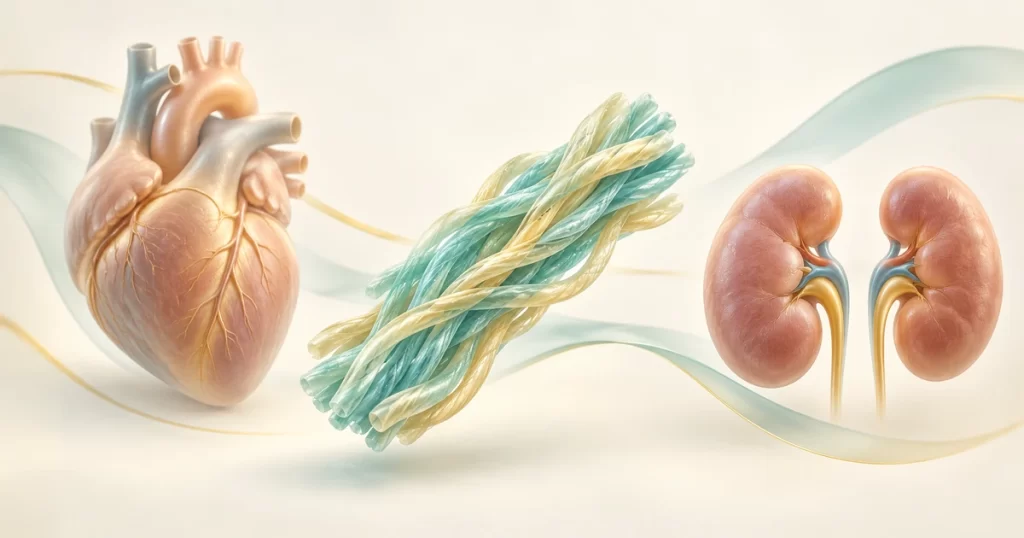
Amyloid is a material; amyloidosis is a disease
Amyloid describes protein that has folded into an abnormal, fibre-like arrangement and accumulated in tissue. Amyloidosis is the group of conditions caused by these deposits. The distinction matters: “amyloid present” on a report is an important finding, but it is not yet the complete name of a disease or a treatment plan. Different proteins can form amyloid, and they do not all come from the same cells or affect the same organs. [1]
For someone beginning an assessment, three questions make the terminology easier to use: which protein is involved, where has it accumulated, and how are those organs working? This guide concentrates on systemic amyloidosis, including AL, AA and transthyretin-related disease. It is educational information, not a way to diagnose yourself. Symptoms, biopsy results and specialist investigations must be interpreted together. A useful first step is to ask for the precise diagnosis in writing rather than relying on the single word “amyloid.” [1]
| Type | Protein process | Why classification matters |
|---|---|---|
| AL | Abnormal immunoglobulin light chains | Care targets the responsible cell population. [5] |
| AA | Inflammation-associated serum amyloid A | Control of the inflammatory driver is central. [6] |
| ATTR | Transthyretin, hereditary or wild-type | Therapy and family advice depend on the specific context. [7] |
Why the protein type changes the plan
The word amyloid describes a shared structure, not one universal substance that can be removed by one universal medicine. In systemic disease, an amyloid-forming protein travels in the blood and deposits in susceptible tissues. Clinicians therefore investigate both the source of that protein and its effects. A treatment that reduces abnormal light chains is addressing a different biological problem from a treatment that stabilises transthyretin or controls persistent inflammation. [2]
This explains why two people with similarly swollen ankles may receive very different care. Their symptoms can look alike while the responsible proteins and organ problems differ. It also explains why an early, accurate diagnosis is valuable even when symptoms appear modest. Care is not simply a response to how uncomfortable a person feels today. It aims to limit further injury while there is organ function to preserve. Asking what evidence established the type is sensible, especially before treatment with potentially substantial side effects. [2]
Common symptoms are clues, not a diagnosis
People may notice fatigue, unintended weight loss, breathlessness, leg swelling, bruising around the eyes, altered bowel habits or tingling in their hands and feet. Not everyone has the same combination. Symptoms depend on the organs involved, and some develop gradually enough to be attributed to ageing or another condition. The absence of a dramatic symptom does not provide a reliable all-clear. [3]
Equally, these symptoms are much more often explained by conditions other than amyloidosis. Frothy urine, tiredness or numb fingers alone cannot identify an amyloid disorder. Arrange a medical assessment for persistent or unexplained changes rather than matching yourself to a checklist. Describe when each problem began, what has changed, and whether several problems developed together. A clinician can decide whether ordinary initial testing, specialist referral or an amyloidosis investigation is appropriate. If a diagnosis has already been made, new symptoms still deserve assessment rather than an assumption that every change is caused by amyloid. [3]
When not to wait for an amyloidosis appointment
Severe difficulty breathing, a tight or heavy chest, pain spreading to the arm, back, neck or jaw, blue or grey lips, or sudden confusion require emergency assessment. Call your local emergency number. Do not wait for a routine specialist appointment or drive yourself when you are seriously unwell. These signs can have several causes, and identifying the cause comes after getting urgent help. [4]
Less severe but worsening breathlessness, palpitations, coughing blood, or pain and swelling in one leg also warrant urgent medical advice. When contacting a service, explain both the immediate symptoms and any known amyloidosis diagnosis. Do not use a previously reassuring scan to dismiss a new problem. Keep a current medication list available and tell the receiving team about treatment you are taking. A written plan from your own clinical team should identify whom to contact during office hours and outside them, without replacing emergency services when symptoms are severe. [4]
Main amyloidosis types: AL, AA and ATTR
AL amyloidosis: the light-chain form
In AL amyloidosis, a population of abnormal plasma cells produces immunoglobulin light chains that can form amyloid. Plasma cells normally participate in the immune system by making antibodies. AL treatment targets the abnormal protein-producing cells, but the amount of abnormal cells does not by itself describe the extent of organ injury. A relatively small clone can still cause important disease. [5]
AL amyloidosis and multiple myeloma are related through plasma-cell biology, but they are not interchangeable diagnoses. Some patients have both; others with AL do not have myeloma. Conversely, finding a monoclonal protein in someone with amyloid does not automatically prove AL, because a plasma-cell abnormality can coexist with another amyloid type. This is one reason protein typing is so important. Ask whether the diagnosis has been confirmed from the deposits themselves and how the marrow and blood results fit that finding. Avoid interpreting a single abnormal laboratory value as the complete answer. [5]
AA amyloidosis: the link with persistent inflammation
AA amyloidosis is associated with sustained inflammation, including some chronic inflammatory diseases and infections. Its precursor is serum amyloid A, an inflammatory protein. A long period of increased production can allow AA deposits to develop in susceptible people. This does not mean that every person with arthritis or another inflammatory illness will develop amyloidosis. [6]
Kidney problems are particularly important in AA disease. Treatment addresses the underlying inflammatory or infectious driver as well as the organ consequences. The appropriate specialist may therefore include a rheumatologist, infection specialist or another clinician alongside the amyloidosis and kidney teams. The useful question is not simply whether an anti-inflammatory medicine is available, but whether the actual source of inflammation has been identified and adequately controlled. Do not start leftover antibiotics, steroids or supplements in an attempt to lower inflammation yourself. Different causes require different approaches, and follow-up needs to establish whether the inflammatory activity and kidney findings are improving. [6]
ATTR amyloidosis: hereditary and wild-type disease
Transthyretin, abbreviated TTR, normally helps transport thyroxine and vitamin A through the body. It is made mainly in the liver. In ATTR amyloidosis, transthyretin contributes to amyloid deposits. Some cases are associated with a disease-causing TTR gene variant; these are called hereditary or variant ATTR. In wild-type ATTR, the protein has the usual genetic sequence but can still form deposits, particularly in older people. [7]
The word “wild-type” does not mean harmless or mild. Nor does a hereditary label establish how severe the disease will be in a particular person. These terms identify different origins of the protein and help guide family assessment. A diagnosis should distinguish the two rather than treating ATTR as a single category with identical implications for relatives. If you see older terms such as “senile systemic amyloidosis” in a historical record, ask the team to translate them into current terminology and explain whether genetic testing has been performed. [7]
Heart, nerve and other patterns can overlap
Hereditary ATTR can affect peripheral nerves, the autonomic nervous system and the heart, with other organs involved in some people. Peripheral nerves carry sensation and movement signals. Autonomic nerves help regulate functions such as blood pressure, bowel activity and bladder control. Symptoms can therefore extend beyond the numbness that people commonly associate with neuropathy. [8]
Some people predominantly have a cardiac presentation, while others have prominent nerve or autonomic problems. These patterns are not a rule that restricts assessment to a single organ. The age at onset and the course vary, including within families. A relative’s experience can be useful background without predicting your own future. Bring a family history that includes unexplained heart failure, walking difficulties and relevant diagnoses where known, but do not assume that every similar symptom in a relative has the same cause. A specialist can decide which symptoms require assessment and which family information is genuinely informative. [8]
What inheritance does, and does not, predict
Hereditary amyloidosis refers to inherited disorders in which an altered protein can accumulate as amyloid. ATTR is an important example, but not every hereditary amyloid disorder involves transthyretin. The affected protein and gene need to be specified. A family history can help, yet an apparently negative history does not settle the question: previous generations may not have had a precise diagnosis. [9]
For a family considering assessment, begin with the confirmed diagnosis in the affected person when possible. A copy of the genetic or protein-typing report is more useful than a family recollection that someone had “heart trouble.” Relatives should discuss testing with a qualified clinical service rather than assuming a general consumer test answers the question. Results need interpretation alongside symptoms and family context. This conversation is also an opportunity to ask what monitoring would be offered, what a positive result would change now, and how uncertainty would be handled if the result is not straightforward. [9]
Genetic counselling makes testing more useful
Genetic testing can help identify an inherited condition, guide care and clarify implications for relatives. It can also produce uncertainty. Before testing, ask what the test can answer, what it cannot answer, and whether the result could affect other family members. A genetic counsellor can help explain possible outcomes and support an informed choice. [10]
A positive genetic result and a diagnosis of active organ disease are not the same question. The team should explain whether the result indicates a predisposition, establishes a cause for existing symptoms, or requires further clinical assessment. Ask when results are expected and who will discuss them with you. Do not rely on an unexplained portal entry or a variant name found online. For relatives, choices about predictive testing may involve emotional and practical considerations as well as medical ones. Planning a supported conversation is more useful than pressing everyone in a family to make the same decision at the same time. [10]
Other amyloid types still need exact identification
AL, AA and ATTR are not the entire classification. Kidney-related amyloid can include LECT2 disease and rarer inherited forms. Dialysis-related amyloidosis involves beta-2 microglobulin and commonly affects bones, joints and tendons. A name that sounds unfamiliar is not a reason to substitute the treatment used for a better-known type. [11]
This distinction is especially important when a kidney biopsy finds amyloid. The report should help establish the protein involved, because a kidney problem does not automatically mean AL or AA disease. Ask whether the sample needs specialist review and whether the result is definitive. Treatment may focus on the underlying protein process, supportive kidney care or both, depending on the type. No special diet has been established as a universal way to prevent or treat amyloidosis itself. Dietary changes may nevertheless be important for the consequences of kidney disease, and should be tailored rather than taken from a generic “amyloid detox” programme. [11]
Localised amyloid is not automatically systemic disease
Amyloid may be localised to a particular site rather than distributed as systemic disease. Localised deposits can occur in areas such as the bladder, airways or skin. Their significance depends on the location, symptoms and investigation. The presence of amyloid in one sample does not automatically justify treatment directed at the whole body. [12]
A useful discussion after a biopsy is whether the finding is localised, systemic or not yet fully classified. Ask what additional tests are needed to make that distinction and what follow-up the affected site needs. A local procedure or observation may be considered in some circumstances, while systemic disease requires a different assessment. This is not something to decide from the biopsy word alone. Accurate classification helps avoid both undertreating important disease and exposing someone to unnecessary systemic treatment. If another clinician later sees the report, provide the specialist conclusion as well as the original pathology wording so that the context is not lost. [12]
Amyloid in Alzheimer’s disease is a different context
The amyloid plaques discussed in Alzheimer’s disease involve beta-amyloid in the brain. That is a different protein context from the light chains of AL disease or transthyretin of ATTR disease. Sharing the word amyloid does not make these conditions interchangeable, and a diagnosis of systemic amyloidosis does not by itself diagnose Alzheimer’s disease. [13]
If you are reading a brain scan or memory-clinic report, ask the memory specialist what the particular biomarker means in that setting. A cardiac scan, tissue biopsy and brain amyloid test answer different questions. Treatments developed for one protein and one clinical condition should not be assumed to treat another. This guide therefore does not use dementia treatment recommendations as advice for systemic amyloidosis. Likewise, difficulty concentrating during illness can have many explanations and should be assessed on its own merits. Keeping the protein name and the organ context together prevents a great deal of confusion when searching for information or discussing reports with family. [13]
How amyloidosis can affect different organs
The heart assessment looks beyond pumping strength
Cardiac amyloidosis can make the heart muscle stiff, interfering with filling and contributing to heart failure. A person may notice breathlessness, reduced exercise tolerance, swelling or rhythm-related symptoms. The assessment is not limited to whether the heart’s ejection fraction is reduced. Clinicians consider the overall pattern of structure, filling, rhythm and symptoms. [14]
A normal-sounding statement about one measurement should not be interpreted as excluding every cardiac problem. Ask what the echocardiogram showed and whether further testing is needed to explain the symptoms. Conversely, a thickened heart wall is not proof of amyloid; there are other explanations. The diagnosis requires a coherent assessment rather than a single image feature. For background on the syndrome rather than amyloid typing, Sly Academy’s guide to heart failure explains the broader terminology. Your specialist’s interpretation determines whether amyloid is involved and which investigations are appropriate. [14]
Kidney findings may appear before obvious kidney failure
Nephrotic syndrome is a pattern of kidney damage that includes substantial protein loss in urine, low blood albumin, swelling and changes in blood lipids. It is a syndrome with several possible causes, not a synonym for amyloidosis. When amyloid is suspected, doctors investigate the cause as well as the consequences of protein leakage. [15]
Ask how urine protein is being measured and how the result relates to kidney filtration tests. These are different parts of the assessment. Swelling alone cannot tell you how much protein is being lost, and the appearance of urine is not a reliable substitute for laboratory testing. Bring a list of changes such as ankle swelling, weight changes and altered urination to the appointment. Sly Academy’s kidney disease symptoms in women guide offers related reading, but symptoms are not specific enough to identify amyloid or replace the kidney team’s tests. [15]
Nerve symptoms deserve their own assessment
Sensory neuropathy can cause burning pain, tingling, reduced sensation or difficulty judging the position of the feet. Motor involvement can produce weakness. Autonomic involvement can affect bowel function, sweating, bladder emptying or blood-pressure control. Describing these separately is more informative than saying only that the nerves feel “bad.” [16]
For example, tell the clinician whether you feel dizzy on standing, have fallen, cannot feel a hot surface normally, or have trouble lifting the front of a foot. These details can guide examination and practical safety measures. Not every nerve symptom in someone with amyloidosis is necessarily due to amyloid. Diabetes, compression, treatment effects and other conditions may contribute. A symptom diary should record the pattern and functional impact rather than trying to assign a cause. If there is a new or rapidly worsening problem, contact the treating team instead of waiting until the next scheduled review to add it to the diary. [16]
Confirmation and staging are different questions
Testing has several jobs: detecting amyloid, identifying its type and assessing organ involvement. Blood and urine tests, a tissue biopsy and imaging may contribute different pieces. A biopsy can be taken from abdominal fat, bone marrow or an affected organ, depending on the situation. The safest and most informative approach is chosen individually. [17]
Ask which question each proposed test is intended to answer. A test arranged to assess heart function may not establish the protein type. Similarly, a result confirming deposits does not fully describe their effect on the kidneys or nerves. Understanding this sequence can make a lengthy investigation less confusing. Keep copies of the key reports and the specialist’s summary, particularly if care crosses hospitals. When discussing a procedure, ask about preparation, medicines that need review, the risks relevant to your health and when results will be discussed. Do not independently stop blood thinners or other prescribed treatment before a biopsy. [17]
Protein typing prevents the wrong treatment
Pathologists first establish whether the tissue contains amyloid, commonly using Congo red staining and specialised microscopy. Identifying the protein within those deposits is a further step. Specialist laboratories may use techniques such as mass spectrometry to distinguish types. The practical outcome should be a specific classification that the clinical team can use. [18]
A report that says only “amyloid positive” may need further work before disease-directed treatment is selected. Ask whether typing is complete, which method was used and whether the sample is adequate. If results do not fit the clinical picture, expert review may be appropriate. This is especially important when more than one explanation is plausible. It is reasonable to request a plain-language explanation of the conclusion, rather than trying to interpret staining names yourself. Save the final amended report if additional testing changes or clarifies the original result, so future clinicians are not relying on an incomplete preliminary version. [18]
Why a positive heart scan is not enough on its own
The cardiac diagnostic pathway must consider AL disease before a bone-tracer scan is interpreted as ATTR. The monoclonal protein screen includes serum free light chains plus serum and urine immunofixation. Ordinary protein electrophoresis alone is not an adequate substitute for this screen. Kidney function can also affect interpretation of light-chain measurements. [19]
A positive tracer scan does not, by itself, distinguish ATTR from AL. In the appropriate clinical setting, a characteristic scan together with the required exclusion of a monoclonal process can support a non-biopsy ATTR diagnosis. If a monoclonal protein is present, further assessment and tissue typing may be needed rather than assuming the scan settles the type. Ask whether all parts of the diagnostic pathway were completed. This is a particularly important safety question before starting ATTR-specific treatment. The aim is not to demand every possible test, but to make sure that the tests performed actually answer the classification question. [19]
Different imaging tests answer different questions
Echocardiography assesses cardiac structure and function. Cardiac magnetic resonance imaging can add detailed tissue information and help clarify whether amyloidosis is likely. Bone-tracer scintigraphy has a particular role in the ATTR pathway. None should be interpreted as an isolated label detached from blood testing, symptoms and the other findings. [20]
An MRI may support cardiac amyloidosis without independently proving whether the protein is AL or ATTR. If a report uses phrases such as “suggestive of” or “consistent with,” ask what remains to be established. A specialist may recommend additional imaging, a biopsy or genetic testing when results are uncertain or discordant. Before a scan, disclose relevant implants, kidney problems and previous contrast reactions to the imaging service. Follow the service’s preparation instructions rather than assuming all scans have the same requirements. The most useful result is a clear clinical conclusion and next step, not simply accumulating more scan reports. [20]
Specialist coordination matters in a multisystem condition
An amyloidosis centre brings together experience in diagnosis, protein analysis and the different organ patterns. Depending on your condition, local care may involve haematology, cardiology, nephrology, neurology and genetics. Specialist review can be particularly useful when the protein type is uncertain, symptoms span several systems or treatment decisions depend on complicated test results. [21]
Ask who is coordinating the overall plan and who should receive new results. A shared summary can reduce the chance that one clinic changes treatment without understanding another organ’s needs. Useful items include the confirmed type, organs involved, current medicines, recent procedures and emergency contacts. If you live far from a specialist centre, ask which monitoring can happen locally and which decisions require specialist input. The goal is a workable arrangement rather than unnecessary travel. A named point of contact also helps when you are unsure whether a new symptom belongs with the heart, kidney or blood-disorder team. [21]
AL treatment targets the source of abnormal light chains
For newly diagnosed AL amyloidosis, the United States FDA granted traditional approval on 19 November 2025 to daratumumab and hyaluronidase-fihj with bortezomib, cyclophosphamide and dexamethasone. This replaced the earlier accelerated approval for that indication. The combination is an example of treatment aimed at the abnormal plasma-cell process, not a treatment for all amyloid types. [22]
Eligibility and safety require individual assessment. The FDA specifies that this treatment is not indicated or recommended for AL patients with NYHA class IIIB or IV cardiac disease or Mayo stage IIIB outside controlled clinical trials. Serious cardiac adverse reactions are among the safety concerns. Do not use an online drug list to decide that a regimen is appropriate for you. Ask the haematology team about the intended benefit, the reasons for its recommendation and the monitoring required. Availability and prescribing criteria differ between countries, and the current local prescribing information takes precedence over a general educational summary. [22]
Treatment logistics and side effects need a written plan
Treatment for AL amyloidosis may be delivered through repeated outpatient visits, with hospital care needed for some people. The practical plan should cover the schedule, tests before treatment, medicines used at home and whom to call when unwell. Do not assume every symptom can wait until the next infusion or injection appointment. [23]
Ask the team for its specific instructions about fever, suspected infection, vomiting, diarrhoea, worsening swelling or other treatment problems. Keep the urgent contact number somewhere easily accessible, not only inside a hospital portal. A family member or trusted friend can help record instructions if appointments are tiring. Report side effects honestly; hiding symptoms to avoid a delay can make care less safe. Support may also include nursing advice, symptom management and help navigating appointments. The appropriate response depends on both the treatment and organ involvement, so generic advice from another patient should not replace the instructions supplied by your own treatment service. [23]
ATTR treatments are specific to the manifestation
One approach in ATTR disease is to stabilise transthyretin so that it is less likely to break apart and contribute to deposits. Acoramidis, marketed as Attruby in the United States, is approved for adults with cardiomyopathy of wild-type or hereditary ATTR to reduce cardiovascular death and cardiovascular-related hospitalisation. This is a defined cardiac indication, not a claim that it cures all manifestations of amyloidosis. [24]
A medicine’s mechanism, indication and expected outcome are separate questions. Ask which problem it is intended to address and what changes will be monitored. Symptoms may still require supportive treatment even when disease-directed therapy is appropriate. Do not stop another prescribed medicine because a new ATTR medicine has been started, and do not assume that combining treatments offers additional benefit without specialist advice. The decision should account for the evidence, your particular organ involvement, other medicines and local access criteria. Information about a trial or approval in another country may not describe your own treatment options. [24]
TTR-lowering treatment also has defined indications
Another treatment strategy reduces the amount of transthyretin produced. The FDA’s 2025 approval summary includes vutrisiran, marketed as Amvuttra, for adults with cardiomyopathy caused by wild-type or hereditary ATTR, to reduce cardiovascular mortality, cardiovascular hospitalisations and urgent heart-failure visits. This should not be confused with a guarantee that existing deposits disappear or normal function returns. [25]
When discussing a treatment that lowers a precursor protein, ask how the team will assess clinical benefit rather than focusing only on a laboratory reduction. Relevant outcomes may include symptoms, function and organ-related events over time. A fast change in a protein measurement does not automatically mean an equally fast recovery of the heart or nerves. Also ask which safety monitoring and supplementation instructions apply to the specific product. Do not independently start high-dose vitamins or change supplements based on the protein’s normal role in the body. Follow the prescribing team’s instructions and report new symptoms during treatment. [25]
A neuropathy indication is not automatically a cardiac indication
Eplontersen, marketed as Wainua in the United States, is indicated for the polyneuropathy of hereditary transthyretin-mediated amyloidosis in adults. That wording matters: hereditary ATTR polyneuropathy is a specific manifestation and population. It is not interchangeable with a general statement that any person with amyloid in the heart should receive the medicine. [26]
Product-specific precautions also matter. The prescribing information includes reduced vitamin A levels and instructions about supplementation and assessment of relevant eye symptoms. The appropriate supplement plan comes from the treating team, not from a presumed need to take more than recommended. Bring an up-to-date list of over-the-counter products to the appointment. More broadly, compare medicines by their approved purpose and evidence rather than treating all “gene-silencing” or TTR-directed treatments as equivalents. If your disease involves both nerves and heart, ask how the proposed plan addresses each and which specialist will coordinate follow-up across those needs. [26]
Daily care, nutrition and protecting function
Daily heart monitoring should be personalised
If amyloidosis has caused heart failure, home monitoring can help identify changes before they become a crisis. Your team may ask you to track weight, swelling, breathing and how ordinary activities feel. Ask how often to record these and which changes should trigger a call. There is no single threshold that this general article can safely prescribe for everyone. [27]
Keep the plan practical: use a consistent method, record the date and describe symptoms alongside measurements. A weight change without context may be less informative than knowing that it accompanies more breathlessness or reduced appetite. Take medicines as prescribed and tell the team about troublesome effects rather than stopping them alone. Salt or fluid advice should be individually specified. Living with a chronic cardiac condition can also be stressful; emotional support, counselling or a patient group may help. Supportive or palliative care can address difficult symptoms and quality of life alongside other appropriate treatment, not only at the end of care. [27]
Nutrition should protect organs without causing undernutrition
Kidney disease can change the appropriate amounts of protein, salt, minerals and fluid in a person’s diet. At the same time, poor appetite and unintended weight loss make adequate nutrition important. A restrictive diet copied from the internet can create problems if it does not match the stage of kidney disease and the person’s nutritional needs. [28]
Ask for dietetic advice that takes account of both kidney and heart findings. The plan should explain what, if anything, needs limiting and how to maintain enough energy and nutrition. Protein restriction is not a universal instruction for everyone with amyloid, and too little protein can contribute to malnutrition. Potassium and phosphorus advice should reflect the clinical situation rather than automatically excluding large food groups. Bring examples of what you actually eat, including drinks and supplements, so the discussion can lead to realistic changes. If eating becomes difficult or weight is falling, tell the team rather than treating it as an unavoidable part of the condition. [28]
Protect function as well as treating the underlying disease
When nerve damage affects sensation, balance or strength, symptom care and rehabilitation remain important. A physiotherapist may help with movement and suitable walking aids, while prescribed nerve-pain treatments can differ from ordinary painkillers. Reduced sensation can make injuries less noticeable, so ask how to protect and inspect areas such as the feet. [29]
Report a wound that is not healing, worsening weakness or increasing falls. Do not force exercise through dizziness or assume that pain is a reliable warning when sensation is impaired. The goal is to maintain safe activity and independence within your abilities. Practical adjustments at home may matter as much as a test result: suitable footwear, clear walking routes and help with difficult tasks can be discussed with the care team. These measures support function but do not identify the cause of neuropathy or replace disease-specific treatment. Review them as needs change, rather than assuming that the first plan will remain suitable indefinitely. [29]
Make the next consultation answer concrete questions
An effective consultation should leave you knowing what is confirmed and what remains uncertain. Write down the exact protein type, how it was established, which organs need monitoring and the next planned decision. If the diagnosis is still being investigated, ask what finding would change the current working explanation. This is more useful than leaving with a list of unfamiliar abbreviations and no sequence for what happens next. [30]
Bring your medication list, key reports and a short account of changes in daily function. Prioritise the questions that affect safety or decisions now. Ask whether the clinicians involved share a plan and whom to contact between visits. The central message is that amyloid is not one diagnosis with one treatment: precise classification and coordinated care make the information actionable. Progress should be judged against your own clinical situation, not another person’s story. If information conflicts, ask the specialist to explain the difference before making changes to treatment or assuming that a result has been overlooked. [30]
Sources
- UCL National Amyloidosis Centre: Helping you understand amyloidosis
- UCL: The science of amyloidosis
- NHS: Amyloidosis
- NHS: Shortness of breath
- UCL: Management and treatment of amyloidosis
- UCL/Royal Free: AA amyloidosis patient information
- MedlinePlus Genetics: TTR gene
- MedlinePlus Genetics: Transthyretin amyloidosis
- MedlinePlus Medical Encyclopedia: Hereditary amyloidosis
- NHS: Genetic and genomic testing
- NIDDK: Amyloidosis and kidney disease
- Mayo Clinic: Amyloidosis symptoms and causes
- National Institute on Aging: What happens to the brain in Alzheimer’s disease?
- Mayo Clinic: What is cardiac amyloidosis?
- NIDDK: Nephrotic syndrome in adults
- NHS: Peripheral neuropathy symptoms
- Mayo Clinic: Amyloidosis diagnosis and treatment
- Mayo Clinic Laboratories: Laboratory approach to the diagnosis of amyloidosis
- American College of Cardiology: 2023 cardiac amyloidosis expert consensus
- American College of Cardiology: Multimodality imaging for ATTR cardiomyopathy
- UCL: National Amyloidosis Centre
- FDA: Traditional approval of daratumumab and hyaluronidase for newly diagnosed AL
- UCLH: AL Amyloidosis Treatment Centre
- FDA: Acoramidis for ATTR cardiomyopathy
- FDA: Advancing health through innovation, 2025 drug approvals
- DailyMed: Wainua prescribing information
- NHLBI: Living with heart failure
- NIDDK: Healthy eating for adults with chronic kidney disease
- NHS: Peripheral neuropathy overview
- American College of Cardiology: Avoiding missed cardiac amyloidosis diagnosis





