

A mouth ulcer is a sore in the lining of the mouth, with several possible causes. This guide explains common patterns, practical comfort measures, and the warning signs that call for dental or medical assessment. [1]
What a mouth ulcer actually means
A mouth ulcer is an area where the surface lining of the mouth has broken down, leaving a sore. The term describes a finding rather than one particular disease. An ulcer after an accidental bite, an aphthous ulcer, and an ulcer associated with another illness can look similar while needing different approaches. Location, duration, changes over time, and symptoms elsewhere help a clinician work out the cause. A photograph cannot provide all of that information. A sore is also different from a lump, a fluid-filled blister, or a persistent patch, although people may use the same everyday words for them. The practical starting point is therefore to describe what is happening without deciding too early what it must be. Treatment may relieve discomfort, address an identifiable cause, or do both; an unexplained lesion sometimes needs tests rather than another over-the-counter product. [1]
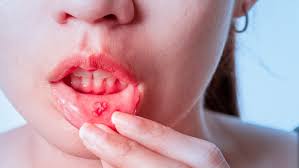
Canker sores and the patterns of aphthous ulceration
Canker sores are also called aphthous ulcers. Recurrent aphthous stomatitis describes a pattern in which these sores heal and later return. They commonly affect softer, movable surfaces such as the inner lips, cheeks, tongue, and soft palate. Oral clinicians distinguish minor, major, and herpetiform patterns. Minor ulcers are usually small and heal without a scar. Major ulcers are larger and deeper, may last longer, and can leave scarring. Herpetiform ulceration consists of groups of very small ulcers that may join together; its name describes the appearance and does not mean that herpes causes it. These categories are useful after clinical assessment, but measuring a sore at home cannot reliably classify it. In particular, a large or long-lasting ulcer should not be dismissed as the major variety simply because that category exists. Symptoms elsewhere in the body can change the assessment. [33]
Typical features and healing
A typical canker sore can be painful enough to interfere with speaking, brushing, or eating even when it is small. Pain and visible healing do not always follow exactly the same schedule: discomfort may improve before the surface has fully recovered. Many uncomplicated sores resolve without specific treatment, but a sore that worsens or fails to improve with usual care deserves review. Repeated episodes also justify discussing the overall pattern with a dentist or doctor, especially when they disrupt normal activities. A confirmed canker sore is not cancer and does not turn into cancer. That reassurance applies to the diagnosis, however, and cannot establish that every new mouth sore is an aphthous ulcer. Changes from a familiar pattern, associated fever or digestive symptoms, or a lesion that never completely disappears are reasons to reconsider the explanation rather than repeatedly applying the same label. [3]
How mouth ulcers differ from cold sores
Cold sores, also called fever blisters, are caused by herpes simplex virus, usually HSV-1. They often develop as a group of fluid-filled blisters at the lip border or nearby skin, sometimes following tingling or burning. Aphthous ulcers are usually open, round or oval sores inside the mouth and are not contagious. Their treatments differ, so a cold-sore medicine is not automatically suitable for a canker sore. Location is a useful clue, not a definitive test: herpes infections can also involve the inside of the mouth. A clinician may use the appearance and history together, and occasionally testing, when the pattern is unclear. Neither repeated cold sores nor recurrent aphthous ulcers has a guaranteed permanent cure. The realistic aims are to manage the current episode and, when possible, reduce its impact or recurrence. [4]
Transmission and precautions
If a lesion is a cold sore, preventing transmission matters. The NHS advises avoiding kissing and oral sex until it has fully healed and taking particular care around babies. Hands should be washed after contact with the affected area, and touching or picking the sore can spread the virus to other sites. The contagious period can begin with the early tingling stage, before an obvious blister is visible. This is why “it has not opened yet” is not a reliable sign that contact is safe. Pharmacists can explain which cold-sore products are appropriate and when they are most likely to help. Large, very painful, slow-healing, or frequently recurring outbreaks need clinical advice, as do symptoms in someone whose immune system is weakened. Eye symptoms should never be treated as an ordinary extension of a lip sore. [5]
Local irritation, injury, and a dry mouth
A single ulcer may follow biting the cheek or tongue, a sharp tooth, a rough filling, a rubbing denture, or irritation from an orthodontic appliance. Hot food can burn the lining, while hard or rough food may injure it. Finding a likely trigger is useful because ongoing contact can keep the same area sore. A dental professional can assess the tooth, restoration, denture, or appliance and decide how to correct the problem. Do not file a tooth or reshape an appliance yourself. Gentle brushing and temporarily choosing softer, less irritating foods can make the area more comfortable. A plausible injury does not remove the need to check a lesion that is changing, worsening, or remaining present. [6]
Why saliva matters
Saliva does more than wet the mouth. It helps food move, supports swallowing, washes away debris, and contributes to protection against tooth decay and infection. Persistent dryness can therefore make oral discomfort more complicated than one isolated sore. A sticky mouth, cracked lips, difficulty eating dry food, or recurrent irritation is worth mentioning during an assessment. Medicines, health conditions, and some cancer treatments can reduce saliva or change its consistency. A dentist or doctor can review possible causes and discuss suitable saliva-supporting products or other care. Frequent sips of water may help comfort, but they do not identify or correct every underlying cause. If a medicine contributes to dryness, changes should be made with the prescriber. Continuing preventive dental care is especially useful because dry mouth can affect both the soft tissues and the teeth. [8]
What recurring ulcers can tell a clinician
A recurring pattern means separate episodes with healing in between. It is different from one ulcer that remains continuously present, even if its pain rises and falls. Keeping track of which situation is happening makes an appointment more informative. Recurrent ulcers often begin earlier in life, and many people have no identifiable medical disorder behind them. During assessment, clinicians may ask about skin problems, abdominal symptoms, sores elsewhere, and general health. Blood tests can be useful when the pattern suggests a deficiency or another condition, but normal results are common. Normal results do not make the pain unimportant or rule out useful symptom relief. The goal is a manageable plan that fits the frequency and severity of episodes, with planned follow-up. [7]
Other mouth conditions that can resemble an ulcer
Oral thrush is a fungal infection that can cause a red, sore mouth with white patches. When patches come away, the tissue underneath may look red and can bleed. That appearance differs from the usual single, shallow canker sore, but it is easy to confuse the conditions without an examination. Thrush can be associated with factors such as recent antibiotics, steroid inhalers, dentures, or certain health conditions. It needs an appropriate assessment and, when confirmed, antifungal treatment rather than assuming that every white area needs an ulcer gel. Denture hygiene and following instructions for rinsing after a steroid inhaler can be relevant preventive measures. Persistent soreness, altered taste, or difficulty eating deserves attention even when a distinct crater-like ulcer is hard to see. [9]
White or red patches
Lichen planus can affect the mouth as well as the skin and other body sites. In the mouth it may produce white patches and burning or stinging, particularly with food or drink. Some people notice changes in more than one area, while others have only oral symptoms. A persistent white pattern or an inflamed area should therefore be described to a clinician rather than repeatedly treated as a short-lived canker sore. Diagnosis matters because management and follow-up depend on the actual condition. Photographs on the internet cannot reliably distinguish it from other white or red lesions. Mention accompanying skin, nail, scalp, or genital changes if present, even if they seem unrelated to the mouth, because they may help the clinician connect the findings. [10]
Infections with symptoms elsewhere
Hand, foot and mouth disease is an infection that often affects children, although adults can get it too. Mouth sores may occur alongside a fever, sore throat, and spots or blisters on the hands and feet. The name does not mean that every affected person shows an identical rash, and a child who refuses drinks may be expressing mouth pain before they can describe it clearly. Support focuses on comfort and maintaining fluids, with age-appropriate advice from a pharmacist or clinician. The infection can spread between people, so handwashing and cleaning shared surfaces matter. A child who is drinking poorly, urinating less, or becoming unusually sleepy needs timely medical advice. A mouth ulcer alone cannot establish this diagnosis. [11]
| Condition | Possible appearance or pattern | Key distinction |
|---|---|---|
| Aphthous ulcer | Usually an open sore inside the mouth | Not contagious; several patterns exist [2] |
| Cold sore | Often grouped blisters near the lips | Contagious; location alone does not confirm the cause [5] |
| Oral thrush | Soreness with white patches | Fungal infection requiring appropriate assessment [9] |
| Oral lichen planus | Persistent white or red areas, sometimes ulcers | Inflammatory condition that may need ongoing review [10] |
| Hand, foot and mouth disease | Mouth sores with fever or a hand-and-foot rash | Infectious illness; watch fluid intake [11] |
Digestive and inflammatory conditions in the wider picture
Celiac disease can cause symptoms outside the digestive tract, including canker sores and other mouth changes. It is an immune-mediated response to gluten that can damage the small intestine, so the clinical picture may include problems absorbing nutrients as well as digestive symptoms. Some people have relatively little abdominal discomfort, which is one reason a clinician considers the whole history. Mouth ulcers by themselves are common and do not demonstrate celiac disease. However, a recurring problem accompanied by persistent diarrhea, unexplained weight change, fatigue, or a relevant family history may justify a discussion about investigation. The useful question is whether there is a pattern that needs explaining, rather than whether one sore resembles a picture of the condition. Diagnosis can help identify the right long-term management when celiac disease is genuinely present. [12]
Testing before dietary changes
If celiac testing is being considered, changing to a gluten-free diet beforehand can make the results less reliable. NIDDK advises discussing testing with a doctor before removing gluten. Blood tests and, in some circumstances, a small-intestinal biopsy help establish the diagnosis; improvement after avoiding a food is not the same as confirmation. This distinction matters for a mouth-ulcer diary too. A food may sting an existing sore because it is acidic or rough, without being the cause of the ulcer. A clinician or dietitian can help separate irritation from a possible dietary disorder and avoid unnecessary long-term restrictions. Record observations, but keep the investigation and any major dietary change coordinated. [13]
Inflammatory bowel disease
Crohn’s disease can affect different parts of the digestive tract and may have effects beyond the bowel. Abdominal pain, ongoing diarrhea, and weight loss are common reasons for assessment, and some people also develop skin, joint, or eye problems. An occasional mouth sore is not a reason to assume that someone has inflammatory bowel disease. These wider symptoms make recurrent ulcers more informative when considered together. Mention changes in bowel habits, unexplained weight loss, fatigue, and symptoms that come and go together. In a person already diagnosed with Crohn’s disease, new oral symptoms may need input from both their dental professional and medical team. The cause could relate to the illness, its treatment, nutrition, or a separate local problem. [14]
Symptoms beyond the mouth
Behçet’s disease is an uncommon inflammatory condition in which recurring mouth ulcers may occur with genital ulcers, skin changes, joint symptoms, and inflammation affecting the eyes. Not everyone has every feature, and similar mouth ulcers occur much more commonly without Behçet’s disease. A list of possible associations is therefore not a checklist for self-diagnosis. The important practical point is to mention symptoms outside the mouth rather than treating each episode in isolation. Eye pain, redness, light sensitivity, or blurred vision needs prompt medical assessment, particularly when it accompanies recurrent ulcers. Waiting for the mouth lesion to finish healing is not an appropriate way to judge an eye problem. A clinician may arrange specialist assessment when the broader pattern suggests an inflammatory disorder, and follow-up depends on which organs are involved. [15]
Nutrition and deficiencies without guesswork
Iron deficiency is one possible part of the medical context, but an ulcer cannot reveal someone’s iron status. Iron is needed for hemoglobin and other body functions, and deficiency can cause fatigue or reduced exercise tolerance. A clinician may consider diet, blood loss, absorption problems, and blood-test findings rather than assuming that food intake is the only explanation. If deficiency is found, its cause matters as well as replacing the missing nutrient. Taking iron without an appropriate reason can produce side effects and, in excess, serious harm. Iron supplements also interact with some medicines. Keep them securely away from children. A balanced diet supports health, while supplementation is best matched to an identified need. [16]
Vitamin B12
Vitamin B12 deficiency can affect the blood and nervous system and may be accompanied by soreness of the mouth or tongue. Risk can relate to dietary intake, difficulty absorbing the vitamin, or particular medicines and medical conditions. That is why an apparently adequate diet does not exclude a deficiency, and why a mouth ulcer alone cannot confirm one. People eating little or no animal-derived food may need reliable fortified foods or an appropriate supplement plan, but the right response depends on their overall circumstances. A clinician can decide whether testing and treatment are needed. Report numbness, tingling, balance changes, or persistent fatigue as well as oral symptoms; these details can be more important than the appearance of the sore. [17]
Folate
Folate also supports normal cell function, and deficiency can be associated with a sore tongue or sores in the mouth. It is sensible to discuss restrictive eating patterns, appetite changes, and digestive problems during an assessment. More is not always better: substantial folic-acid supplementation can mask the anemia of vitamin B12 deficiency while neurological harm continues. The safest educational message is to investigate a suspected deficiency rather than stack several “mouth ulcer” supplements. Food choices and any replacement plan should address the person’s actual needs. A benefit reported by someone else does not establish that the same nutrient is missing in every person with recurrent ulcers. [18]
Medicines and cancer treatment can change the response
A medication review is part of investigating otherwise unexplained ulceration. Nicorandil, a medicine used for angina, is an important example because regulators warn that it can cause serious ulcers, including oral ulcers. These can occur after treatment has been established rather than only when a prescription is new. Someone taking nicorandil who develops ulceration should contact the prescriber promptly so that the medicine and alternative explanations can be assessed. An ulcer linked to a medicine may not resolve with a local soothing product alone. The prescriber must decide how to manage the suspected adverse effect and the underlying heart condition together. Do not assume that a long-standing prescription cannot be relevant. [19]
Mouth problems during cancer treatment
Chemotherapy and radiation involving the head and neck can damage the rapidly renewing mouth lining or affect saliva production. The resulting soreness, inflammation, or ulceration may be described as oral mucositis. Eating, swallowing, speaking, and oral hygiene can become difficult, and infection or bleeding may require particular attention. These symptoms belong within the cancer team’s care plan, not a routine self-care trial lasting several weeks. Report new or worsening mouth problems to that team, especially when they interfere with fluids or nutrition. Dental assessment before treatment, when feasible, can help identify problems that would be harder to manage later. During treatment, follow the team’s specific advice about brushing, rinses, dentures, pain relief, and when to call. Products suitable for an otherwise healthy adult may not be appropriate in this setting. [21]
Severe reactions need emergency care
A rare but urgent situation is widespread painful mouth involvement with a new rash, blistering or peeling skin, or eye and genital symptoms, particularly after starting a medicine. Stevens–Johnson syndrome is one possible cause and needs immediate hospital assessment. It is not something to distinguish from ordinary ulcers by waiting to see whether an ulcer gel helps. Fever or flu-like symptoms can precede the more obvious skin and mucosal changes. Seek emergency care if this pattern develops and provide the treating team with a complete medication list. Most isolated canker sores are unrelated to this severe reaction, but the combination of extensive mouth symptoms and a rapidly developing skin illness changes the urgency completely. [22]
When to seek urgent help
The ability to drink matters more immediately than the size of a sore. Pain that prevents adequate fluid intake can lead to dehydration, particularly in babies, children, older adults, or people who are already unwell. Warning signs can include much less urine than usual, dark urine, dizziness, unusual tiredness, or a dry mouth. In children, fewer wet nappies, few tears, or unusual drowsiness can be concerning. Arrange urgent medical advice when intake is poor or dehydration is developing, rather than waiting for a standard healing interval. A clinician can assess the severity and advise on fluids and symptom control. Confusion, marked sleepiness, rapid breathing, or other signs of serious deterioration warrant emergency attention. Reduced drinking should not be dismissed merely because mouth ulcers are common. [23]
Breathing and swallowing emergencies
Difficulty breathing, an inability to swallow, drooling because swallowing is not possible, or rapidly worsening severe symptoms requires emergency assessment. These signs may reflect a problem extending beyond a simple surface ulcer, and they cannot be safely assessed from an article or a photograph. Contact the local emergency service or attend emergency care according to local advice. If swallowing is painful but still possible, the timing of assessment depends on the severity, fluid intake, fever, and other symptoms. Someone with a weakened immune system should seek advice earlier when unwell. The familiar advice about checking a persistent ulcer after several weeks applies only to a different, non-emergency situation. It should never be interpreted as permission to wait through breathing or swallowing problems. [24]
A persistent or unusual sore needs an examination
An unexplained ulcer that remains present, a new lump, a persistent red or white patch, unexplained bleeding, ongoing mouth pain, or difficulty swallowing deserves professional assessment. Mouth cancer is one possible explanation among many; these symptoms do not establish that diagnosis. The reason for checking is that appearance alone cannot reliably exclude a serious cause and earlier detection can make treatment easier. The NHS specifically advises assessment of an ulcer lasting more than three weeks, while changes that are unusual or worrying justify an earlier appointment. A sore that is painless is not automatically harmless. Equally, a painful ulcer is not automatically dangerous. Report how long the lesion itself has remained, rather than only how long it has hurt. A dentist can assess oral changes, and a doctor can also help arrange further evaluation. [25]
What the three-week threshold means
The three-week threshold is a safety rule for unexplained persistence, not a normal waiting period for every mouth problem. In its suspected-cancer guidance, NICE recommends considering referral through an appropriate pathway for unexplained oral ulceration lasting more than three weeks. This guides investigation; referral does not mean that cancer has been diagnosed. Other findings, such as an unexplained persistent neck lump or concerning oral patches, can also influence urgency. Local referral systems and appointment times vary, but the underlying principle is consistent: an unexplained lesion should not drift through repeated courses of self-treatment without a clear assessment and follow-up plan. If symptoms worsen while an appointment is pending, contact the service again and describe the change. New emergency symptoms need emergency care instead. [26]
What happens at a dental or medical assessment
A clinician examines more than the most painful spot. Assessment may include the lips, tongue, gums, cheeks, floor of the mouth, back of the throat, and the neck. They look for changes in the surrounding tissues and may feel areas that need closer evaluation. Describe the start date, whether the lesion completely disappears between episodes, any injury, and what makes eating or drinking difficult. The medical history can include tobacco and alcohol exposure, current medicines, previous treatment, and symptoms elsewhere. These questions guide care rather than prove a particular cause. An unusual finding may lead to specialist referral or further tests. NIDCR advises review for relevant symptoms persisting beyond two weeks. Arrange assessment if a sore is not clearly healing by about then, and seek help sooner for worrying changes. [27]
When a biopsy is useful
A biopsy means taking a tissue sample so that it can be examined in a laboratory. It may be recommended when a lesion needs a definite diagnosis; being offered one does not mean the clinician already knows that it is cancer. Other tests are selected according to the findings, and not everyone needs the same investigations. Ask what the test is intended to clarify, how results will be communicated, and who to contact if no result arrives within the expected timeframe. Those practical details help prevent an uncertain finding from being lost between appointments. If a specialist does diagnose a condition, the next step depends on that diagnosis and its extent. General mouth-ulcer care cannot replace the tailored follow-up required after an abnormal examination or biopsy result. [28]
Comfort measures and the role of treatment
Comfort measures should make eating, drinking, and cleaning the mouth easier while the cause is addressed. Choose foods and drinks that feel tolerable, avoid very hot temperatures, and set aside acidic, salty, or spicy items that sting. A soft toothbrush can reduce further irritation; brushing hard is not a way to clean an ulcer away. Chewing slowly and having a dentist assess a sharp tooth or poorly fitting denture can reduce repeated injury. A pharmacist can advise on a suitable protective or pain-relieving product and explain its limitations. Relief is useful, but it is different from confirming the diagnosis or preventing another episode. If a product irritates the area, or several products are being combined without improvement, get advice. Do not put household disinfectants, undiluted chemicals, or improvised medicine mixtures on the sore. [29]
Topical anti-inflammatory medicines
A topical corticosteroid may be appropriate for certain mouth ulcers after professional advice, but it is not suitable for every cause of oral soreness. Hydrocortisone buccal tablets illustrate this distinction: NHS guidance warns against their use for sores caused by dentures, suspected mouth injury, or infection because they could make the problem worse. This is an example of a medicine category, not a recommendation to buy a particular product. Availability and prescribing arrangements vary. A pharmacist or clinician needs to check the diagnosis, age, allergies, pregnancy status, and relevant health history before recommending treatment. Recurrent or worsening ulcers also need discussion. Do not improvise by crushing other steroid tablets or applying a skin preparation inside the mouth. The formulation, reason for treatment, instructions, and follow-up are all part of using a medicine appropriately. [30]
Antiseptic mouthwashes
An antiseptic mouthwash is also a medicine rather than a substitute for brushing or an explanation of the ulcer. Chlorhexidine products can cause side effects such as temporary taste changes, a burning sensation, staining, or irritation of the mouth lining. Different products have different uses and instructions. If a rinse appears to worsen soreness or causes peeling, seek advice instead of continuing because stinging is assumed to mean it is working. An allergic reaction is unusual but can be serious; sudden swelling or breathing difficulty needs emergency care. Tell the pharmacist about any previous reaction and other oral-care products being used. [31]
Numbing gels and children
Numbing gels require particular care in children. The FDA warns that oral benzocaine products can cause methemoglobinemia, a potentially serious condition that reduces the blood’s ability to carry oxygen. It advises against their use in children younger than two years and calls for warnings in products intended for older children and adults. “Available without a prescription” does not mean suitable for every age or medical situation. Ask a pharmacist to check the active ingredient and suitability instead of choosing a product only by its brand name. Do not apply an adult product to a baby’s mouth. If symptoms such as breathing difficulty or a blue or gray appearance develop after using a medicine, seek emergency help. [32]
Planning follow-up and reducing repeat irritation
A useful care plan includes what to do if the sore has not healed and who will review it. Routine dental check-ups allow a dentist to examine the mouth, gums, and teeth, discuss symptoms, and tailor advice to the person’s needs. Recall intervals differ; they are not a reason to leave a new problem until the next scheduled visit. Contact the practice between check-ups when an ulcer or other change needs attention. At the appointment, explain whether pain relief is allowing normal eating and drinking and whether a denture or appliance is still rubbing. Agree on the next step if symptoms continue after a local cause is addressed. This makes follow-up a specific part of care rather than an open-ended instruction to keep watching the sore. [20]
Frequently asked questions
Are all mouth ulcers contagious?
Aphthous ulcers are not contagious. Some infections that cause mouth sores, including herpes, can spread, so the cause matters. [4]
How long does a canker sore last?
Minor aphthous ulcers commonly heal within one to two weeks. Larger ulcers can last longer, but an unfamiliar or persistent sore needs assessment. [2]
Should I wait three weeks before getting help?
No. Worsening or concerning symptoms need earlier assessment. Three weeks is a persistence threshold for unexplained ulcers, not a waiting requirement. [26]
What can make a mouth ulcer more comfortable?
Gentle brushing, softer foods, and avoiding irritating food or drinks may help. A pharmacist can advise on a suitable product. [6]
Do mouth ulcers mean I need vitamin supplements?
No. Ulcers do not identify a deficiency. Discuss testing when appropriate; unnecessary supplements can cause harm or obscure another problem. [18]
Why do mouth ulcers keep coming back?
Recurrent aphthous ulcers often have no clear cause. Frequent or disruptive episodes deserve assessment for local, nutritional, or broader medical factors. [7]
Educational information checked against the sources below on 6 October 2026. This guide does not provide an individual diagnosis or treatment plan.
Sources
- MedlinePlus: Mouth ulcers
- American Academy of Oral Medicine: Canker sores
- MedlinePlus: Canker sore
- NIDCR: Fever blisters and canker sores
- NHS: Cold sores
- NHS: Mouth ulcers
- Cambridge University Hospitals: Recurrent oral ulceration
- NIDCR: Dry mouth
- NHS: Oral thrush
- University College London Hospitals: Lichen planus
- NHS: Hand, foot and mouth disease
- NIDDK: Symptoms and causes of celiac disease
- NIDDK: Diagnosis of celiac disease
- NIDDK: Symptoms and causes of Crohn’s disease
- NHS: Behçet’s disease symptoms
- NIH Office of Dietary Supplements: Iron facts for consumers
- NIH Office of Dietary Supplements: Vitamin B12 facts for consumers
- NIH Office of Dietary Supplements: Folate facts for consumers
- MHRA: Nicorandil and ulcer complications
- NHS: Dental check-ups
- NIDCR: Cancer treatments and oral health
- NHS: Stevens–Johnson syndrome
- NHS: Dehydration
- NHS: Sore throat emergency guidance
- NHS: Symptoms of mouth cancer
- NICE: Suspected cancer recognition and referral, recommendations by cancer site
- NIDCR: Oral cancer
- Guy’s and St Thomas’: Oral biopsy
- MedlinePlus: Mouth sores
- NHS: Who can and cannot use hydrocortisone buccal tablets
- NHS: Side effects of chlorhexidine
- FDA: Oral benzocaine safety announcement
- British and Irish Society for Oral Medicine: Recurrent aphthous stomatitis





