

Health education · Content checked 2026-10-08
A practical guide to Japanese encephalitis vaccine discussions: travel exposure, product differences, safety questions and planning with a healthcare professional. This is general education, not an individual vaccination recommendation or a vaccine administration guide.
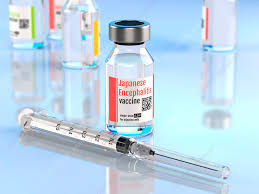
What Japanese encephalitis vaccination is trying to prevent
Japanese encephalitis, often shortened to JE, is a mosquito-borne infection that can inflame the brain. Infection and encephalitis are not the same outcome: many infections cause no obvious illness, while the smaller group who develop brain inflammation can become critically unwell. Survivors may have lasting difficulties with movement, learning, behaviour or other neurological functions. That combination of an uncommon outcome and potentially severe consequences explains why prevention deserves careful consideration even when a traveller’s likelihood of becoming ill is low. [1]
The vaccine discussion is therefore about reducing a serious disease risk before exposure. It belongs alongside an assessment of where someone will spend time and how they will avoid mosquitoes. Fear alone is a poor guide, but so is dismissing a severe infection simply because it is uncommon. A useful consultation makes room for both the likelihood of exposure and the consequences of illness.
How mosquitoes connect the disease to the environment
JE virus circulates between mosquitoes and animals, including pigs and waterbirds. A mosquito can acquire the virus while feeding on an infected animal and later pass it to a person through a bite. This is why agricultural surroundings, wetlands and outdoor work can matter in an exposure history. The relevant question is whether a person could encounter infected mosquitoes, rather than whether they personally handled a pig or noticed an ill animal. [2]
Ordinary contact with another person is not the usual route of JE transmission, and touching an infected animal or eating its meat is not how people acquire JE. These distinctions help prevent misplaced precautions and stigma. Avoiding shared meals with a traveller does not address the mosquito exposure that caused the concern. Conversely, someone can have relevant exposure without visiting a farm, because mosquitoes and suitable animal habitats are not confined by the boundaries of a tourist attraction or a workplace. [2]
For sleeping areas, NSW Health recommends screened or air-conditioned rooms and mosquito nets when the space is exposed to the outdoors. Check that the measures are actually usable during the stay, including when doors are opened repeatedly or a room cannot be kept closed. [2]
Who may benefit from a Japanese encephalitis vaccine
United States CDC guidance recommends JE vaccination for people relocating to an endemic country, longer-term travellers spending about a month or more in endemic areas, and frequent travellers to those areas. For shorter trips, clinicians consider vaccination when outdoor exposure, location, season or accommodation increases risk, or when the itinerary is uncertain. A short trip restricted to urban areas, or outside a clearly defined transmission season, may be assessed as very low risk and vaccination is generally not recommended. These are assessment categories, not a guarantee about any particular journey. [3]
Bring the parts of the itinerary that do not fit a simple holiday label. An urban conference followed by rural fieldwork contains two different settings. A family visit may involve evening activities, village stays or an open-ended return date. Describe those details in ordinary language instead of trying to assign yourself a risk category. The clinician can then explain which parts of the plan influence the recommendation.
Few reported human cases in an area do not necessarily mean that the virus has disappeared. Vaccination and immunity in residents can reduce reported illness while the mosquito–animal cycle continues, leaving susceptible visitors with a different situation. [3]
Why season, accommodation and activities matter together
JE exposure is associated particularly with rural and sometimes peri-urban environments in affected parts of Asia and the Western Pacific. Rice cultivation, wetlands and pig farming can create relevant ecological settings. The mosquitoes involved commonly feed during the evening and night. Camping, extended outdoor fieldwork or spending evenings outside can therefore change the assessment even when the overall trip is brief. A hotel address alone cannot describe all the places a traveller will visit. [4]
Seasonality also needs local interpretation. Transmission in temperate settings often concentrates in warmer months; tropical patterns can be longer and are influenced by rainfall and agricultural conditions. Cases can occur outside the usual high-transmission period. A calendar is useful background, but it should not be treated as a precise boundary between exposure and safety. Use current destination advice for the actual region, and revisit the assessment when an itinerary changes from a city stay to substantial time in the countryside. [4]
Vaccine names, vaccine types and national rules
Worldwide, JE prevention uses several vaccine types, including inactivated cell-derived vaccines, live attenuated vaccines and live recombinant vaccines. WHO supports vaccination programmes where JE is a public-health priority. A national childhood programme and a travel clinic can use different products for different populations. The general phrase Japanese encephalitis vaccine does not identify a single formulation, age indication or set of instructions. [1]
In the United States, IXIARO is approved for people aged two months and older. Its US prescribing information identifies severe allergy after a previous JE vaccine or to a component, including protamine sulfate, as a contraindication. An allergy history needs professional assessment before another vaccination; a product name alone cannot establish suitability. [5]
IXIARO is inactivated: its viral material cannot cause Japanese encephalitis. It stimulates an immune response that helps the body respond to later exposure. The European regulator’s assessment includes studies measuring antibodies after vaccination. Such results support expected protection but do not promise that every recipient will avoid disease or remain protected indefinitely. [6]
An antibody study answers a different question from a trial counting clinical illness in exposed travellers. When reading a percentage, check the outcome measured and the study population before treating it as a personal probability of protection. [6]
Why Australian product distinctions need extra care
Australia uses Imojev, a live vaccine, and JEspect, an inactivated vaccine. Imojev is registered from nine months of age. The Australian Immunisation Handbook distinguishes JEspect’s product registration for adults aged eighteen and older from ATAGI guidance allowing its use from two months to under eighteen years when an alternative is unavailable or contraindicated. That is a distinction between a product’s registration and a national expert recommendation, not a contradiction that a traveller should resolve alone. [7]
The choice also depends on medical circumstances and previous vaccination. Australian guidance excludes Imojev during pregnancy and for immunocompromised people. Its approach to breastfeeding includes a distinction between product information and ATAGI advice, illustrating why an isolated sentence copied from an older leaflet can be misleading. A clinician should apply the current local recommendation to the exact product and situation. Rules from an Australian clinic should not be silently transferred to a clinic in another country. [7]
Recommendations about further vaccination also depend on the product received, age at vaccination and whether exposure continues. There is no single lifetime rule that can be applied to every JE vaccine or every person whose travel plans change. [7]
Previous vaccination abroad needs a proper record review
A previous JE vaccination is useful information, but the words JE vaccine on their own may not identify the product. Germany’s Robert Koch Institute warns that live products available in some countries differ from inactivated IXIARO in composition and scheduling, and that interchangeability between live and inactivated products should not be assumed. The distinction matters when someone begins vaccination in one country and later seeks advice elsewhere. [20]
Show the clinician the original record, including the brand and dates, rather than relying only on a remembered number of injections. If the record is in another language, retain it and ask the original provider for a legible product name. A clinician should decide how earlier vaccination fits current local guidance and future exposure. Uncertainty about the record does not justify choosing a replacement brand independently or assuming that every previous course must be restarted. [20]
Planning appointments before departure
Queensland Health advises arranging travel-health review well before departure and discussing the specific itinerary with a doctor or travel medical service. Starting early creates time for the provider to assess vaccine suitability, arrange the appropriate course and coordinate other travel needs. The date of the flight is not always the first possible exposure date: a stopover, an earlier work assignment or travel within the departure country may also belong in the discussion. [9]
If departure is close, contact the clinic promptly rather than deciding that advice is now pointless. Explain when travel begins, when outdoor activities begin and which dates are flexible. The provider must determine what vaccination planning is appropriate for the product, age and remaining time. A booked appointment is not evidence that protection will already be present at departure. Outdoor precautions still need attention, including suitable covering clothes for evening activities and accommodation that limits mosquito entry. [9]
Pregnancy, breastfeeding and reduced immune function
These circumstances require a product-specific conversation. The Canadian Immunization Guide discusses IXIARO, the inactivated product authorized in Canada, and notes limited pregnancy and breastfeeding data. Its guidance weighs the risk of unavoidable high-risk travel against uncertainties about vaccination. That discussion should happen with a healthcare professional who knows the pregnancy or breastfeeding situation; it is not a blanket instruction to receive or avoid every JE vaccine. [8]
Immune suppression can also affect how well the body responds to vaccination. Canadian guidance recommends involving the treating clinician and obtaining specialist advice for complex cases. A complete medicine list matters, including treatments from another clinic. Do not interrupt prescribed therapy to fit a vaccination appointment. Routine antibody testing before or after JE vaccination is not recommended in the Canadian guide; a privately obtained result is not a substitute for an agreed prevention plan or a clinician’s assessment of ongoing exposure. [8]
Older adults may have a weaker antibody response than younger recipients. The Canadian guide highlights this difference; a previous vaccination date should therefore be considered alongside age and the clinician’s assessment, rather than used as an automatic reassurance. [8]
What the clinic needs to know about live vaccines
The Australian regulator has specifically warned about inadvertent use of live vaccines, including Imojev, in people for whom they are unsuitable. Significant immune suppression can arise from an illness or its treatment, and it may not be obvious from how well someone feels. Cancer treatment, certain medicines for inflammatory disease and other immune-affecting therapies are examples of information a vaccination provider needs before choosing a live product. [11]
Tell the provider about current treatment, recent treatment and any planned changes, together with pregnancy or plans for pregnancy. If the degree of immune suppression is unclear, the TGA advises professional clarification before a live vaccine is used. This is a reason for coordination between clinicians, not for a traveller to interpret drug categories or stop medicines independently. Screening also includes previous severe vaccine reactions. A past uneventful injection does not replace review of circumstances that may have changed since the previous visit. [11]
Expected reactions and symptoms that need help
HealthLink BC describes soreness, redness or swelling where the vaccine was given, along with possible fever, headache, muscle aches or feeling unwell. Ask the vaccination provider what effects are expected for the actual product and age, and how to obtain advice if symptoms are worrying. The fact that a symptom starts after vaccination does not, by itself, explain its cause. [10]
Breathing difficulty, swelling affecting the throat, tongue or lips, or other signs of a severe allergic reaction need emergency help. Contact the local emergency service if these occur after leaving the clinic. Serious or unexpected symptoms should also be reported to a healthcare professional. [10]
Older safety stories may concern different products
Japan’s health ministry describes changes in the vaccines used in its domestic programme. The earlier mouse-brain-derived vaccine is no longer distributed or used for routine vaccination there; current domestic products are cell-derived inactivated vaccines. The ministry also explains a period when active vaccination recommendations were withheld following a serious illness reported after vaccination, followed by the development of a newer vaccine and the resumption of recommendations. Those events belong to a specific national programme and historical period. [22]
An article or personal story about that period should be checked for the product, date, population and actual conclusion of the investigation. The Japanese ministry discusses how certain inflammatory neurological illnesses can follow infection, occur after vaccination or have no identified trigger, making causation difficult to establish from timing alone. This does not make every reported event unimportant. It explains why a historical safety concern should be interpreted through the relevant regulator’s assessment instead of being automatically applied to every current JE vaccine. [22]
How to interpret reports of suspected side effects
Safety reporting systems deliberately collect suspected events, including reports where the cause is uncertain. New Zealand Medsafe explains that a report in its database does not establish that a medicine or vaccine caused the event. The database also lacks the information needed to calculate the chance of a reaction: the number of people exposed and the extent of under-reporting are not reliably known. A raw count is therefore not an incidence rate. [21]
For the same reason, two products cannot be ranked safely by comparing report totals alone. Differences in use, media attention, reporting practices and the quality of individual reports can change the numbers. Regulators consider the wider evidence when investigating a possible signal. A useful question for a vaccination consultation is whether a concern is an established adverse reaction, a signal under review or merely an event reported afterward. Seek clinical help for concerning symptoms regardless of whether causation has been established; the reporting process and the immediate need for care are separate questions. [21]
What a JE vaccine does not cover
Vaccination against one mosquito-borne infection does not provide general protection from mosquito-borne disease. NCIRS specifically distinguishes JE from Murray Valley encephalitis: the viruses are related, and some of the same mosquitoes can transmit them, but adequate evidence that JE vaccines protect against Murray Valley encephalitis is lacking. Similar-sounding disease names or related viruses do not establish that a vaccine covers both. This matters when a destination has more than one mosquito-associated health concern. [12]
Keep a whole-trip prevention plan rather than a list of injections alone. Ask the clinician which mosquito precautions apply across the journey and which other measures are destination-specific. Other travel exposures also deserve their own discussion; Sly Academy’s typhoid guide provides background for food, water and travel-health planning. Reading that guide does not determine which vaccines an individual needs. The purpose is to arrive at the consultation with clearer questions about the different infections and routes of exposure relevant to the trip. [12]
Using repellent as part of everyday protection
Choose a repellent approved or registered under the rules where it is sold, and follow its label. The US Environmental Protection Agency explains that application, reapplication and age precautions belong to the individual product instructions. Sweating, water exposure and other conditions can affect performance. A single application cannot be assumed to cover every evening activity, and applying more than directed is not a reliable way to improve protection. [13]
Keep repellents away from eyes, mouths, wounds and irritated skin, and follow the product’s instructions about clothing and exposed skin. Adults should manage application for children and avoid putting repellent on a child’s hands, which may reach the mouth or eyes. Store products where children cannot access them. For an infant, pregnancy or uncertainty about an ingredient, ask a qualified professional to help select an appropriate product. These practical details make bite prevention usable rather than leaving it as a vague instruction to pack insect spray. [13]
Making accommodation and outdoor spaces less inviting to mosquitoes
Hong Kong’s Centre for Health Protection advises reducing standing water around living areas, covering water containers and disposing of items that collect rainwater. These measures address places where mosquitoes can breed. They complement personal protection rather than turning an entire neighbourhood into a mosquito-free area. In rented accommodation, ask the host to address obvious water accumulation and check how the sleeping area is protected before assuming that an indoor bed prevents bites. [23]
For travel in affected rural settings, a suitable mosquito net can be part of the plan, alongside covering clothing and repellent. Products intended to treat nets or fabrics are different from products intended for skin; follow their labels. Vaccination does not remove the need for these measures. Keep protection practical for the actual trip, including outdoor meals and time spent outside before going to bed. [23]
Funding and eligibility are different from clinical suitability
Publicly funded JE vaccination programmes may target particular residents, workers or geographical areas. SA Health’s programme information illustrates that access can depend on evidence of residence or employment and that people outside a funded programme can still discuss vaccination with a doctor or travel medicine clinic. Funding criteria describe who can use that programme; they do not decide every traveller’s medical need or establish that a specific product is suitable. [24]
Before booking, ask the provider to distinguish the clinical assessment, the available product and any funding arrangements. If documentation is required, check what the programme accepts instead of assuming that a holiday booking or a workplace address will be sufficient. A product offered through a public programme may differ from the product suitable for a particular person. Eligibility and availability can change, so use current local information rather than an old screenshot or a list copied from another jurisdiction. [24]
Keeping the vaccination plan usable during travel
Keep a record of the vaccines received and take it on the journey. HealthLink BC advises bringing earlier vaccination records to the clinic as well. An accessible copy helps a provider review the history without relying on memory. [10]
For outdoor activities, Queensland Health recommends loose, light-coloured clothing that covers the arms and legs, together with socks and covered footwear. Choose clothing that can realistically be worn for the planned activity, so protection is available when evening plans move outdoors. [9]
Recognising illness in children and older adults
Western Australia’s health guidance highlights that young children and older people who become infected can be more vulnerable to severe illness. A prevention discussion for a family should therefore consider each traveller’s age and circumstances. Adults should not assume that a child will describe a headache, confusion or weakness in the same way they would. Equally, a new change in an older person’s alertness should not be dismissed as an ordinary response to a tiring journey. [14]
Most infections do not produce obvious symptoms, but illness can include fever and headache, and severe disease can involve seizures, reduced consciousness or paralysis. Symptoms commonly begin several days after exposure rather than immediately after a noticed bite. The absence of a memorable bite does not make a travel history irrelevant. When seeking care, describe where the person has been and what has changed from their normal behaviour or abilities. A vaccination record provides useful context but cannot settle the diagnosis. [14]
When fever or neurological symptoms need urgent assessment
Seek prompt medical assessment for fever or other new illness after visiting an area where JE occurs, and mention recent travel and possible mosquito exposure. Sudden confusion, a seizure, loss of consciousness, new weakness or paralysis, severe breathing difficulty, or a severe headache with a stiff neck require emergency help. Use the emergency service where the person is located. Do not wait to see whether the illness fits every feature of Japanese encephalitis, and do not let prior vaccination delay assessment. [15]
Why diagnosis is more than a positive antibody result
JE can resemble other serious infections affecting the brain. The European Centre for Disease Prevention and Control explains that antibody results require interpretation alongside exposure, symptoms, previous vaccination and tests for related flaviviruses. Antibodies that react in an assay may not provide a simple answer about which virus caused the current illness. A positive result therefore needs the laboratory’s explanation and the clinician’s assessment, particularly when someone has received flavivirus vaccines or had related infections previously. [16]
Specialist confirmatory testing may be necessary. Clinicians may examine blood and cerebrospinal fluid, the fluid around the brain and spinal cord, and use other investigations according to the illness. These are diagnostic decisions for a healthcare team, not a checklist for travellers to order independently. Bring the vaccine record and a clear travel timeline so the team can interpret tests in context. The same written record that helped plan vaccination may later prevent an important detail being missed during an urgent assessment. [16]
Why an early negative test may not finish the investigation
Victoria’s clinical guidance notes that antibodies may not yet be detectable when symptoms first appear. A later blood sample may therefore be needed when acute JE remains a concern. This does not mean every fever requires JE testing; the clinician considers the illness, relevant exposure and other possible causes. It does mean that a single early laboratory result should not be read in isolation from a developing neurological illness or a specialist’s follow-up instructions. [17]
Public-health teams also use information from suspected or confirmed cases to understand where exposure may have occurred. In Victoria, clinicians and laboratories have urgent reporting responsibilities. A request for dates, locations or activities is part of investigating risk and supporting prevention, not proof that a particular venue caused the infection. Give accurate information, flag uncertainty and keep any follow-up appointments arranged by the clinical team. Do not substitute an internet map or a historical case count for the investigation of the person’s actual illness. [17]
Treatment is supportive, and severe illness needs hospital care
There is no specific antiviral treatment that cures JE. Singapore’s Communicable Diseases Agency describes care focused on supporting the patient and managing complications. In severe illness, hospital teams may need to address seizures, breathing or airway problems and pressure-related complications affecting the brain. Supportive treatment is active medical care; the term does not mean that a seriously ill person can simply rest at home while the disease resolves. [18]
The care plan depends on the patient’s condition and may change as the illness develops. Families can help by supplying a clear history and asking the team to explain the immediate problems being treated. A vaccine appointment is a prevention service, not a treatment pathway for new neurological symptoms. When illness is already suspected, medical assessment takes priority over trying to arrange vaccination, compare brands or identify the mosquito. The healthcare team must also consider other diagnoses that could require different treatment. [18]
Lasting effects can involve speech, thinking and behaviour
Taiwan’s Centers for Disease Control describes neurological consequences of JE that extend beyond visible weakness or paralysis. Some survivors have problems with speech, movement control or muscle tone. Cognitive difficulties can affect children, and behavioural or personality changes may also occur. These possibilities help explain why preventing severe disease matters, while also showing why recovery cannot be judged solely by whether a person can walk or has left hospital. [25]
A family noticing changes should describe concrete examples to the treating team, such as difficulty expressing familiar words or a change in movement or behaviour. Those observations help communicate needs without assigning a diagnosis independently. At the same time, do not assume that every survivor will develop the whole list of complications. The consequences differ between people. Clinical follow-up should address the individual’s actual difficulties and connect the family with the appropriate assessment, rehabilitation and support. [25]
Recovery can continue after discharge
Encephalitis International’s recovery guidance describes outcomes that range from few lasting problems to long-term disability. This applies to encephalitis broadly, so it cannot predict an individual JE outcome. Recovery may continue for months or longer, and some difficulties become more apparent at home when a person tries to resume familiar activities. A discharge date marks a change in setting, not necessarily the end of the illness’s effect on everyday life. [19]
Follow-up may involve rehabilitation, support with fatigue and help returning to education, employment or family roles. The organisation describes pacing activity and rest as part of recovery guidance. The appropriate plan should come from the treating and rehabilitation teams rather than a fixed timetable copied from someone else’s experience. Families may need support too, especially when changes in memory, behaviour or independence are difficult to understand. Record practical concerns for follow-up so less visible problems receive attention alongside physical recovery. [19]
If the follow-up arrangements are unclear, ask who will review recovery and how to raise new difficulties. Problems that emerge during daily life deserve attention even when they were not obvious during hospital care. [19]
Frequently asked questions
Does everyone need a JE vaccine?
No. A clinician assesses the destination, activities, accommodation and time at risk. [3]
Can IXIARO cause Japanese encephalitis?
No. IXIARO is an inactivated vaccine. [6]
Does vaccination replace mosquito precautions?
No. Vaccinated people still need bite prevention. [23]
Is one vaccine schedule used worldwide?
No. Product, age, previous vaccination and national guidance matter. [20]
What symptoms need emergency help?
Seizures, sudden confusion, loss of consciousness or severe breathing difficulty need emergency care. [15]
Should I keep the vaccine record?
Yes. Record the product name and dates, and take a copy when travelling. [10]
Sources
Sources accessed 8 October 2026. Publication and review dates are shown separately where available. National recommendations and product indications apply in their stated jurisdictions.
- WHO: Japanese encephalitis. Published or reviewed: 2024-08-06. Accessed: 2026-10-08.
- NSW Health: Japanese encephalitis fact sheet. Published or reviewed: 2025-12-15. Accessed: 2026-10-08.
- CDC Yellow Book: Japanese Encephalitis. Published or reviewed: 2026-02-20. Accessed: 2026-10-08.
- NaTHNaC TravelHealthPro: Japanese encephalitis. Published or reviewed: 2026-06-02. Accessed: 2026-10-08.
- FDA: IXIARO prescribing information. Published or reviewed: 2018-09. Accessed: 2026-10-08.
- European Medicines Agency: Ixiaro medicine overview. Published or reviewed: 2019-03-15 overview; 2026-05-08 product information. Accessed: 2026-10-08.
- Australian Immunisation Handbook: Japanese encephalitis. Published or reviewed: 2026-09-30. Accessed: 2026-10-08.
- Public Health Agency of Canada: Japanese encephalitis vaccine, Canadian Immunization Guide. Published or reviewed: 2024-11 partial update; 2023-09 full revision. Accessed: 2026-10-08.
- Queensland Government: Japanese encephalitis. Published or reviewed: 2026-06-22. Accessed: 2026-10-08.
- HealthLink BC: Japanese encephalitis vaccine. Published or reviewed: 2025-07-04. Accessed: 2026-10-08.
- Therapeutic Goods Administration: Live vaccines, what are the contraindications?. Published or reviewed: 2023-05-04. Accessed: 2026-10-08.
- NCIRS: Japanese encephalitis frequently asked questions. Published or reviewed: 2025-06-20. Accessed: 2026-10-08.
- US Environmental Protection Agency: Using insect repellents safely and effectively. Published or reviewed: 2025-11-10. Accessed: 2026-10-08.
- Western Australia Department of Health: Japanese encephalitis. Published or reviewed: 2026-07-21. Accessed: 2026-10-08.
- NHS: Japanese encephalitis. Published or reviewed: 2023-06-06. Accessed: 2026-10-08.
- European Centre for Disease Prevention and Control: Disease information about Japanese encephalitis. Published or reviewed: 2023-12-15. Accessed: 2026-10-08.
- Victoria Department of Health: Japanese encephalitis. Published or reviewed: 2026-08-25. Accessed: 2026-10-08.
- Singapore Communicable Diseases Agency: Japanese encephalitis. Published or reviewed: 2026-09-04. Accessed: 2026-10-08.
- Encephalitis International: Guidelines for recovery. Published or reviewed: 2025-04. Accessed: 2026-10-08.
- Robert Koch Institute: Vaccine availability and product cautions, Japanese encephalitis entry. Published or reviewed: 2026-09-18 JE entry. Accessed: 2026-10-08.
- New Zealand Medsafe: Suspected Medicine Adverse Reaction Search disclaimer. Published or reviewed: Date not clearly stated. Accessed: 2026-10-08.
- Japan Ministry of Health, Labour and Welfare: Japanese encephalitis vaccine information. Published or reviewed: 2026-03-10 Q&A version. Accessed: 2026-10-08.
- Hong Kong Centre for Health Protection: Japanese encephalitis. Published or reviewed: 2025-08-06. Accessed: 2026-10-08.
- SA Health: Japanese encephalitis virus vaccination programme fact sheet. Published or reviewed: 2025-10. Accessed: 2026-10-08.
- Taiwan Centers for Disease Control: Japanese Encephalitis. Published or reviewed: 2014-11-24 original publication; revision date not stated. Accessed: 2026-10-08.





