

General health information for adults, not a diagnosis or an individual treatment plan. Sources checked on 12 October 2026. Children and people with complex medical conditions need advice appropriate to their circumstances.
Common dry mouth causes include medicines, dehydration, breathing through the mouth and anxiety. Sometimes persistent dryness is associated with a condition such as diabetes or Sjögren’s disease, or with cancer treatment. The symptom itself does not tell you which explanation applies. When it continues or disrupts daily life, a medical or dental assessment can help identify the cause. [3]
A useful starting question is: “What changed around the time this began?” A new tablet, a blocked nose, a recent illness and a previous course of cancer treatment belong in different parts of the conversation. This guide explains those possibilities and helps you prepare a clear account for a clinician. For help comparing comfort measures after the cause is considered, see our companion guide to dry mouth relief and the limits of advertised cures.
A dry feeling and low saliva are related but different
Xerostomia is the experience of having a dry mouth. Hyposalivation means saliva production is measurably reduced. A person can report dryness even when measured flow is within a normal range. Saliva output also varies across the day and is lowest during sleep. These distinctions help explain why a symptom report and a saliva test may not tell exactly the same story. [2]
Describe your experience before trying to name it. You might mean that your lips are dry, your tongue feels sticky, food is difficult to move around, or your mouth burns. Those descriptions are more precise than saying simply that you feel dehydrated. If there is more than one problem, list them separately. For example, “The sticking feeling is there when I wake, but the soreness starts later” gives the clinician two observations to discuss rather than one assumed diagnosis.
Saliva supports swallowing, helps clear food from teeth and supplies minerals that protect them. Persistently inadequate moisture can make speaking and eating difficult and increase the risk of tooth decay and oral fungal infection. This is why an assessment should consider oral health as well as the discomfort itself. A quieter symptom does not necessarily answer the question of how the teeth and mouth are doing. [1]
Start with the pattern rather than a list of diseases
You do not need an elaborate tracking app or a perfectly remembered start date. Make a brief timeline using landmarks you remember, such as a prescription refill, a holiday, an illness or the start of a new work schedule. Keep facts and guesses separate: “I noticed it in early September” and “I wonder whether my new medicine contributed” are both useful, but they are different kinds of information.
| Question | Useful information to bring | Example wording |
|---|---|---|
| When did it start? | Approximate first occurrence, whether onset felt sudden or gradual, and what was happening then. | “I first remember it during the week I returned to work; I cannot be more exact.” |
| When is it noticeable? | Whether symptoms occur on waking, during meals, while talking, throughout the day or intermittently. | “It wakes me twice some nights, but I rarely notice it at lunch.” |
| What becomes difficult? | A particular task you avoid or interrupt, and how that differs from your usual routine. | “I have started pausing during phone calls because my tongue feels stuck.” |
| What have you already tried? | Names of products, when you used them, and the specific change you noticed. | “The spray made my mouth feel wet briefly; I still woke during the night.” |
Record only enough detail to communicate the problem. If you cannot remember whether a symptom began before or after a medicine change, say that rather than filling the gap. A relative can help find a date or describe something they observed, but your account of discomfort remains important. Keep any photograph dated and explain why you took it; a photograph is supporting context for an examination, not a substitute for one.
Medicines deserve a careful review
Many medicines can reduce saliva production. Examples include some drugs used for high blood pressure, depression and bladder-control problems. Head or neck injury can also damage nerves involved in saliva production, so a medicine explanation is not the only possibility after a major health event. A dentist or doctor considers medical history and current medicines together rather than assigning every new symptom to the newest tablet. [1]
Do not stop a prescribed medicine because you suspect it is drying your mouth. Ask the prescriber or pharmacist to review it; changing treatment safely requires medical advice. [3]
Include occasional and nonprescription products
Antihistamines illustrate why the review needs specific names. They may be used for allergies, motion sickness, nausea or short-term sleep problems. Dry mouth is a possible adverse effect of both drowsy and non-drowsy types, although their other effects differ. Some cough and cold remedies also contain an antihistamine, which matters when another product is taken alongside them. “It is just my allergy medicine” or “the packet says non-drowsy” does not establish that it cannot contribute. Show the exact product and its leaflet to a pharmacist. This is a reason to check suitability and combinations, not an instruction to swap medicines yourself. [6]
The FDA recommends discussing prescription medicines, nonprescription products, vitamins, minerals, herbal products and supplements when reviewing potential interactions. U.S. over-the-counter labels identify active ingredients and provide warnings and directions; different branded products can contain the same active ingredient. Bring packaging or a clear photograph of that information if the name is uncertain. A brand name alone may not identify everything inside a combination product. Reading the current label matters because warnings can change. The purpose of this review is to give the professional a complete picture, not to decide that every ingredient is responsible for dryness. [5]
Build a medication timeline without running an experiment
Put the medicine name beside the approximate date you began it, any prescribed change you remember, and the date dryness became noticeable. Include what you actually take, even if that differs from an old printed list. Mark an occasional product as occasional. You can then ask, “Does this timing make a medicine effect plausible, and what else should we check?” Avoid describing a theory as a confirmed allergy or a proven adverse effect before it has been assessed.
For example, imagine someone began a daily prescription in spring and bought a nighttime cold remedy in autumn, when the dryness appeared. A list containing only the daily prescription would miss part of the history. The useful next step is to bring both packages and the timeline for review. The example does not identify a culprit; it shows how incomplete records can make the consultation less informative. You need not deliberately skip or restart a product to produce a more convincing story.
Dehydration is one possibility, not a synonym for dry mouth
Dehydration occurs when fluid losses exceed intake. Vomiting, diarrhea, fever, heavy sweating and difficulty accessing drinks can contribute. Alongside a dry mouth, clues can include thirst, darker urine, less frequent urination, tiredness or dizziness. Mouth dryness on its own cannot show the degree of fluid loss. Children and older adults are particularly vulnerable. During an illness, tell the clinician about fluid losses and how much you have been able to drink, rather than focusing only on the mouth sensation. [4]
If you are describing a recent illness, use ordinary observations: how many times you vomited, whether drinks stayed down, when you last urinated, and who has been helping you. You do not need to calculate an exact fluid balance before seeking advice. If you have existing instructions about fluids, bring those instructions and ask how they apply during this episode. This article does not set a drinking target or replace an individual plan.
Nighttime dryness calls for a sleep and nose history
Breathing through the mouth at night can contribute to dryness, including when the nose is blocked or the mouth stays open during sleep. Anxiety is another recognized contributor to dry mouth. These are possibilities to discuss, not explanations that can be confirmed from the time of day alone. [3]
A blocked nose is worth describing accurately
Non-allergic rhinitis can cause nasal blockage or a runny nose without an allergy being responsible. Irritants, changes in temperature or humidity, some medicines and overuse of decongestant nasal sprays can contribute. Using a decongestant spray longer than its instructions allow can worsen nasal symptoms. If blockage affects sleep, the cause is unclear or pharmacy treatment has not helped, seek advice. Tell the pharmacist which spray you use and for how long; “a nasal spray” is not specific enough to distinguish products with different ingredients and directions. [17]
Dry mouth does not diagnose sleep apnea
Dry mouth may accompany sleep apnea, but the sleep history matters: repeated pauses in breathing, gasping, frequent loud snoring and daytime sleepiness are relevant symptoms. A sleeping partner may notice events the person does not remember. A clinician may recommend a sleep study to investigate. Morning dryness by itself does not establish the condition or tell you how severe it might be. [16]
If you already use positive airway pressure, report dryness along with any leaking mask, poor fit or nasal symptoms to the sleep team. They can review the equipment and whether a different mask, humidification or other adjustments are appropriate. NHLBI advises using prescribed PAP for all sleep, including naps. Do not treat stopping the device as a way to test the cause of dryness; ask the team to help you use it comfortably and effectively. [16]
Separate what you observe from what another person reports. “My mouth is dry when I wake” is your observation; “my partner heard gasping twice this week” is theirs. If you live alone, simply say that nobody can report on your sleep. There is no need to arrange an overnight recording before making an appointment. Bring existing sleep-clinic letters or the device details if you have them, and name the problem you most want reviewed.
Persistent dryness can be part of a wider medical condition
Sjögren’s disease and dryness in more than one place
Sjögren’s disease is an autoimmune disorder in which the immune system attacks moisture-producing glands. Dry eyes and dry mouth are prominent features; fatigue and joint or muscle pain can accompany them. It can occur on its own or alongside another autoimmune condition. It is more common in women but is not restricted to one sex or age group. Having dryness does not establish Sjögren’s, and a clinician needs to consider the overall pattern. [7]
If you have eye symptoms, describe what they feel like and when they began rather than assuming that every eye complaint and mouth complaint share a cause. Bring any relevant eye-clinic findings and the names of products you already use. If an autoimmune condition has previously been diagnosed, give its exact name if you know it. If it is only something you have wondered about, label it as a question. That distinction helps keep an accurate medical record.
Diabetes and the difference between thirst and oral dryness
Diabetes can affect the quantity and composition of saliva. NIDDK explains that diabetes, and some medicines used in its care, can reduce saliva production; high blood glucose can also increase glucose in saliva. These changes can contribute to cavities and other mouth problems. Tell the dentist if you have diabetes and describe changes in mouth health. A dry-mouth complaint should not replace review of glucose management, nor should an existing diabetes diagnosis prevent consideration of other contributors. [8]
If you already have diabetes, pay attention to symptoms beyond dryness, including red or bleeding gums, receding gums, loose teeth or persistent bad breath. NIDDK advises seeing a dentist promptly for signs of mouth problems and keeping the dentist informed about diabetes medicines and health changes. These are reasons for dental evaluation, not signs that can identify the cause of dryness by themselves. Mouth symptoms should be assessed on their own merits. [8]
Frequent urination, ongoing thirst, tiredness and unexplained weight loss are reasons to seek urgent medical assessment for possible diabetes. Blurred vision or slow-healing wounds may also occur. Type 2 diabetes may develop gradually or have no obvious symptoms; a blood test is used in diagnosis. Similar symptoms can occur in type 1 diabetes, often developing more quickly. Neither the person’s age nor a description of dryness is enough to decide the type. Explain the speed of change and any other symptoms when contacting a healthcare professional. [9]
For the appointment, distinguish “I keep drinking because my mouth feels sticky” from “I am unusually thirsty all day.” Report both if both are true. Do not try to make your history fit a checklist you read online. If there are already test results, bring the report with its date rather than describing it only as normal or abnormal. Ask the clinician to explain what the result answers in relation to the symptoms you have now.
Cancer treatment history changes the questions to ask
Radiotherapy that exposes salivary glands can damage them. With head-and-neck radiotherapy, the extent of dryness depends in part on the radiation dose and which glands receive it; recovery may be incomplete. Some chemotherapy used with stem-cell transplantation can also affect saliva, often temporarily. Oral graft-versus-host disease after a donor stem-cell transplant can cause dryness and other mouth problems. These treatment histories are not interchangeable, so the precise treatment matters more than simply saying that you once had cancer. [11]
NCI also advises that dentists know about previous head-and-neck radiation because oral surgery and other dental work may carry additional concerns. New pain, changes in swallowing, sores or trouble eating deserve discussion with the cancer team. Even when dryness began during treatment, there can be other oral complications requiring assessment. The expected course and dental precautions should come from the treating teams, not a universal online recovery deadline. [11]
Some cancer-treatment complications arise during care, while others persist or develop later. Taste changes, inflamed mouth tissues and infection can overlap with dryness. Record which symptoms started together and which are new, and make sure the team knows about new difficulties rather than assuming they all have the same treatment-related explanation. [11]
Bring the treatment summary if one is available. Useful details include the area treated, approximate dates, whether a transplant took place, and the name of the team that followed you afterward. If records are elsewhere, ask the clinic how they can be obtained. A practical opening is: “This started during treatment, and I want to know which late effects or other problems need checking now.” You do not need to remember technical radiation details before requesting help.
Pain swelling or burning may point to a more local problem
Salivary gland stones and infection
Salivary stones can obstruct the flow of saliva. They may cause intermittent pain or swelling, and a complete blockage can produce intense pain around meals. A stone is not always visible, so failing to see one under the tongue does not exclude it. Persistent bothersome symptoms warrant assessment; pain, redness, pus or fever can accompany infection. Do not probe a duct or use a sharp instrument to remove a suspected stone. Such attempts can injure the tissue or introduce infection. [12]
The major salivary glands sit near the ears, below the jaw and beneath the tongue, with ducts carrying saliva into the mouth. Infections of these glands may be bacterial or viral. Possible features include dryness, an unpleasant taste, fever, tenderness and swelling near a gland. A clinician examines the area; ultrasound or other imaging may be considered when looking for a stone or an abscess. A culture may help identify a bacterial cause. Seek medical advice for suspected infection and prompt help for high fever or swallowing problems; breathing difficulty is an emergency. [13]
An obstructed duct and a gland infection can be connected: blockage is one setting in which bacterial infection can occur. Dehydration and chronic illness are other relevant factors. Viruses can also affect glands. This helps explain why a swollen gland is not automatically evidence that an antibiotic is needed. Examination, the illness pattern and any selected investigations guide that decision; the word “infection” alone does not specify the organism. [13]
Be specific about location and timing: which side, whether you can point to the painful area, whether swelling comes and goes, and whether it has changed since you arranged the visit. “The left side under my jaw becomes swollen at dinner” communicates more than “my glands are bad.” Do not repeatedly press on a painful area to create a clearer description. If you already have a photograph showing earlier swelling, tell the clinician when it was taken.
A sore white mouth and oral thrush
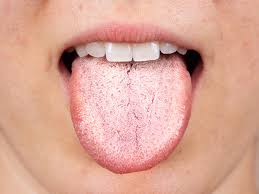
Oral thrush is a Candida fungal infection. It can produce redness, white patches, soreness, unpleasant taste and difficulty eating. Risk factors include dentures, prolonged antibiotic use, asthma inhalers, some cancer treatments and certain medical conditions. A white tongue has other possible explanations, so its appearance alone should not become a self-diagnosis. Ask a pharmacist or clinician about suspected thrush. Medical advice is especially important with painful or difficult swallowing, a weakened immune system or medicines that suppress immunity. Identifying an infection and investigating ongoing dryness may be separate parts of the visit. [15]
Burning mouth symptoms with little to see
Burning mouth syndrome can involve persistent burning, scalding or tingling, sometimes accompanied by altered taste or a dry feeling. The mouth may look healthy. Before making this diagnosis, a dentist or doctor checks for other explanations, such as dental disease, infection or irritation. Depending on the history, investigations may include blood tests, swabs, allergy testing, salivary measurements or imaging. A lack of visible changes does not make the pain unreal, and a burning sensation does not by itself establish the syndrome. Describe the pain pattern and allow the assessment to distinguish possible causes. [14]
Do not let age or a stressful week end the investigation
NIDCR emphasizes that dry mouth is not a normal consequence of aging. Occasional dryness can occur when someone feels nervous or stressed, but persistent symptoms deserve attention. Being older is not an explanation to accept in place of checking medicines, health history and the mouth itself. [1]
If symptoms fluctuate with a stressful event, mention that observation without treating it as proof. You can say, “It seemed worse during the presentation, but I also notice it on quiet days.” Equally, there is no need to deny stress to make a physical symptom worth discussing. The goal is an accurate account, including whatever you do and do not know. A respectful assessment should leave room for questions rather than asking you to choose a psychological or physical explanation in advance.
What a dental or medical assessment can show
Assessment usually begins with a medical and dental history and examination. A dentist may look for saliva pooling, tissue changes, decay, infection and gland swelling or tenderness. Depending on findings, further evaluation can include saliva-flow measurement, blood tests, microbial tests or a minor salivary-gland biopsy. Measuring flow helps assess gland output; it does not independently name the cause of dryness. Not every person needs all these investigations. [2]
Salivary testing can measure output at rest or after stimulation, such as chewing. Those are different measurements, with different clinical reference points. Ask which test was performed and how the result fits the examination and your symptoms. Comparing a home estimate with a number intended for a different collection method can be misleading; this guide does not provide a do-it-yourself diagnostic threshold. [2]
Ask what each proposed test is meant to answer
For suspected Sjögren’s, clinicians assess tear and salivary function alongside evidence of autoimmunity. Testing may include eye examinations, saliva measurements, blood tests, gland ultrasound or biopsy. There is no single definitive test. Antibodies may support the assessment, but they can occur in healthy people or in other disorders. A specialist therefore interprets findings together with symptoms and examination. [7]
An antinuclear antibody test, or ANA, illustrates this limitation. If ordered as part of an autoimmune assessment, a positive result does not by itself establish a particular disease. Some healthy people have a positive ANA, and medicines or other conditions can affect the picture. A negative result reduces the likelihood of some autoimmune disorders but does not exclude every possibility. Share your medicine list before testing and follow the clinician’s preparation instructions; do not stop medicines independently. Discuss the result with the professional who ordered it rather than treating a highlighted laboratory value as a final diagnosis. [20]
Before a test, ask: “What question will this answer, what preparation do I need, and how will the result change the next step?” If no test is recommended yet, ask what the clinician found reassuring and what would make testing useful later. These questions are compatible with a staged assessment. They do not require requesting every available investigation, and they help you understand why a particular plan fits your circumstances.
| What you were told | A useful follow-up question |
|---|---|
| “We will review your medicines” | “Who will contact the prescriber, and should I book a separate pharmacist appointment? Which list should I use so everyone is reviewing the same products?” |
| “We are arranging blood tests” | “Which questions are these tests addressing? Who will explain the results, and when should I contact the practice if I have not heard?” |
| “The mouth examination was reassuring” | “What did you check, and what remains unexplained? If the symptoms continue, what is the agreed point for reassessment?” |
| “You need another specialist” | “What is the reason for the referral? Who is sending it, what information should accompany it, and whom should I contact about a delay?” |
Make the handover between professionals practical
A dentist and a medical clinician may each need information held by the other. Ask for a short summary of findings that you can share: what was observed, what is being considered, what was tested and what happens next. If you cannot access an online record, request an alternative. Keep the date and the professional’s name with each document so an older suggestion is not mistaken for the current plan.
If someone accompanies you, agree on their role beforehand. They might help remember dates, take notes or ask a question you wanted covered. Tell the clinician which information is your own experience and which comes from someone helping with meals or medicines. If speaking for long periods is uncomfortable, bring your main points in writing and ask to work through them. A concise written account can also help when the appointment needs an interpreter.
An appointment can feel inconclusive when there is no immediate single cause. Before leaving, clarify what is known and what remains open. For example: “The examination has been completed, the medication review is next, and the blood result still needs discussion.” That is more useful than remembering only “everything was fine.” Ask whether you should arrange follow-up yourself or expect contact, and write down the agreed route for reporting a change in symptoms.
When to arrange or bring forward an appointment
Arrange medical advice if dryness persists after a few weeks of home or pharmacy measures, makes eating or talking difficult, or comes with dry eyes. Seek assessment for ongoing taste problems, sore white patches, painful or bleeding tissues, or concern about a prescribed medicine. Do not wait weeks when regular eating is already difficult. [3]
A mouth ulcer lasting more than three weeks, a red or white patch, an unexplained mouth or neck lump, or persistent mouth pain should be checked by a dentist or doctor. Ongoing swallowing or speaking difficulties and persistent hoarseness also warrant assessment. These symptoms have many possible causes and do not automatically mean cancer, but they should not be assigned to dryness without examination. A referral for further investigation is a step toward finding the explanation, not confirmation of a diagnosis. [19]
When booking, explain the effect on your day and any recent change instead of asking only for a “dry mouth check.” If an appointment is already booked but the situation worsens, contact the service again and describe what is different. Keep the emergency guidance above separate from a routine follow-up plan. You do not need to finish preparing notes, locate every old record or wait for an expected result before asking for help with a new concern.
The most useful outcome is a specific next step: a medicine review, an examination finding to follow, a test with a clear purpose, or a referral whose progress someone will check. Bring your main question back into the conversation if it gets lost: “What might be causing this, and how will we find out?” Comfort and prevention still matter, but an organized assessment gives you a better foundation for deciding what to do next.
Video note: The older general video retained with this page has not been independently medically reviewed and may omit individual considerations. Use the article’s cited sources and current advice from your own clinician when making health decisions.





