

Educational information only. This guide cannot diagnose a breathing problem or replace individual medical care. Editorial source-checking is not a licensed clinician’s review.
Popcorn lung: what the name means
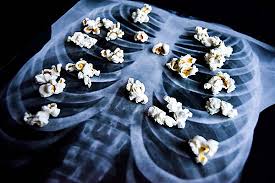
Popcorn lung is the nickname for bronchiolitis obliterans, a condition in which injury and scarring narrow the lungs’ smallest airways. The name became known after investigations of workers who inhaled flavoring chemicals while manufacturing microwave popcorn. Diacetyl exposure in food production is an established occupational concern. The nickname does not mean that pieces of popcorn collect inside the lungs. [5]
A persistent cough or breathlessness deserves assessment, but those symptoms alone do not identify this rare disease. The useful questions are what has changed, what exposures or medical conditions might matter, and which tests can distinguish the possibilities. Treatment may help manage symptoms and protect remaining function, but established airway scarring cannot simply be washed out or reversed by a home remedy. [2]
When breathing symptoms need urgent help
Arrange prompt medical advice for new or worsening breathlessness, coughing up blood, or breathlessness with one swollen or painful leg. A cough lasting three weeks or more also deserves a clinical appointment. Do not wait for every symptom in an online list to appear. Someone with an existing lung condition still needs new symptoms assessed rather than automatically attributing them to the old diagnosis. [3]
When contacting a service, describe the immediate problem before offering a suspected diagnosis. For example: “I became much more breathless today and cannot walk across the room as usual.” Give your location, say whether you are alone, and follow the dispatcher or clinician’s instructions. A relative can gather medication information while help is arranged.
What happens inside the small airways?
Air travels through the windpipe and larger bronchial tubes before entering thousands of smaller branches called bronchioles. These lead toward the alveoli, the tiny air sacs where oxygen passes into the blood and carbon dioxide leaves it. Airways and air sacs do different jobs: one carries air, while the other provides the surface for gas exchange. Understanding that distinction helps explain why a disease centered on very small air passages can still affect everyday breathing. [4]
In bronchiolitis obliterans, scarring constricts those passages and obstructs airflow. “Obliterative bronchiolitis” and “constrictive bronchiolitis” are other names used for the condition. Food-safety terminology can be misleading here: a flavoring judged suitable to eat is not automatically safe to inhale. Workplace exposures differ from ordinary consumption; a food ingredient label cannot establish inhalation safety. [1]
Similar names that describe different situations
| Term you may see | What it means in context |
|---|---|
| Bronchiolitis obliterans syndrome, or BOS | After a lung transplant, BOS describes a form of chronic rejection involving small-airway damage and declining lung function. It falls within chronic lung allograft dysfunction, or CLAD. The transplant team compares current breathing tests with the patient’s best post-transplant function and excludes other explanations. The transplant context is essential when interpreting this label. [6] |
| Organizing pneumonia and the older term BOOP | BOOP stands for bronchiolitis obliterans organizing pneumonia. It is an older name associated with organizing pneumonia, including cryptogenic organizing pneumonia. The shared words do not make it interchangeable with constrictive bronchiolitis. If an old record says BOOP, ask which current diagnosis the clinician means before applying advice about popcorn lung. [7] |
| Cryptogenic organizing pneumonia, or COP | This is an inflammatory lung condition with no identified cause. Organizing pneumonia can also be secondary to another illness, medicine or exposure. It involves inflammatory tissue in small airways and air sacs, and often responds to corticosteroid treatment. Its management and outlook should not be copied directly onto bronchiolitis obliterans. [8] |
| Common childhood bronchiolitis | This usually refers to a viral chest infection affecting babies and children under two, often caused by RSV. It is a different clinical situation from a chronic scarring diagnosis. An infant with grunting, pauses in breathing, blue or grey color, or difficulty waking needs emergency help; the similarity between disease names should never delay care. [9] |
Popcorn lung symptoms and changes to notice
Common symptoms include a usually dry cough, wheezing, fatigue and shortness of breath, particularly during physical activity. Some people have few or no early symptoms. A cough’s sound cannot confirm the diagnosis, and mucus does not automatically rule it out. A clinician needs the pattern of symptoms and the rest of the medical history rather than a recording or description of the cough alone. [5]
In flavoring-exposed workers, symptoms may develop gradually and worsen over weeks or months, although sudden worsening can occur. Importantly, they often continue during weekends, vacations or time away from the job. Lack of immediate improvement outside work therefore does not exclude a work-related problem. NIOSH advises further evaluation for frequent coughing, worsening breathlessness, abnormal spirometry or a noticeable decline in lung function. [30]
Record changes in familiar activities: the number of rests needed on your usual walk, whether you now pause on stairs, and whether a normal task takes substantially longer. Note when the change started and whether it followed an illness, a new work process or a change in products used. Describe what actually happened rather than testing your limits to generate a more impressive symptom log.
Why a persistent cough needs a broader assessment
Other illnesses can produce overlapping symptoms. For example, active tuberculosis in the lungs can cause a prolonged cough, chest pain, fever, night sweats or weight loss. TB is an infection and needs its own testing and treatment pathway. These symptoms are reasons to seek assessment, not a way to diagnose either TB or popcorn lung at home. For background, read our guide to tuberculosis symptoms, tests and treatment. [34]
Causes and risk factors beyond the nickname
Flavorings and other workplace exposures
NIOSH’s recommended standard for diacetyl and 2,3-pentanedione draws together human health findings, toxicology and exposure assessment. Its purpose is to reduce respiratory impairment and severe irreversible disease in exposed workers. This is why controlling airborne exposure matters even before a workplace has a recognized case. Occupational exposure limits are tools for industrial hygiene; they are not consumer instructions for calculating a safe number of inhalations. [10]
The issue extends beyond popcorn factories. A CDC investigation described two affected workers in a coffee-processing facility whose illnesses were initially misdiagnosed. Coffee roasting and grinding can generate diacetyl as well as exposures from added flavorings. The report could not determine each source’s contribution to those cases or assume that one facility represented the entire industry. Its practical lesson is to investigate actual tasks and exposures rather than dismiss a risk because the product is coffee. [11]
Infections, immune conditions and transplantation
Bronchiolitis obliterans can occur after certain respiratory infections or inhalation injuries, and in association with conditions such as rheumatoid arthritis. Lung transplantation is another important setting. Having one of these conditions or a past exposure does not establish the diagnosis, and many people with them never develop this particular disease. Tell the clinician about major illnesses, autoimmune diagnoses and previous transplants rather than focusing only on flavoring exposure. [5]
After a donor blood or marrow transplant, chronic graft-versus-host disease can injure the small airways when donor immune cells attack the recipient’s tissues. Early lung involvement may be difficult to notice, making the transplant team’s scheduled lung-function testing important. New cough, chest tightness, fever, painful breathing or declining activity tolerance should be reported promptly. A generic article cannot substitute for the center’s individual follow-up plan. [31]
Does vaping cause popcorn lung?
The evidence requires more care than a simple slogan. In a published four-patient case series, investigators found small-airway fibrosis, including constrictive bronchiolitis, in people with several years of e-cigarette use. After evaluating alternative causes, the authors considered vaping the most likely common cause. Some patients improved after stopping, but did not return fully to their earlier baseline. All four had previously smoked cigarettes, an important detail when interpreting the study. [12]
A small case series can identify a concerning clinical pattern, but cannot tell us how frequently it occurs among everyone who vapes. It also does not establish that diacetyl caused those patients’ disease or that every device carries the same risk. The appropriate conclusion is that vaping-associated constrictive bronchiolitis has been reported, while the size of the risk and the roles of individual ingredients remain uncertain. [12]
CDC says e-cigarette aerosol can contain harmful substances, including fine particles, metals, volatile compounds and flavorings such as diacetyl. The contents and exposure are not captured by calling the aerosol “water vapor.” Long-term effects remain incompletely understood. Vaping should not be started by people who do not use tobacco, and it is particularly inappropriate for young people and during pregnancy. Uncertainty about one rare diagnosis does not make vaping harmless. [13]
Product regulation also matters. NHS guidance says diacetyl is banned in UK-regulated nicotine vapes and e-liquids. That statement is specific to regulated UK products; it should not be turned into a claim about every product sold worldwide. The NHS also distinguishes vaping from smoking: nicotine vaping is less harmful than smoking, while remaining not risk-free. If you switched to vaping to stop smoking, ask for a supported plan rather than returning to cigarettes because of a frightening headline. [14]
EVALI is not another name for popcorn lung
E-cigarette or vaping product use-associated lung injury, called EVALI, refers to a different clinical problem from chronic constrictive bronchiolitis. CDC’s investigation of the 2019 outbreak strongly linked vitamin E acetate and THC-containing products, particularly from informal sources, to many cases. Other chemicals could not be excluded in every case. Those outbreak findings should not be recast as proof that diacetyl caused all vaping-related lung injury. [15]
If breathing symptoms occur after vaping, tell the clinician what was used, where it came from, whether it contained nicotine or THC, and when symptoms began. Do not modify liquids or add oils or other substances. CDC advises contacting a health professional about symptoms and help quitting; people using vaping instead of cigarettes should not return to smoking. Severe breathlessness still calls for emergency care, whatever the product label says. [15]
How clinicians investigate suspected bronchiolitis obliterans
A useful evaluation starts with the timeline and a detailed occupational history, including previous jobs. NIOSH advises asking about dusts, mists, gases, vapors and fumes, as well as whether coworkers have similar symptoms. Earlier labels such as asthma or bronchitis do not remove the need to reconsider unexplained decline. Bring previous test reports where possible so the clinician can assess change rather than viewing each result in isolation. [33]
Breathing tests: airflow, volume and gas transfer
Spirometry measures how much air you can breathe out and how quickly. The test may be repeated after an inhaled bronchodilator to compare results. Lung-volume testing measures how much air the lungs hold, while a diffusion-capacity test examines gas transfer into the blood. These tests answer different questions. A clinician interprets the combination with symptoms, exposure history and imaging rather than using a single number as a stand-alone diagnosis. [16]
For occupational flavoring-related disease, an obstructive pattern that does not substantially improve with a bronchodilator is common, but restrictive or mixed patterns can occur. Comparison over time matters: a concerning decline can warrant investigation even if a result remains within the laboratory’s normal range. This is one reason to keep copies of earlier tests and attend planned monitoring rather than waiting for severe breathlessness. [33]
Imaging and its limitations
A chest CT creates detailed images of structures inside the chest and can help investigate unexplained breathlessness. It uses radiation, so repeat scans should have a clear clinical purpose. Tell the imaging team if you could be pregnant and about previous reactions if contrast is planned. A scan report is part of the assessment, not a diagnosis to interpret independently from the rest of the clinical findings. [16]
In flavoring-related disease, a chest X-ray may look normal. High-resolution CT, including images during exhalation, can reveal uneven air trapping and other small-airway abnormalities. Diffusion capacity may also be normal, particularly early on. These findings explain why a normal basic test does not necessarily close the investigation when symptoms and exposure history remain concerning. A lung biopsy is not required in every occupational case. [33]
Bronchoscopy and selected tissue sampling
Bronchoscopy uses a thin camera-equipped tube to examine the airways. During a bronchoalveolar lavage, sterile saline is introduced and collected so the sample can be tested. This can help investigate infection or other explanations for symptoms, especially in people with immune problems or a transplant. A biopsy, when needed, collects tissue for examination. Ask which question the proposed procedure is meant to answer and how its result could change treatment. [17]
What a home oxygen reading can and cannot tell you
A pulse oximeter estimates blood oxygen saturation; it does not examine the bronchioles or diagnose popcorn lung. FDA advises considering symptoms alongside the reading. Accuracy can be affected by circulation, skin pigmentation, skin temperature, nail polish and other factors. A reassuring display should not be used to dismiss serious or worsening breathing symptoms. Equally, an unexpected reading should be discussed with a clinician rather than interpreted through a universal internet cutoff. [18]
If home monitoring is recommended, ask which device to use, how to take a reliable measurement, what your personal action thresholds are, and whom to contact outside office hours. Record the reading with the time and how you felt. Your care team can explain when to repeat a measurement and when symptoms mean you should seek help without spending more time checking the device. [18]
Treatment: protecting function and managing symptoms
Treatment is tailored to the cause and severity. Options may include bronchodilators to ease airflow, selected anti-inflammatory medicines, oxygen for low blood oxygen, and consideration of transplantation in advanced disease. A medication used for one form of bronchiolitis is not automatically appropriate for every other form. The goals and expected benefit should be clear before treatment begins; no medicine should be presented as a reliable way to erase established scar tissue. [2]
Occupational disease deserves particular realism. NIOSH reports that many affected workers show little or no response to medical treatment. Avoiding further exposure may lessen coughing over time, but breathlessness and abnormal lung-function tests can persist. Exposure removal is therefore important even when it does not produce immediate recovery. Continued symptoms after leaving a job do not prove that the exposure was harmless or that further protection is unnecessary. [30]
If corticosteroids are prescribed
Corticosteroids reduce inflammation and suppress aspects of the immune response, but have important risks. NHS information on prednisolone describes increased susceptibility to infection and common problems such as disturbed sleep, weight gain and indigestion. The benefits, monitoring and duration depend on the person’s condition. Tell the prescriber about new illness or side effects, and ask how to reach the team if you cannot take the medicine as directed. [32]
Do not start leftover steroids or abruptly stop a prescribed course without advice. Stopping suddenly can be dangerous after longer treatment or higher doses, and some people need a gradual reduction supervised by their clinician. Ask for the plan in writing and check whether you need a steroid card under local practice. This guide intentionally provides no dose, tapering schedule or substitute for an individual prescription. [32]
Oxygen and pulmonary rehabilitation
Oxygen treatment may be needed when a lung condition causes blood oxygen levels to become too low. It can be provided in hospital or at home using prescribed equipment. Oxygen has a serious fire risk: nobody should smoke near it, and flammable materials must be kept away. Ask the supplier and clinical team to demonstrate safe use and explain the plan for outings, equipment problems and power interruptions. [20]
Pulmonary rehabilitation is a supervised program combining exercise, breathing techniques and education. It can help people with chronic lung disease build strength, manage daily tasks and address anxiety or low mood. The team may assess breathing, exercise responses and walking capacity before designing a plan. Ask whether it is suitable for you; rehabilitation should be adapted to your limitations rather than copied from a generic high-intensity workout. [19]
Practical goals might include dressing with fewer pauses, preparing a meal, or walking comfortably enough to visit a friend. Rehabilitation can teach pacing, energy conservation, medication technique and ways to recognize deterioration. Tell the team what you actually want to do and what prevents it. Progress in daily life is worth tracking alongside test results, without assuming that better stamina means airway scarring has disappeared. [19]
Specialist treatment after transplantation
For BOS after lung transplantation, the team investigates infection, other rejection processes and possible contributors such as reflux. Treatment can involve changes to anti-rejection medication or other specialist therapies. These decisions should stay with the transplant center. Report new symptoms and changes in home spirometry according to its instructions; do not increase or stop immune-suppressing medicines on your own. Prompt review matters because different causes of deteriorating function require different treatment. [6]
For chronic lung graft-versus-host disease after donor blood or marrow transplantation, specialists may use inhaled treatments, immune-modifying medicines and other approaches. Some patients are considered for clinical trials. The aim is often to prevent further decline rather than restore normal lungs, and the condition can worsen despite treatment. Keep routine testing appointments even when you feel reasonably well, and discuss infection precautions with the transplant team. [31]
When a lung transplant is considered
A lung transplant can be an option for selected people with end-stage respiratory failure when other treatments have not worked. NHS Blood and Transplant emphasizes that it is not suitable for everyone and is not a simple cure: it carries substantial risks as well as potential benefits. Referral starts a specialist assessment, not a promise of immediate surgery. Ask what the evaluation involves and what support would be needed before and after a transplant. [21]
After lung transplantation, ongoing medical follow-up and medicines to suppress rejection remain necessary. The new lungs require protection against infection and other complications. Discussing transplantation is therefore a conversation about a long-term treatment pathway, including practical support, rather than just replacing a damaged organ. It may improve quality and length of life for suitable patients, but expectations must be individualized by the transplant team. [20]
Reducing risk at work
Effective prevention begins with the process creating the exposure. NIOSH’s engineering guidance prioritizes eliminating hazards or using genuinely safer alternatives where possible, followed by controls such as closed systems and local exhaust ventilation. Work practices, training and protective equipment add further layers. Substitution needs assessment: removing one named chemical is not enough if its replacement has similar inhalation toxicity. Ask how exposure is controlled during ordinary work, cleaning, maintenance and spills. [22]
Air sampling and checking ventilation performance help determine whether controls are working. A room feeling less stuffy is not a measurement of flavoring exposure. High-emission tasks such as mixing, pouring and packaging deserve particular attention. Workers should know who is responsible for investigating a concern and how to report symptoms. A prevention plan should describe the actual process, rather than simply instruct everyone to be careful around chemicals. [22]
A particle mask is not protection against chemical vapor
An N95 filtering facepiece is designed to filter particles. It does not protect against gases or vapors such as diacetyl vapor. Other respirators can use suitable cartridges or supplied air, but selection depends on the contaminant, concentration and conditions. Air-purifying equipment also does not make an oxygen-deficient or immediately dangerous atmosphere safe. Do not choose equipment solely from a retail label or enter an unsafe area because you have a mask. [23,24]
In covered U.S. workplaces, OSHA’s respiratory-protection standard requires a proper program, including medical evaluation before required respirator use, appropriate selection, training and maintenance. Tight-fitting respirators require fit testing with the actual make, model, style and size used. A seal check when putting one on serves a different purpose from the formal fit test. Ask the responsible safety professional to explain both, especially if a lung condition makes wearing equipment difficult. [24]
Labels and safety data sheets have limits
Safety data sheets are useful, but cannot be treated as proof that a flavoring contains no hazardous inhalation ingredients. In a NIOSH investigation, chemical testing found diacetyl or 2,3-pentanedione in flavorings whose sheets did not list them. That finding does not show that every unlabeled mixture is dangerous; it shows why industrial-hygiene assessment sometimes needs more than the paperwork. Share available product information with occupational health without trying to collect or test chemicals yourself. [25]
In the United States, employees, employers and union representatives can request a NIOSH Health Hazard Evaluation when workplace conditions may be harming health. The program evaluates hazards without charging the requester or workplace and recommends prevention measures; it does not enforce safety standards. Outside the United States, ask about the equivalent occupational-health service. A workplace review complements personal medical care and should not delay an appointment for worsening symptoms. [29]
Living with a diagnosis and protecting your lungs
Quitting smoking remains valuable even after a lung diagnosis. Tobacco smoke harms the airways and contributes to major diseases beyond bronchiolitis obliterans. NCI points to counseling, quit-planning resources and other support for people who want to stop. Tell your care team about previous attempts, cravings and what made quitting difficult. The purpose is to find workable support, not to blame you for symptoms or assume smoking explains every abnormal test. [27]
Reduce avoidable respiratory infections through recommended immunizations, hand hygiene and cleaner indoor air. CDC also describes masks, distancing and testing as additional layers in relevant situations. Recommendations vary with age, health history, immune suppression and local guidance, so review your individual plan with a clinician. If you are at higher risk of severe illness, seek advice promptly when respiratory symptoms develop because some infections have treatments that work best when started early. [26]
Be cautious about commercial promises to regenerate scarred lungs. FDA warns that unapproved regenerative products are often marketed with claims not established by adequate research and can cause serious harm. In the United States, its patient guidance states that regenerative medicine therapies have not been approved to treat lung diseases. A testimonial, clinic advertisement or research-registration claim does not establish effectiveness. Discuss an advertised intervention with an independent qualified clinician before paying for it. [28]
A practical checklist for your next appointment
Prepare one short page rather than a large unsorted history. Separate what you noticed from what you suspect. “Cough started after a change in my mixing duties” is an observation worth discussing; “this product definitely caused my disease” is a conclusion the evaluation may or may not support. If dates are approximate, label them approximate. You can update the page as records become available.
| Bring or write down | Useful details |
|---|---|
| A symptom timeline | List the first noticeable change, major worsening, days missed from work, and examples of activities that have become harder. Include what improved, what did not, and the date of any urgent assessment. |
| Work and product history | List employers, jobs, tasks, products and dates as accurately as you can. Add available safety data sheets or product photographs. Note changes in ventilation or protective equipment without entering an unsafe area to obtain more information. |
| Existing records | Bring previous breathing-test reports, imaging reports and a current medication list. Include over-the-counter products and supplements. Ask the clinic how to transfer images if they are stored at another hospital rather than assuming printed reports contain everything needed. |
| Questions and practical barriers | Write down the three questions you most want answered. Mention problems with transport, medicine cost, work arrangements or using an inhaler. Ask who will contact you about results and whom you should call if no message arrives. |
Before leaving, confirm the working diagnosis, what remains uncertain, the purpose of each new test or treatment, and the next review date. Ask for a written action plan distinguishing ordinary follow-up from symptoms that need same-day or emergency help. If you see several teams, clarify who is coordinating decisions and who should receive copies of reports.
Frequently asked questions
Does eating popcorn cause popcorn lung?
The occupational concern involves inhaled flavorings rather than eating popcorn. [1]
Can bronchiolitis obliterans be cured?
Established scarring is generally irreversible. Treatment focuses on symptoms, preventing further injury and protecting function. The likely course and useful treatments depend on the cause and individual findings, so a promise of complete recovery is not reliable. [2]
Will stopping vaping guarantee that breathing returns to normal?
No guarantee can be made. Even the small published case series reported only partial improvement after cessation. Stopping exposure and obtaining a proper assessment are worthwhile, but a predictable recovery timeline cannot be calculated from how long someone has vaped. [12]
Should I wait for a diagnosis before discussing workplace protection?
You can raise a concern before a final diagnosis. Exposure assessment and medical evaluation answer related but different questions. NIOSH’s recommended standard aims to prevent impairment, not simply respond after workers become seriously ill. Ask for professional assessment of the process rather than relying on your own exposure calculation. [10]
What should I ask if a report uses an unfamiliar abbreviation?
Ask the clinician to write out the full term and explain whether it is a suspected diagnosis, a confirmed finding or a description of test results. Request an explanation of what the term changes about your care. Keep that answer with your reports so future appointments do not depend on remembering a similar-sounding disease name.
Video note: The older video below is retained from the original article and has not been independently medically reviewed. Use the written, source-checked guide for distinctions between occupational disease, vaping-associated injury and transplant-related conditions.





